COLUMN | What Does Chile Need in Terms of Ambassadors?
This article was translated automatically and may contain differences from the original. For reference, read the original.
- por Richard Kouyoumdjian
- Columnas
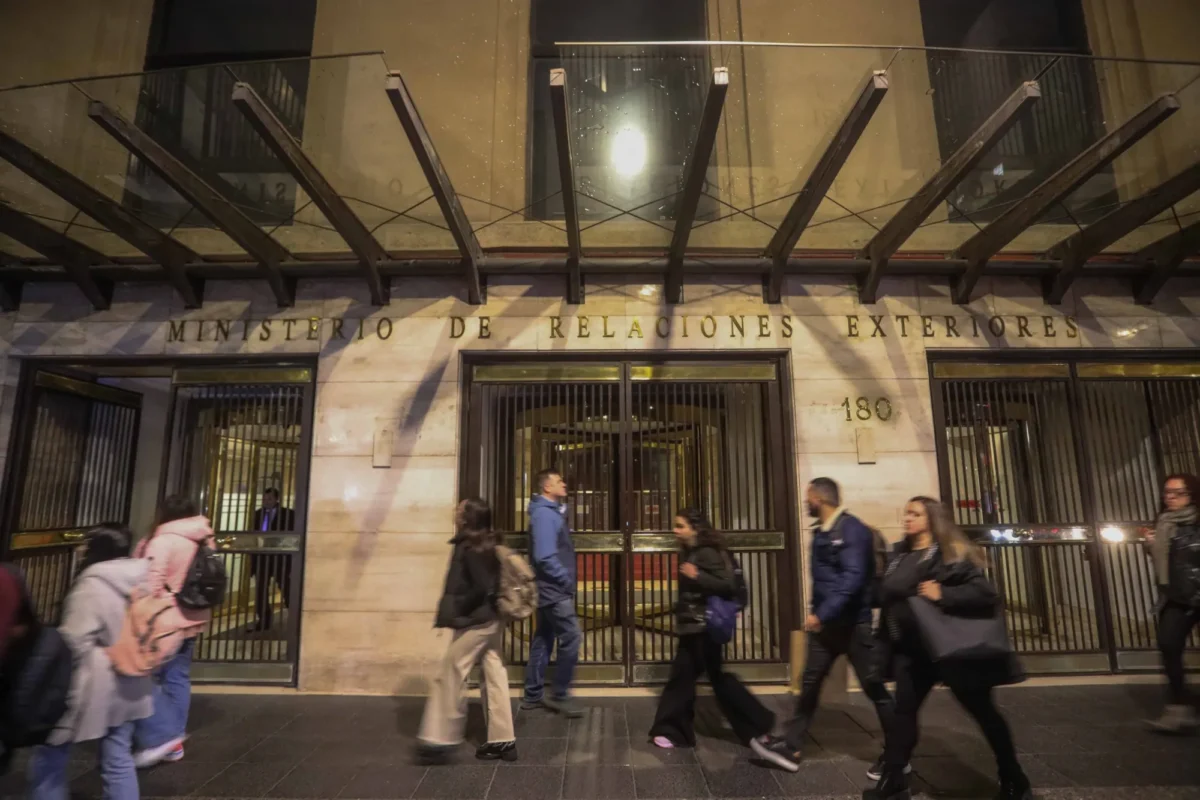
The Chile of emergencies and a State that must be adjusted in size and cost necessitates a review of ministries such as the Foreign Ministry, its geographical coverage, and service model.
The purpose of this column is to clarify that the issue of ambassadorial appointments is considerably more complex than simply appointing non-professional ambassadors in countries deemed important to us, leaving the rest to career ambassadors.
The topic of ambassadors of the Republic of Chile becomes particularly relevant during government transitions, as it typically requires those considered political ambassadors or non-career diplomats to resign and be replaced. This turnover process generates noise and expectations due to their non-professional status, as many may be former senators and deputies who can no longer serve in Congress, or are appointed as compensation for campaign support or political favors, often lacking the competencies for effective performance in the role—something that would never occur in the private sector when selecting managers or board members.
There is an accepted practice used by all governments, whether right or left, to maintain 80% career ambassadors, allowing the President to appoint ambassadors, heads of mission, and consuls with ambassadorial rank from outside the Foreign Ministry’s ranks.
To provide a sense of scale, Chile has 74 embassies, 116 consulates, and 12 missions. It is common to see non-career ambassadors in Buenos Aires, Mexico, the United States of America, Spain, the United Kingdom, OAS, and UN, among others, while leaving the more diplomatically complex countries like Peru, China, and Bolivia to those who began their careers at the Diplomatic Academy, whether they are currently serving or retired.
In all countries, except Peru where everyone, including the chancellor, are career diplomats, the practice of appointing individuals outside of diplomacy to ambassadorial positions is common. What can vary is the percentage and the level of prior preparation provided before they begin their mission in the assigned country, which reduces the likelihood of errors due to lack of preparation. It is worth recalling some missteps that occurred in the previous government.
However, the issue of ambassadors does not end there; it is considerably more complex and its origin lies in the deficiencies within the career system of Chilean diplomats. In 2018, the law 21.080 was enacted, which seeks, among other things, the modernization and professionalization of the Foreign Ministry and the diplomatic career, a useful effort on several fronts, particularly regarding organization, but which avoided addressing the core issue: the incentives to become ambassadors rather than remaining stuck at the rank of minister counselor.
Traditionally, those at the ambassadorial rank are expected to retire at 65, a requirement that does not apply to minister counselors. This limitation is significant when one only has the savings that the career may have produced, making it more profitable to remain in the minister counselor rank for a long time rather than being promoted to ambassador and leaving shortly thereafter. Diplomats are subject to the AFP system, and their main source of support once retired is the savings they may have accrued during their time abroad.
Logic suggests that the practice of retiring at 65 should be reconsidered, perhaps extending it to 70 years. This way, the experience and knowledge accumulated during the diplomatic career can be utilized without overly affecting opportunities for younger diplomats. What is clear is that the issue of the career system must be addressed, seeking to correct the deficiencies that are well known to all, hoping that ADICA will support the changes agreed upon to finally resolve this illogical situation.
That said, as we are already well into the 21st century, in the era of digitalization and AI, the question arises of how we want to manage our relationships, the service model, how many embassies, consulates, and missions we need, as well as whether the distribution is appropriate and aligned with national interests, which, as previously indicated, lie in neighboring countries, the United States of America, China, India, and some relevant European capitals for Chilean interests, and missions such as those we have at the UN that represent multilateralism, which can still be useful for Chile.
For example, Singapore serves Chile with a non-resident ambassador based in Singapore, covering not only our country but a large part of South America. In contrast, we have a resident ambassador in that country. The issue is to review and model what we need, the benefits and costs of models with non-resident ambassadors, the countries that can be managed in that way versus those for which we need a permanent physical presence.
Another issue to review in foreign relations is the fact that the staff has been limited to 500 since 1979. For the current service model and geographical distribution, this is insufficient, but if we close embassies, consulates, and missions that do not add value, we can move to a hybrid model that combines embassies and consulates only in strategic locations, while addressing the rest remotely or through regular visits. We could manage with 500 or fewer if the numbers indicate so, allowing us to assign more personnel to strategic departments such as the Strategic Planning Directorate, where foreign policy and strategy should be formulated; the Borders and Limits Directorate, where we establish land and maritime borders; and the Chilean Antarctic Institute, from where we manage our interests in Antarctica.
The Chile of emergencies and a State that must be adjusted in size and cost necessitates a review of ministries such as the Foreign Ministry, its geographical coverage, and service model. Surely, if we do this, we will see that there is no lack of budget; on the contrary, there is an excess, and, more importantly, that we do not need political ambassadors or those who are not career diplomats, as we can meet the needs with the current staff of minister counselors and career ambassadors, especially if we extend their careers to 70 years.
What this government cannot do is the sleight of hand that the previous government performed, promoting counselors to the rank of ambassador without the corresponding experience or maturity,, seeking to promote allies while failing to address the underlying issues of the career system, and disrespecting the entire professional hierarchy of the Foreign Ministry. The case of the ambassador we had in New Zealand represents everything we do not want for our foreign service, promoted beyond her capabilities and with her own agenda, leading us to a new problem: the absence of a good evaluation and promotion system. The current one has proven to fail with an unacceptable frequency.
Another issue is the lack of an adequate education and capacity-building system for diplomats. The Diplomatic Academy does good work, but the diplomatic career, like that of the Armed Forces, requires ongoing training that recognizes geography and languages, as well as the complexity of the positions assumed as the career progresses. The goal is to have diplomats of the highest quality and capabilities, who represent Chile and Chileans in the best possible way.
In summary, the issue of ambassadors is considerably more complex than the number of non-career ambassadors and the countries to which they are assigned. It is a matter we can no longer avoid, referring to defining the model of foreign relations that Chile needs, and with it the type of professionals and resources required for effective relations with the rest of the world, the protection of national interests and security.
Richard Kouyoumdjian
Executive Vice President AthenaLab