Violence in Our Streets
This article was translated automatically and may contain differences from the original. For reference, read the original.
El Líbero, January 15, 2022
While Chile boasts one of the lowest homicide rates in the region, a review of the last decade shows an upward trend in these figures.
For decades, we were distant witnesses to situations of violence associated with transnational organized crime. Today, 15 days into 2022, concern over the increase in homicides is spreading across our country, following one of the most violent weekends.
Six deaths in the regions of Valparaíso and Santiago have raised alarms for everyone. Meanwhile, many are asking whether the crime of murder in Chile is here to stay; the numbers are clear: between 2016 and 2020, homicides increased by 43%, and deaths related to settling scores rose by 28% in 2021 compared to 2020. And while Chile boasts one of the lowest homicide rates in the region, a review of the last decade shows an upward trend in these figures. We are witnessing a change in criminal phenomena where the increase in violence is setting the tone.
Guns and drugs have taken root in our cities, changing the face of crime. Violent crimes are dominating the headlines while shaping the public agenda.
The increase in domestic drug production is injecting resources into local gangs; groups that previously acted as intermediaries are no longer doing so, and globalization fully integrates us into the phenomenon of transnational crime.
The nature of crime is changing. Armed violence has reached drug trafficking gangs in neighborhoods. Crimes involving drugs, weapons, and deaths have increased. New crimes, such as settling scores and extortion, are also emerging. It is true that the rise in homicides may be related to the advance of drug trafficking in the country, but it is not the only factor. There are associated phenomena that create environments conducive to the development of crime.
In the late 1960s in the United States, Stanford University conducted an experiment now known as the broken windows theory. A car in the Bronx was dismantled shortly after being abandoned in one of its neighborhoods. Since the same did not happen with another identical car in Palo Alto, a window was broken. The result was the same. Ultimately, it did not matter the neighborhood; crime was higher in neglected environments.
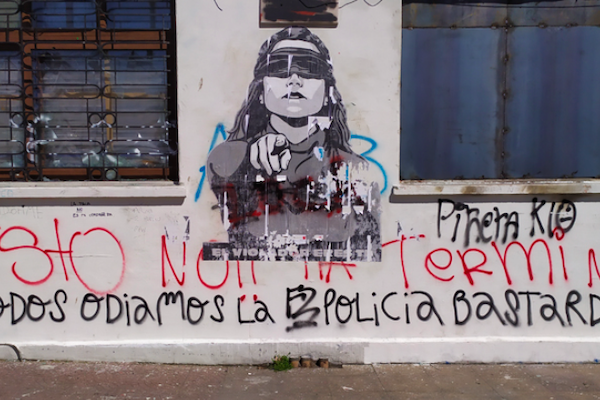
For several years, we have witnessed the deterioration of our cities. In Santiago and Valparaíso, for example, graffiti, litter, and areas taken over by various groups are a legacy of the so-called social outbreak. The closure of historic establishments has accompanied the deterioration of these urban centers, while their owners argue that crime and drug trafficking force them to shut down.
There are several broken windows we have. For some, a sign of neglect by the state, and for others, an opportunity to control territories. The problem is that this opportunity, coupled with the emergence of new crimes, is jeopardizing the peace and stability for which our country is known.
It is urgent to repair the broken windows. Recovering lost territory is essential. The Legislative, Executive, and Judicial branches must work together to design a response that returns public spaces to citizens and pushes back against crime. Local governments have an undeniable role.
We require a decisive response that halts the advance of violence and has a cross-cutting commitment from all state actors. It is essential to think strategically about domestic security, understanding that the national sphere is no longer isolated from the international. It is important to learn from foreign cases, understanding their successes and failures. We still have time, and a good start could be the repair of our broken windows.
Pilar Lizana
Researcher at AthenaLab


