Good luck, Minister Fernández
This article was translated automatically and may contain differences from the original. For reference, read the original.
El Mostrador, February 14, 2022
The Armed Forces of Chile do not have a monopoly on patriotism; however, being a patriot is a necessary requirement to serve in the Armed Forces. The identification codes and commitment of the minister in her service to the homeland will be fundamental elements that will be under constant observation. The privilege of receiving honors, just one step below the President of the Republic in military ceremonies, is not free. The Minister of Defense will need to materialize the dialogue, representation, and political defense of non-deliberative Armed Forces, which are often drawn into political issues without seeking it. Understanding that national defense institutions enjoy great prestige, recognition, and the trust of the citizenry is an inevitable step in understanding the relationship between politics and them.
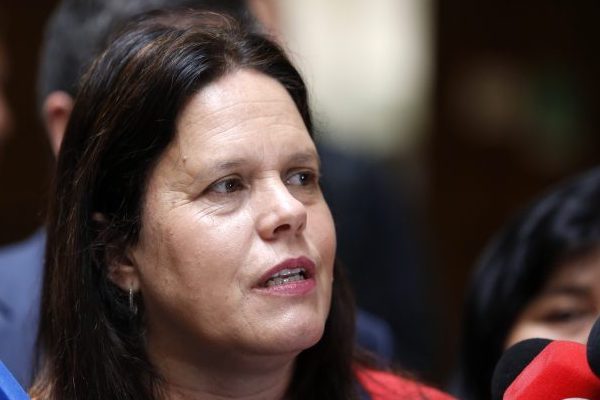
Starting March 11, current Deputy Maya Fernández will assume the political leadership of the military instrument of the State of Chile. This is a delicate, specialized, and highly relevant function. It involves nothing less than the political leadership of the monopoly on the legitimate use of state force for the production of public goods of security and defense, without which progress and development are not possible. She assumes the position at a complex time that requires deep reflection to project our homeland into the future.
Our tri-continental reality and our vital dependence on foreign trade present significant challenges. The global economic and strategic competition between the U.S. and China, the former being our main strategic partner and the latter our primary trading partner, compels us to synchronize our foreign policy with our defense policy to maximize our capabilities in promoting and defending national interests.
The growing presence of China in the Americas, especially in the southern cone, should alert us regarding the defense of our interests. The development of Chinese-origin nuclear energy in Argentina, China’s support for Argentina’s sovereignty claim over the Falklands or Malvinas, and the recent offer from that country for Argentina to be China’s gateway to South America raise alarms regarding the delimitation of the continental shelf and the extended continental shelf in the Magallanes region, particularly in Chilean Antarctica. The Argentine port development in Tierra del Fuego, with Chinese financial support, directly competes with the service and support infrastructure of Punta Arenas and Puerto Williams in the national Antarctic projection, which is also a relevant element in our strategic puzzle.
Our borders are being continuously permeated by the trafficking of illegal migrants, smuggling, especially of stolen vehicles in Chile, and drug trafficking, to the point where our compatriots in the northern region are protesting vehemently, demanding that the State fulfill its role as a provider of the public good of security. Is it advisable to maintain the logistical support and command, control, and surveillance capabilities provided by the Armed Forces for the control of land, maritime, and air borders? Our seas suffer the effects of indiscriminate fishing by immense fleets, especially Chinese, starting from the 201-mile limit of our Exclusive Economic Zone, an area that, by Chile’s sovereign will, has been declared a Marine Protected Area in more than half of its vast expanse. The challenge of monitoring, patrolling, and controlling our spaces of sovereignty and exclusivity is of gigantic proportions. Additionally, we have in the region the persistent actions of Mr. Evo Morales, who seeks to place a Plurinational America on the agenda, above states and their borders, attempting to revive Tahuantinsuyo in an ethno-nationalist sense, taking advantage of the weakness of institutions in present-day Peru.
In light of the European crisis due to NATO’s eastward expansion approaching Russia, France has taken a leading role in defining Europe’s security and defense needs (France is the only European power with nuclear capability after Brexit), and France is our neighbor in the Pacific. Great Britain, for its part, under the slogan of “Global UK,” has demonstrated its willingness and ability to establish effective autonomous presence in the Indo-Pacific after a long time, and we must not forget that we have overlapping sovereignty claims with Great Britain in Antarctica.
The case of our main strategic ally is special and requires great care. Due to its South American continental location, Chile’s defense matters are coordinated with the U.S. Southern Command, based in Florida. As a Polynesian country and because our main trading partners and interests are in the Asia-Pacific, our ministry interacts with the Indo-Pacific Command based in Hawaii. Our operational doctrine and tactical procedures are aligned with the U.S., and most importantly, interconnectivity and interoperability are ensured by shared network protocols. A significant portion of our most sophisticated systems are either of American origin or under “end user licenses” for incorporating U.S. defense technology. In her relationship with the U.S. Secretary of Defense and the Southern Command, Minister Fernández may be tested due to her alleged ties with the Cuban government, but we are confident that she understands the distinction between the two matters and will know how to defend herself against those who wish to attack her on that front.
If the challenges of the international environment seem immense, what awaits the minister in her political leadership of the Armed Forces is no less significant. Early on, in her process of understanding capabilities and realities, the minister will encounter generals with a minimum of 7 years of service and admirals, all of whom are polytechnic engineers, with a minimum of 9 years of formal education in Chile or abroad. All hold master’s degrees, and some are doctors, in addition to being bilingual, trilingual, or quadrilingual. With classes and personnel from the sea with professional technical training, many of whom have received training abroad, specializing in the maintenance and operation of complex high-technology systems. Retaining the talent and investment that the State has made in the training, education, and preparation of the nearly 70,000 men and women who make up the Armed Forces of Chile in the 21st century is one of the most urgent priorities. Likewise, maintaining security training levels to reduce the inherent operational risks associated with the profession of arms during times of economic constraints will be a significant challenge. With the memory of the ARA San Juan submarine disaster in mind, the political responsibility for ensuring training levels is immense.
The Armed Forces of Chile do not have a monopoly on patriotism; however, being a patriot is a necessary requirement to serve in the Armed Forces. The identification codes and commitment of the minister in her service to the homeland will be fundamental elements that will be under constant observation. The privilege of receiving honors, just one step below the President of the Republic in military ceremonies, is not free. The Minister of Defense will need to materialize the dialogue, representation, and political defense of non-deliberative Armed Forces, which are often drawn into political issues without seeking it. Understanding that national defense institutions enjoy great prestige, recognition, and the trust of the citizenry is an inevitable step in understanding the relationship between politics and them.
The legislative and executive functions are very different. They are complementary, but the executive function requires a different commitment. A bad law causes harm, but that responsibility dissipates, becomes corporate, and its effects are lost over time. Poor decisions in the executive realm concerning defense can have very serious consequences when operating in volatile, uncertain, complex, and ambiguous environments.
The challenges facing the new Minister of Defense are immense; they are future challenges that will have a significant impact on the Chile of tomorrow. We wish Ms. Maya Fernández the best of luck. The Armed Forces of Chile are institutions of high national and international recognition. They are professional, trained, obedient, hierarchical, and non-deliberative, and I am confident that she will have the full cooperation of patriots committed to ensuring that Chile thrives and that our compatriots can enjoy security, well-being, and development.
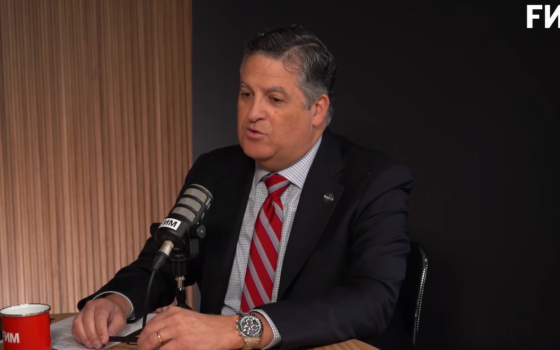
Richard Kouyoumdjian
Vice President, AthenaLab
Source: El Mostrador