Araucanía and the Constitutional Court: A Terrible Signal
This article was translated automatically and may contain differences from the original. For reference, read the original.
We are facing a security threat that requires a political response, and for that, it is urgent that all state institutions and their representatives agree on what we are confronting.
With a vote of four to one, the Constitutional Court declared inadmissible the request seeking the unconstitutionality of the CAM, Weichan Auca Mapu (WAM), Mapuche Malleco Resistance (RMM), and Mapuche Lavkenche Resistance (RML). The reason: to consider that it exceeds the implications of that court declaring these groups unconstitutional, stating that it would be a matter for criminal justice.
The argument is surprising, as Article 19 No. 15 of the Constitution states that “political parties, movements, or other forms of organization whose objectives, acts, or conduct do not respect the basic principles of the democratic and constitutional regime, seek the establishment of a totalitarian system, as well as those that use violence, promote it, or incite it as a method of political action, are unconstitutional. It is the responsibility of the Constitutional Court to declare this unconstitutionality.”
Héctor Llaitul, leader of the CAM, called in May to “prepare armed resistance” in response to the intermediate State of Exception proposed by the government. In December 2021, he urged the “rebellious Mapuche people to continue resisting and to reclaim violence as a legitimate instrument of our struggle”; on that same occasion, he called to “create the foundations for definitive emancipation by multiplying the chem and intensifying territorial control to achieve areas liberated from winka power.” If this is not using violence, inciting it as a method of political action, and not respecting the basic principles of the democratic regime, then what is it?
The problem is deep and exceeds criminal justice. We are facing a security threat that requires a political response, and for that, it is urgent that all state institutions and their representatives agree on what we are confronting. In other regions, a conversation like this would make no sense, as they recognize the threat and unite to combat it. In Chile, they still do not agree on what the threat is. And what better example than the president of the Constitutional Court!
Nancy Yáñez, president of the TC, voted against the request. Of course, she can do so; no one disputes that. The problem is that as the director of the Human Rights Center at the University of Chile in 2020, she stated that “there is no doubt that the Mapuche leaders are imprisoned due to the political context in which the rights of the Mapuche people have been systematically violated.” So, with that mindset, how can she vote objectively on a request against the organizations of those leaders whom she claims are imprisoned due to the political context?
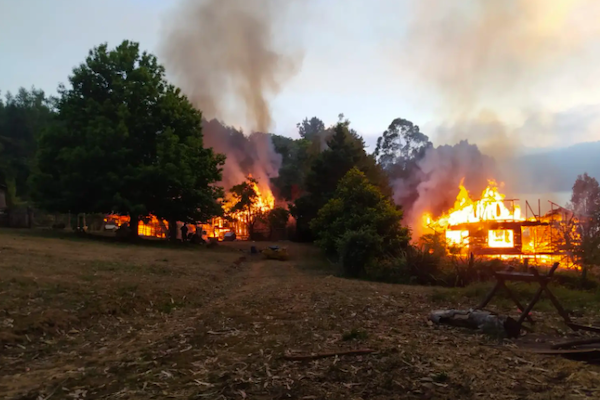
An additional ingredient: all the groups that were sought to be declared unconstitutional have claimed responsibility for attacks on machinery, arson, and other violent acts against the community. Their members are imprisoned for those acts, not for thinking a certain way.
So, if the Constitution is the fundamental law that allows for the organization and action of the state, and the members of the TC are supposed to uphold it, but they vote against such an important request, as a character from many people’s childhood would say, “now who will defend us?”
Pilar Lizana
Researcher at AthenaLab
Source: El Líbero