Homicides on the Rise: The Tip of the Iceberg in Criminality
This article was translated automatically and may contain differences from the original. For reference, read the original.
El Líbero, February 11, 2023
Today, the government is blamed for the discouraging crime statistics in the country, and how could it not be when we have been discussing dialogue tables, diagnostics, and pardons for months, yet we hear very little about results.
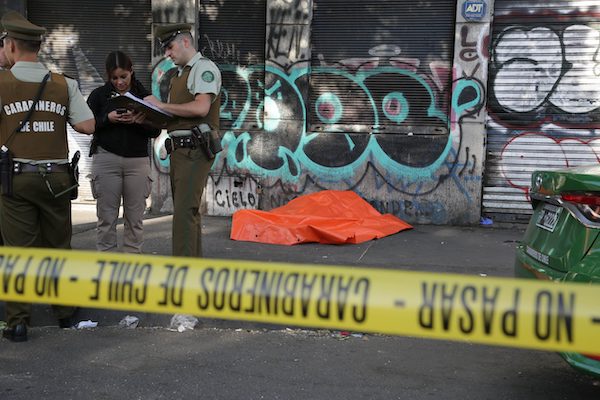
Two of the most stable democracies in the region showed concerning increases in their homicide rates in 2022. Chile and Uruguay are among the three countries with the highest increase in homicides last year. In our case, just as we were regaining the status of a full democracy, the violence indicator rose a full point in 12 months.
This week’s national context includes drug houses in La Florida and a kidnapping in Plaza de Armas. The tip of an iceberg that has been forming in the country for decades and has begun to surface with the arrival of foreign gangs.
The criminality we see today in Chile has been consolidating for years. It is true that in the north we are experiencing an unprecedented migration crisis, but that does not mean that this area is not a historic route for drug trafficking and smuggling. We share a border with two of the three largest coca-producing countries in the world, a narcotic that reached new production highs last year.
The transit of drugs from Peru, through Bolivia and then to Chile via the territory we share with that highland country is now being complemented by the trafficking and smuggling of migrants. The routes for psychotropic substances are intertwined with those for people; the access points remain the same as always.
Today, the government is blamed for the discouraging crime statistics in the country, and how could it not be when we have been discussing dialogue tables, diagnostics, and pardons, yet we hear very little about results.
Local governments have sought ways to confront this threat; the situation in some neighborhoods in Chile cannot wait for agreements or national tables. There is nothing wrong with this; all levels of the state must work to curb the increasingly violent crime that is growing in the country. The problem is: the work must be integrated and coordinated from a national level, under a long-term strategy, so that the fight against organized crime is truly effective. For now, we see individual efforts that respond to a loss of confidence in the work being promoted by the central government in this area.
We have legislation that allows us to articulate inter-agency efforts to pursue and punish national crime and that, in turn, enables the design of national strategies against crime. We have pending discussions in Congress regarding certain norms that update existing ones and provide new tools to prosecutors and police. What we need is the will to act and a common perspective on violence.
Just as all actors are currently fighting the fires in the south, they must unite to extinguish a fire that will spread far beyond March. Public and private entities, along with civil society, must contribute and work together under the leadership of the president. Only then will the short-term responses we can develop today be integrated with those for the medium and long term, and we will be able to continue being the country with one of the lowest homicide rates in Latin America.
Pilar Lizana
Researcher, AthenaLab
Source: El Líbero