COLUMN | Military Personnel at the Border: Why Grant Them Police Functions?
This article was translated automatically and may contain differences from the original. For reference, read the original.
El Líbero, February 25, 2023
In a country that does not have conflict with third states, border identity control should be carried out by the police, and if they are insufficient, consideration should be given to creating a specialized border force.
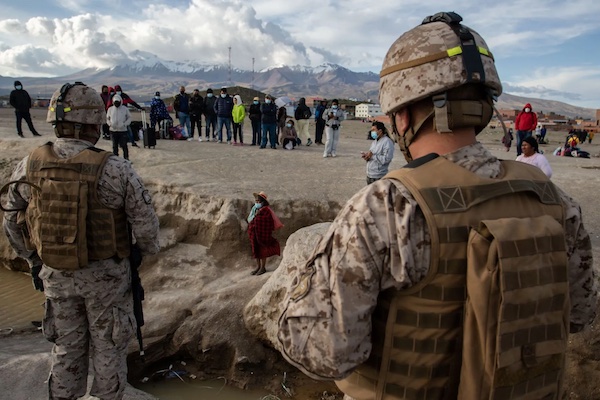
The use of force is an essential part of fulfilling their function. The military is trained professionally to neutralize threats in order to protect sovereignty and territorial integrity. This is something we must not forget when discussing the recent decree that enables the Armed Forces to perform control and detention duties at the border.
There is no doubt that the northern region is experiencing an unprecedented migration crisis. The mayor of Colchane estimates that between 200 and 400 people enter daily through unauthorized crossings near his municipality, with hundreds more doing so through other border areas. However, this is not all, as the uncontrolled migration is compounded by the well-known drug trafficking and smuggling that occurs in that area. The difference is that today, transnational organized crime cells are operating in the Northern Macrozone which have increased levels of violence, raised crime indicators, and transformed the criminal landscape of the notorious gateway for drugs into Chile.
In this context, when the Armed Forces are authorized by decree to control identity, register, and detain individuals to hand them over to the police, the question that remains is what happens to that training aimed at neutralizing threats and using force? Are we transforming soldiers into police officers?
The underlying issue is not the actions of military personnel in border areas, as that is part of their tasks. The concern is that they are deployed to replicate functions that belong to public security institutions rather than defense, and that within the rules of the use of force outlined in the DFL, there are seven stages that resemble the work of the Investigative Police and Carabineros more than that of military institutions.
So, when a soldier confronts a member of an organized crime group that will respond with violence, will they have to follow the seven steps before addressing the threat? What will be the legal framework governing the soldier’s actions when facing organized crime? Is it sufficient to control identity if we are facing a criminal trained to use lethal force? These and many other questions remain open when reviewing the recently presented decree.
In a country that does not have conflict with third states, border identity control should be carried out by the police, and if they are insufficient, consideration should be given to creating a specialized border force, as military control of foreigners could generate unintended effects that would further complicate the security crisis in the area. The Armed Forces in such functions should be the exception and not the norm.
If we are going to deploy military personnel at the border, let us not forget their constitutional mandate, training, and objectives so that their work in that area is a real complement to the actions of other state institutions in response to the security crisis in the Northern Macrozone.
Pilar Lizana
Researcher, AthenaLab
Source: El Líbero