Making the Armed Forces and Law Enforcement Invisible
This article was translated automatically and may contain differences from the original. For reference, read the original.
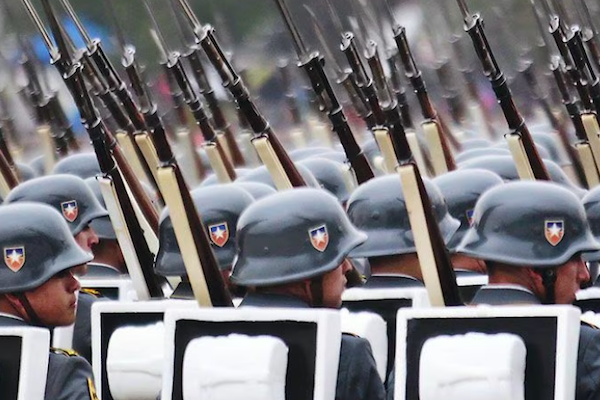
La Tercera, March 13, 2023
In Social Sciences, the term “invisibility” is used to refer to cultural mechanisms that lead to the omission of a particular group’s presence. It is a form of negative discrimination that excludes, denigrates, and ultimately allows for a significant reduction in their valuation, to the extent of losing capabilities and rights. Many examples can be observed today, but perhaps the most striking is the exclusion of a special chapter on the Armed Forces, Law Enforcement, and Public Security in the proposal by constitutional experts for the new Constitution.
Such an omission does not mean that these institutions will not have constitutional regulation. It is essential to enshrine their existence and their subordination to civil power, as established in the “Agreement for Chile” and in the constitutional reform that enshrined it. Additionally, other essential aspects of these institutions must be regulated: how that civil power appoints its commanders-in-chief and officers; their obedient and non-deliberative nature, as armed bodies holding exclusive public force and arms; their professional, hierarchical, and disciplined character; their specialty regarding pensions, social security, and justice, in accordance with the specific characteristics of their professional career; and other aspects deemed necessary to include.
So, why not regulate them in a specific chapter, as is proposed for the Central Bank, the General Comptroller’s Office, or the Electoral Service? Are the Army, Navy, Air Force, or Carabineros and Investigations less important for the constitutional order of the Republic?
What is intended is to “make them invisible,” to tell Chile that the Constitution will not address them, that they will not have a “chapter,” that their regulatory norms will only be distributed among other constitutional provisions, in order to mitigate the cultural presence of the Armed Forces, Law Enforcement, and Public Security in society, to place them in their – certainly secondary – position, to punish them for their mistakes, etc. This breaks with a constitutional tradition of two centuries.
Such a criterion does not align with a renewing spirit of our politics, nor with a desire to build a constitutional agreement that strengthens our rule of law, which is truly democratic; such a criterion “invisibilizes” tens of thousands of young people who risk their lives daily for other Chileans, patrolling borders, securing the seas, guarding the skies, fighting against crime and rampant delinquency; it invisibilizes institutions that enjoy prestige, consistently ranked highly in all surveys; and, finally, it weakens Chilean constitutional institutions by omitting a comprehensive and harmonious regulation that allows the Armed Forces, Law Enforcement, and Public Security to fulfill their respective roles for the benefit of society. Chile needs them in their rightful place.
John Griffiths
Head of Studies at AthenaLab
Julio Leiva
Chairman of the Advisory Council of AthenaLab
Source: La Tercera