RUF and the evident political bias
This article was translated automatically and may contain differences from the original. For reference, read the original.
It seems that this regulation aims to modify those aspects that do not suit some. The problem lies in the fact that legislative debate should be for everyone and not just to please a few.
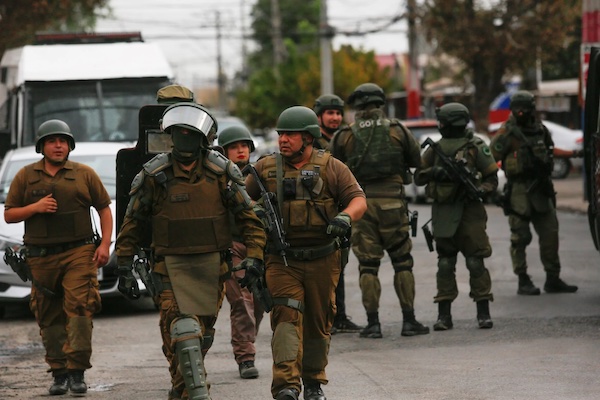
The three police officers shot during an operation in La Florida this week are yet another indication of the need to legislate on norms that provide guarantees to police officers in their public order duties and to advance procedures that ensure the safety of these officials. However, when we see proposals like the Rules on the Use of Force (RUF), it seems that all progress made with the Nain-Retamal Law, is being reversed.
The law named after two martyrs of the Carabineros de Chile was debated in a political context that argued abuse of force and showed discrepancies regarding possible violations of Human Rights. The death of Daniel Palma ended that debate, and the law was published in the Official Gazette on April 10. However, the differences did not end there; the Government, on the same day, sent a message to initiate legislative discussion on a law that regulates the Rules on the Use of Force in matters of public order. This regulation seems to be a response to the discomfort expressed by a part of the ruling party.
It is impossible not to notice the political bias behind the drafting of the norm, which explicitly refers to Human Rights issues by involving the National Institute of Human Rights (INDH) and the Children’s Defense Office when reviewing the corresponding regulations. This not only could represent an ideological response to the criticisms of the already published norm, but also overlooks an increasingly present reality in our country, characteristic of organized crime behavior: the use of minors in crimes. So why wait for reports from these institutions? Is there not trust in those who enforce the law and administer justice?
Furthermore, it includes a series of limitations on the use of force that, rather than reinforcing the concepts proposed in the Nain-Retamal Law, come to nullify it, generating only confusion among the state agents who must enforce the law.
Additionally, there is an excessive tendency to exercise civil control over law enforcement and security forces that already exists in practice. They depend on the Ministry of the Interior and must report to Congress. There is no need to reinforce something that already exists, unless the intention is to make a political statement and signal to ruling sectors.
Overall, beyond the legal analysis that can be made of the proposed law to regulate the use of force, the political bias it brings is concerning, as it seems that this regulation aims to modify those aspects that do not suit some.
The problem lies in the fact that legislative debate should be for everyone and not just to please a few. What will happen when another law is enacted that is not well received? Will a new one be proposed to neutralize it? The security crisis requires political seriousness, technical expertise, and, most importantly, a real commitment to advancing solutions. These aspects will not be achieved if the ruling coalition cannot reach an agreement.
Pilar Lizana
Researcher at AthenaLab
Source: EL Líbero