Argentina, a Question for the World
This article was translated automatically and may contain differences from the original. For reference, read the original.
- por Juan Pablo Toro
- Columnas
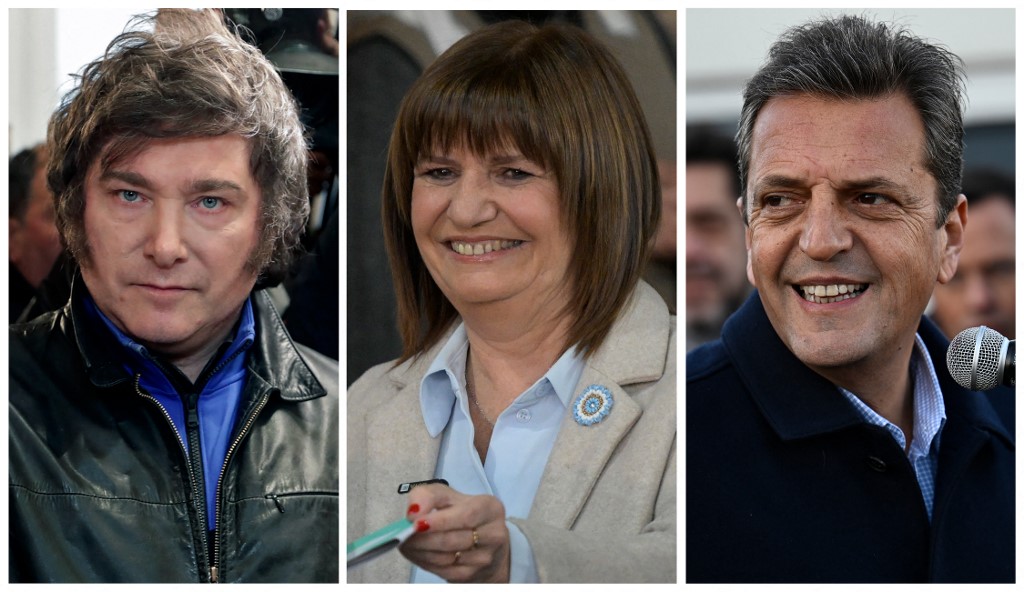
Far from clarifying doubts, the tight results of the Argentine primary elections left the game completely open: the libertarian Javier Milei unexpectedly took first place, but it remains unclear whether he has reached his ceiling or if he is at his floor (he did not dominate); the nomination of Juntos por el Cambio went to Patricia Bullrich, relegating the ruling party’s Sergio Massa to a third place (not bad for an Economy Minister with credentials of 113% inflation), all amidst high abstention rates.
The markets immediately reacted with uncertainty, punishing, once again, the beleaguered peso and impacting dollar-denominated bonds. For this reason, it is risky to assert what the world, Latin America, or Chile can expect from the next Argentine government.
However, it is possible to gain some insights by reviewing the last cycle of Argentine foreign policy that began with the Kirchners in 2003 and will conclude 20 years later with Cristina’s departure from formal power, including the interregnum of Mauricio Macri (2015-2019).
K foreign policy was characterized by Argentina’s distancing from the United States and a marked Latin American shift through ties with other leftist governments and the promotion of organizations such as Unasur and Celac; the bet on a global order with greater prominence for China and Russia, and the exploitation of the Malvinas/Falkland issue in multinational forums.
At the neighborhood level, there were intensified approaches with Bolivia (gas imports) and Venezuela (diplomatic coverage and entry into Mercosur), but there were also impasses with Chile (cutting gas exports), Paraguay (expulsion from Mercosur), and Uruguay (Botnia paper mill). Lula’s excessive prominence was not easy for Néstor to manage.
The so-called ‘return to the world’ of Macri, on the other hand, represented a search for convergence with the United States and the European Union; an attempt to bring Mercosur and the Pacific Alliance closer; the recovery of international prominence through the organization of WTO and G-20 summits, and the normalization of relations with the United Kingdom to address the issue of the islands.
In an interview with this very newspaper, the then-president even stated that he needed Chilean ports to export grains to countries in Asia and promoted his closeness to the government of Sebastián Piñera.
Today, with inflation rampant and insecurity taking over the streets, foreign policy does not seem to be a topic that sways votes in the Argentine campaign, making it difficult to know what candidates think about their ties to the world. Fortunately, we have two familiar faces and a natural polemicist.
Bullrich was Minister of Security under Macri, during which time she fostered closer ties with the United States, criticized the previous government for being ‘hostile to neighbors,’ and proposed regional cooperation against drug trafficking.
From Massa, it can be anticipated that he will continue to deepen the ‘ArgenChina’ line, given the need to inject capital into a debt-laden economy, and will update the K regional script.
Although Milei basically fires slogans without much depth, his commitment to free trade, if translated into reality, could help the economy, but will clash with the constraints of Mercosur. After lending much to Macri, betting on a reformer who did not deliver, financial institutions will be more cautious in trusting a singular character whom serious international media have likened to the Trumps and Bolsonaros of this world, all with dubious legacies. He has also stated that he will break with China for being ‘communist’ and will distance himself from Brazil. Where he will find money is a mystery.
In this scenario, the most sensible approach is to wait for the final results in October and for Chile to continue safeguarding its national interests against those who insist on redrawing maps that infringe upon our borders, regardless of their political color; not to embrace causes that are not ours in exchange for nothing (Malvinas/Falkland), and to evaluate bilateral relations in their proper dimension, without expectations or fears. Undoubtedly, the most beneficial outcome for the world and the region would be to have a prosperous Argentina, open to trade and reliable for its neighbors. But for that to happen, a new foreign policy from that country is needed, very different from what has been seen in two decades.
Juan Pablo Toro, Executive Director of AthenaLab
Column published in El Mercurio 18/08/2023
Photo: France Presse