The Ethical Dilemma of Israel in the Gaza Conflict
This article was translated automatically and may contain differences from the original. For reference, read the original.
El Líbero, November 8, 2023
To oppose its other enemies, Israel will need the support of its allies, support that may be lost if the humanitarian issue becomes even more complex, regardless of whether it is largely its responsibility.
Much has been said in recent days about what is happening in Gaza and particularly about the deaths of Palestinian civilians allegedly resulting from the Israeliattacks. I say allegedly because these figures are reported by Hamas, which may very well exist but are not confirmed by third parties, and I also say allegedly because it is not reported whether these casualties are due to friendly fire, generated by Hamas itself, or due to Israeli errors.
Many also speak of international humanitarian law without even knowing what they are talking about, and furthermore, accuse Israel of committing war crimes based on unproven data, which may well be the result of information operations by Hamas known in military jargon as INFO OPS, aimed at deceiving the enemy and sustaining their own war effort, as was the case with the explosion at the Anglican hospital in Gaza, where everyone incorrectly assumed it was Israel, when in fact it originated from the malfunction of a rocket from a Palestinian militia associated with Hamas, but was attributed to Israel to avoid bearing the costs of civilian casualties.
To avoid getting entangled in ethical issues, one must analyze the data and, based on that analysis, seek to determine whether the parties have acted correctly. Doing what is right, which is much more than what is legal, is one of the greatest challenges faced by political and military leaders in times of conflict. One need only recall cases such as the dropping of atomic bombs on Hiroshima and Nagasaki, the bombings of Dresden in Germany and Tokyo in Japan with incendiary bombs, and many other examples from World War II that, in the eyes of the 21st century, would be questionable to many, but which at the time were accepted as ethically valid and correct despite the large numbers of Germans and Japanese killed, who had no rights to claim due to having initiated the war.
The stark facts indicate the following:
- On October 7, 2023 , the terrorist group Hamas launched a violent and cruel attack on Israel, resulting in the deaths of 1,400 people, and additionally, more than 200 were kidnapped to be used as bargaining chips. Fact 1: Hamas initiates hostilities..
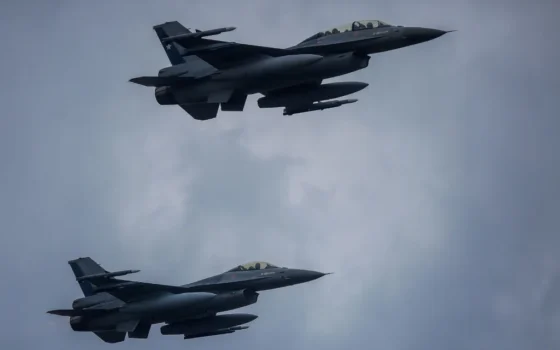
- On the same day, Israel exercised its right to defend itself, seeking to attack Hamas, a terrorist organization with significant military capabilities, whose declared mission is to eliminate the State of Israel and the Jews living there. Fact 2: Israel exercises its right to defend itself.
- Hamas has governed, dominated, and controlled the entire Gaza Strip for over 15 years. It uses human shields to hide, as well as locating its military facilities under civilian buildings such as hospitals, schools, universities, and refugee camps. It operates under the logic that the end justifies the means in pursuing its objectives. Fact 3: Confronting Hamas is inherently complex due to its use of civilians and civilian facilities as part of its military strategy.
- The first phase of the Israeli attack primarily used missiles and aircraft from its air force to destroy military targets and prepare the ground for the entry of its ground forces. The complexity of the ongoing operation arises from the fact that Hamas has hundreds or thousands of kilometers of tunnels that cross Gaza in all directions, which they use to either attack or hide from attacks, and additionally, as mentioned earlier, they actively use civilian facilities to locate their command and logistics posts. All of this is further complicated by the fact that the Gaza Strip is small and relocating the civilian population is not simple. Fact 4: We are talking about an extremely complex military operation that is not easy to carry out.
- The declared objective of the Israeli military operation is to destroy Hamas’s military capability and prevent a repetition of what occurred on October 7. Israel’s other enemies are attentive to the political will of the Israeli people, as it indicates what they can or cannot do in the future regarding attacks on Israel. Israel has declared that it seeks to respect civilian lives in accordance with the laws of war and international humanitarian law, despite the fact that, along with the United States, it is one of the few that has not signed Protocols I and II, which are additional to the four parts of the Geneva Conventions. Fact 5: Israel seeks to eliminate Hamas’s military capability, and its actions regarding Hamas provide insight into how it will handle the rest of its enemies.
- Civilian casualties, which are reported to be in the thousands, but whose origin is unclear and whose numbers are not precise, have rightly led many to call for attention to the humanitarian issue, either in the form of a ceasefire or directly calling for the end of the Israeli military operation due to the civilian casualties it is generating. This is regardless of the fact that Hamas uses civilians and civilian facilities to defend itself from the Israeli attack, placing all media pressure on Israel, while ignoring Hamas’s responsibility in the humanitarian crisis. Fact 6: The humanitarian crisis, in conclusion, is the responsibility of both Hamas and Israel, as one uses civilians and the other accepts it as part of the unintended consequences of its military strategy, but it is clear that Hamas bears more responsibility than Israel.
- The main point to consider in this analysis is that armies respond to politicians, who in turn respond to the people who elect them. If the people of Israel want to eliminate Hamas from the face of the earth, that is what will happen, and only the actions of allies like the U.S., which supplies them with weapons, or the images of civilian victims could prevent it from happening, surpassing the horror they experienced on October 7. This is regardless of what international humanitarian law states, the legislation governing war, or what the Secretary-General of the United Nations thinks, also remembering that the Security Council has been unable to generate a resolution calling for the end of military actions, something that perhaps the government of Chile should take into consideration. Fact 7: Military actions will end when the people of Israel determine, and this does not necessarily imply proceeding with the original idea of eliminating Hamas.
- International humanitarian law requires the cessation of military operations when there are risks to civilian lives, but it does not say anything or provide guidance on what to do in cases where facing an enemy that uses and abuses civilians as shields, and whose purpose is the elimination of Israel and the Jews living there. Fact 8: Be cautious with the use of arguments such as international humanitarian law, as it is not designed for realities like those occurring in Gaza.
While it is true that Israel has the ethical and legal right to defend itself and to eliminate an enemy like Hamas, there are limits, as the remedy may cost more than the disease. To oppose its other enemies, they will need the support of their allies, support that may be lost if the humanitarian issue becomes even more complex, regardless of whether it is largely their responsibility.
Reviewing the desired end state of their strategy is something that Israel’s national unity cabinet should already be undertaking, as well as considering whether they want to go down in history as a people that exercised their legal and ethical right to defend themselves and eliminate those who attacked them, versus a people that knew when to stop and, above all, respected the lives of the Palestinians living in Gaza. The decisions they make now will shape the future in which they live.
Richard Kouyoumdjian
Vice President AthenaLab
Source: El Líbero