The spokesperson's security crisis
This article was translated automatically and may contain differences from the original. For reference, read the original.
El Líbero, December 29, 2023
For this government, the crisis began in March 2022, as that was the moment to analyze and decide. Today, they must react. The snowball has grown larger, and strong measures are now required to stop it.
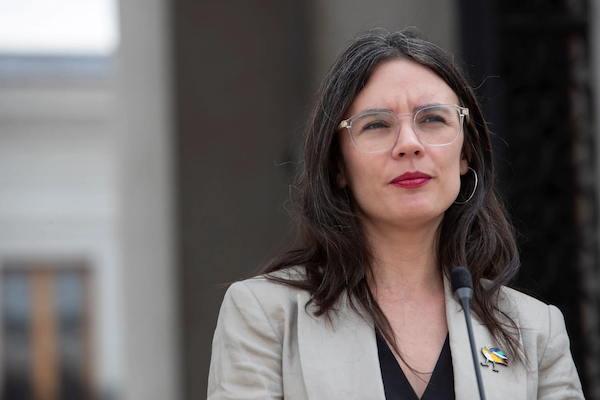
Crisis. That state of chaos or uncertainty that for the Greeks means to separate or decide, to pause and analyze, was used this week by the spokesperson minister, Camila Vallejo, to refer to the security landscape after 9 people were murdered during the Christmas weekend.
The minister arrives quite late, as by the end of 2021 it was already evident that the homicide rate in Chile was rising; in 2022, a peak in murders was reached, and this trend has continued into 2023. A jump from 4.7 to 6.7 deaths per 100,000 inhabitants was reported in the homicide statistics provided by the Ministry of the Interior for 2022, a significant change when placed in the regional context. While we are not close to the most violent countries, we do appear as one where violence has increased the most according to the annual study by Insight Crime.
It is not worth describing a situation that has been widely discussed in various media outlets, but it is relevant to review the elements contributing to its progression, and in this regard, one cannot overlook the corruption. The foundations case offers much to discuss; however, it highlights two extremely concerning aspects: the possibility of bribing state agents and the negligence of political leaders. In other words, “institutional weakness” in the purest sense defined by Victoria Murillo in *The Law and the Trap in Latin America.*
Therefore, to speak of crisis today is inaccurate, as the precise moment to pause and decide was years ago. Moreover, this government could have arrived at La Moneda with a clear strategy, with the groundwork laid to truly transform the crisis into an opportunity. Instead, they assumed office wanting to reform Carabineros, thereby further weakening the institution; and, speaking of Wallmapu, they somewhat validated the narrative of violent organizations. They began to raise diagnoses and grant pardons to those imprisoned during the social outbreak, and only when citizens pressed hard from below did they start legislative work aimed at creating institutions, modernizing legal figures, and updating procedures in security matters.
For this government, the crisis began in March 2022, as that was the moment to analyze and decide. Today, they must react. The snowball has grown larger, and strong measures are now required to stop it. The key, however, lies in the ability of political leaders in security to generate long-term cross-party agreements and strategies that provide sustainability to reactive actions, that is, to design a state policy. How to do it? By recognizing the problem with a degree of generosity that allows them to concede political points and prioritize the well-being of Chileans. Although late, it is always possible to transform the crisis into an opportunity. It will all depend on the real political will of the ruling party.
Pilar Lizana
Researcher at AthenaLab
Source: El Líbero