It is not Ojeda or Venezuela; it is the lack of a national security system.
This article was translated automatically and may contain differences from the original. For reference, read the original.
El Líbero, June 7, 2024
The government’s proposals continue to list actions, but the reality is that, in this matter, shopping lists do not address the core issue.
One “false flag operation” is how the murder of the Venezuelan ex-military officer, Ronald Ojeda, was described by the Attorney General of that country, Tarek William Saab.. They accuse Chile of responsibility for that death. Caracas’s attitude is not surprising; they had previously denied the existence of the Tren de Aragua and are now shifting the discussion about the murder of their citizen elsewhere.
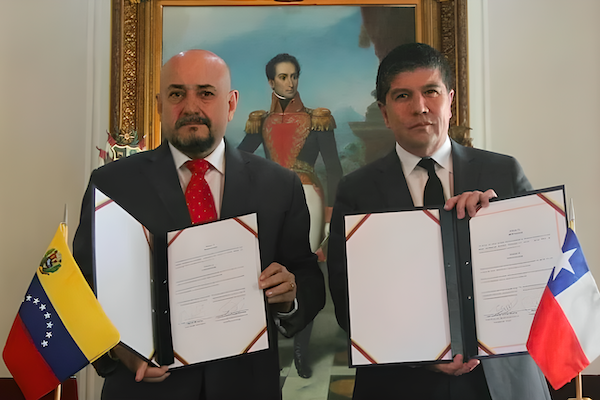
Chile signed an information exchange agreement with the country of Nicolás Maduro some time ago. The argument from national authorities was related to the importance of accessing data that would allow for the pursuit of criminals and the administration of justice. This explanation is quite naive considering that a country like that does not share information.
However, beyond the hypotheses surrounding the case, the comings and goings of Venezuelan leaders, and the questionable decision regarding the signing of the agreement, this should serve the State of Chile to draw lessons learned about mutual trust with countries in the region and about its own capacity to confront a threat as complex as organized crime.
Instead of responding to unserious claims, our authorities should be working to improve the country’s security capabilities, which also includes intelligence..
There is an evident failure in this area. Not only because there was no record of Ojeda’s activities or the potential risks he faced, but also because there has been no demonstrated efficiency in monitoring the behavior and evolution of the Tren de Aragua in the country. Their activities are known, their cells are also known, and beyond the difficulties behind judicial processes, there is still no understanding of the nature of the phenomenon that is indicated as the main threat to Chile: organized crime. The government’s proposals continue to list actions, but the reality is that, in this matter, shopping lists do not address the core issue, which relates to the country’s security structure.
The Royal Academy of Language defines a system as a set of related things that contribute to a goal. This concept is often used to refer to responses in security matters, but in practice, it is not observed.
The size and organizational structure of the ANI or the Ministry of Security alone are not the answers required.
It is necessary for the President to lead security, have an advisory council that strengthens decision-making, with information flows that feed it, and a working system among institutions that contributes to a single objective: restoring stability. It is a long road, but the truth is that there are no shortcuts. This is the great legacy that a government should leave to the country: a National Security System. It is time to speak seriously and not waste any more time.
Pilar Lizana
Senior Researcher, AthenaLab
Source: