The Political Role of the Bolivarian National Armed Force
This article was translated automatically and may contain differences from the original. For reference, read the original.
El Líbero, July 31, 2024
Maduro can be confident as long as he has military support, which is currently aligned with the Chavista regime, as the interests of both coincide.
Many had genuine hopes for a regime change in Venezuela, which unfortunately has not yet occurred and may never happen, or at least not until the Bolivarian National Armed Force (FANB) decides that Maduro is history, whether by replacing him with more of the same, or by a 100% military regime like that of Myanmar, or if they no longer find it convenient to be in government or to support the government, thus opening spaces for a transition to democracy.
Maduro and Chavismo remain in power solely because they have the support of the FANB. There is no other reason for this to occur; it is not a coincidence, but rather something that Chávez developed over the years and managed to pass on to his successor despite not being one of them.
It is said that Chávez learned from the experience of Salvador Allende, which is why he sought from the beginning to align military interests with his own and those of the political movement he founded, which, due to its undemocratic nature, would need something to ensure its permanence in power beyond what could have been a normal presidential term.
What Chávez did is quite normal in leftist regimes, such as in China, where the general secretary is the head of the military commission and thus the head of the armed forces. Cuba, Nicaragua, and North Korea have similar structures to China.
Although he does not lead a leftist government, but one that revolves around him, Putin needs to maintain strict control over the military apparatus to remain in power, with something similar occurring in Iran , which even created a parallel military force years ago known as the Revolutionary Guard, a force with a religious character, to ensure its permanence.In the Latin American region, the cases of Cuba, Venezuela, and Nicaragua are among the few remaining where the military has a very strong political role
, and as I mentioned earlier, rather than being guarantors of institutionalism, they are the ones that allow the existence of these Marxist-Communist regimes. Without control of the armed forces, they would not exist as we know them.In other countries in the region, the political role of the military varies from being guarantors of the Constitution and the government, as in the case of Peru, Bolivia, and Ecuador, to having no role at all, as in Argentina, passing through countries like Chile where the political system is increasingly using them for public security tasks, indirectly placing them in political roles and on the front lines of the fight against organized crime and southern insurgency.
Returning to Venezuela, Chávez and his successor, to ensure military support and loyalty, especially after the attempted coup in 2002, took the following actions:
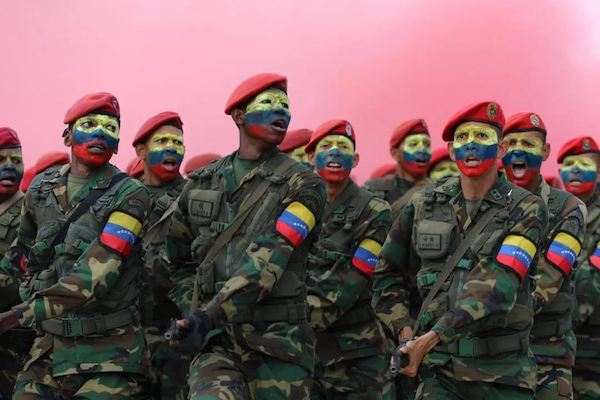
In addition to the four military branches that make up the FANB, they recreated the idea of the Bolivarian Militia,
- a force that mobilizes both reserves and active components with a strong Chavista political orientation. This popular force allows them to counter actions that other institutions might eventually take. Chávez was a military officer and placed his most loyal companions and friends in positions of political leadership.
- The case of Diosdado Cabello , who led the National Assembly for many years, or the case of the current Minister of Defense, General in ChiefVladimir Padrino López , a loyal supporter of the regime since 2002 when he played a fundamental role in preventing the success of that year’s coup against Chávez.It is the country, or perhaps one of the countries, with the most generals and admirals.
- The regime has ensured that the armed forces are in especially comfortable conditions, better than those of the rest of the country. They do not go hungry, live well, and are allowed to develop parallel businesses under conditions that others would not have. For years, they have been responsible for conducting a
- socialist indoctrination for those who join the FANB,something that is reinforced every year for those who are part of it. They seek not only economic loyalty but also ideological loyalty. To feel that they have some moral and traditional grounding, they have strongly revived the
- figure of Bolívar , which allows them, according to themselves, to have a historical foundation linked to their land and history. All institutions include the word “Bolivarian” in their name.Finally, they are
- relentless with those who think or act differently. Just look and remember the case of Lieutenant Ojeda. They either kill them, kill their families, or leave them in prison for life until they rot. I hope I have made it clear why
Maduro can be confident as long as he has military support, which is currently aligned with the Chavista regime, as the interests of both coincide. If Maduro falls, it is unlikely that the military leadership will survive and be able to maintain their privileges. Just look at Cuba after 65 years, and look at Daniel Ortega in Nicaragua, who quickly learns the practices to stay in power. I could be wrong, but the probability that Maduro and his associates remain in power is high. Sanctions, pressures, and anger from the rest of the world will have no influence. He already has the support of China, Russia, and Iran, which is more than sufficient for the reality of the Venezuelan regime, which, combined with the strict control of the FANB, ensures a long life for Nicolás Maduro and Chavismo.
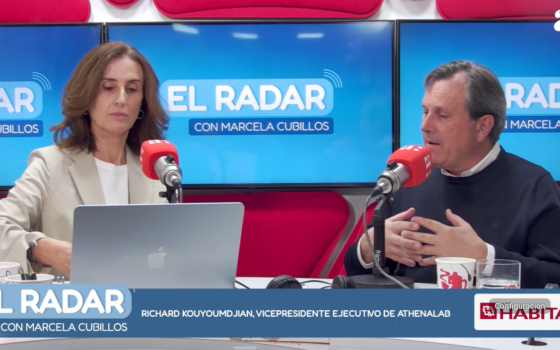
Richard Kouyoumdjian
Vice President of AthenaLab
Source: