Why Venezuela is a Watershed in Chilean and International Foreign Policy
This article was translated automatically and may contain differences from the original. For reference, read the original.
Ex-Ante, August 6, 2024
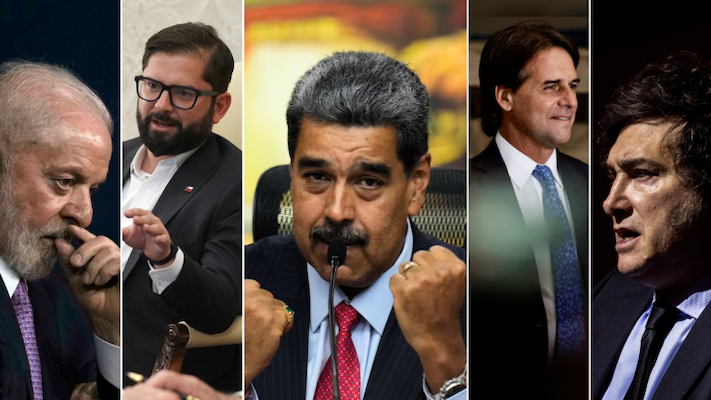
Chile and Brazil have been unable to agree on a perspective regarding Venezuela, and this cannot be minimized as just one issue among many. Lula’s dream is for Brazil to integrate, as a permanent member, into the UN Security Council. Can a strong ally of Russia aspire to represent us, as all of Latin America? A country whose President claims that the election in Venezuela is a completely “normal” contest, and that the serious human rights violations, acknowledged by the UN itself, are merely a “narrative” problem?
The days and events following the recent Venezuelan presidential election must have clarified some matters.
First: the euphemisms that have been used for so many years, even decades, to disguise the Venezuelan reality are no longer acceptable; on the contrary, they will tarnish those who use them. However, their prolonged use certainly served, for many years, to sustain fierce loyalties and false expectations! Otherwise, it would be inexplicable how so many were surprised by the deportations of electoral observers and journalists, and the blatant theft of this election. Everything was predictable.
In Venezuela, the rule of law began to be dismantled not now, nor five or ten years ago, but more than two decades ago, while the left around the world smiled at Hugo Chávez and celebrated his nonchalance. It was with Chávez that the harassment of the opposition press began, foreign investment was expropriated, and the independence of the judiciary was undermined by promoting judges loyal to the regime and persecuting the rest.
While this was happening, Chávez, riding the wave of expropriating investors and the high price of commodities, distributed hugs and bought complicities, sharing large suitcases of money and other costly gifts around the world with strange generosity. How can we forget those offers of mass eye surgeries abroad, with all expenses paid? Or the audacity to propose subsidizing public transport in cities like London and Boston, where the chieftain’s impudence also received a red carpet.
International institutions documented, year after year, Venezuela’s degradation in various reports: and after Chávez’s death, the list of misdeeds became even darker. Electoral reforms made for convenience. The bullying of the opposition. The disappearance of a free press. The transformation of state-owned enterprises into mere cash boxes for bribes and perks. The transformation of its beautiful beaches into exclusive resorts for military or Russian oligarchs. The expansion of state violence against its citizens, including years of preventive detention, forced disappearances, arbitrary detentions, illegal coercion, and sexual abuse in infamous torture centers. The flight of capital, and then, the exodus of millions of people. The hunger of the population, in a country rich in oil and precious metals.
This criminal spiral also includes the fraudulent plebiscite of December 2023, held to justify the administrative annexation of two-thirds of the neighboring country (Guyana) with the aim of seizing, of course, the resources and investments made in that other country, in the silence of Latin American presidents.
Only the audacity to redraw the map of our continent should have alerted us that the situation in Venezuela is much worse than that of Cuba and Nicaragua, because Venezuela, unlike those other dictatorships, is and remains a very rich country. The problem is that today its wealth is not evident, because over 25 years it has been pocketed by Chávez, Maduro, and their henchmen, who now aspire to steal the neighboring country as well. The annexation of Guyana could cease to be administrative and materialize with soldiers at any moment. When that happens, who will stop Maduro? Who will defend Guyana, a country with 3,000 soldiers, against the 150,000 of the Venezuelan army?
The transformation of the prosperous Venezuelan democracy into a bloody dictatorship allied with drug trafficking occurred while much of the left, in many places around the world, turned a blind eye. This explains why some have believed, or still want to believe, that Nicolás Maduro, a dictator, murderer, and thief, will somehow relinquish power despite having much more power today than yesterday. He completely controls the judiciary, controls the National Assembly (and through it, Venezuela’s gold reserves abroad), controls a well-funded, paid, and mostly corrupt army that remains modern in its equipment thanks to support from China. And finally, he has the full backing of two nuclear powers, Russia and Iran, also governed by murderers.
The second conclusion is that without euphemisms, we have realpolitik laid bare. Brazil is the largest buyer of hydrocarbons and fertilizers from Russia, and Mexico invites the Russian army (the same one that has kidnapped thousands of Ukrainian children) to parade at its military parade. The “negotiations” led by them will be a farce: they will lead to nothing. The suffering of the Venezuelan people will increase, making a new wave of migration certain.
The third conclusion is that Venezuela is a watershed that goes beyond a regional perspective, as it must be read in geopolitical terms. The axes today are not left and right, but democracy and dictatorship, and Chile has done well, under Boric, to ally with Western democracies in favor of Ukraine. Receiving insults from the bully who governs Venezuela is an honor. But this will have consequences.
For now, Chile and Brazil have been unable to agree on a perspective regarding Venezuela, and this cannot be minimized as just one issue among many. Lula’s dream is for Brazil to integrate, as a permanent member, into the UN Security Council. Can a strong ally of Russia aspire to represent us, as all of Latin America? A country whose President claims that the election in Venezuela is a completely “normal” contest, and that the serious human rights violations, acknowledged by the UN itself, are merely a “narrative” problem?
There is also a key issue for Chile: the country that can easily follow the path of Venezuela is Bolivia, which has concluded extensive alliance agreements with Russia and Iran… in total silence from Chile (in contrast to the concerned and indignant reaction from Argentina, for example).
The consequences of the Venezuelan watershed will be both internal and external, and will soon begin to become apparent. At least externally, it is time for Chile to think strategically about them, especially regarding its military alliances, with urgency.
Paz Zárate
Senior Researcher, AthenaLab
Source: Ex-Ante