Regarding the PDI, Carabineros de Chile, and the Public Ministry
This article was translated automatically and may contain differences from the original. For reference, read the original.
- by Richard Kouyoumdjian
- Opinion
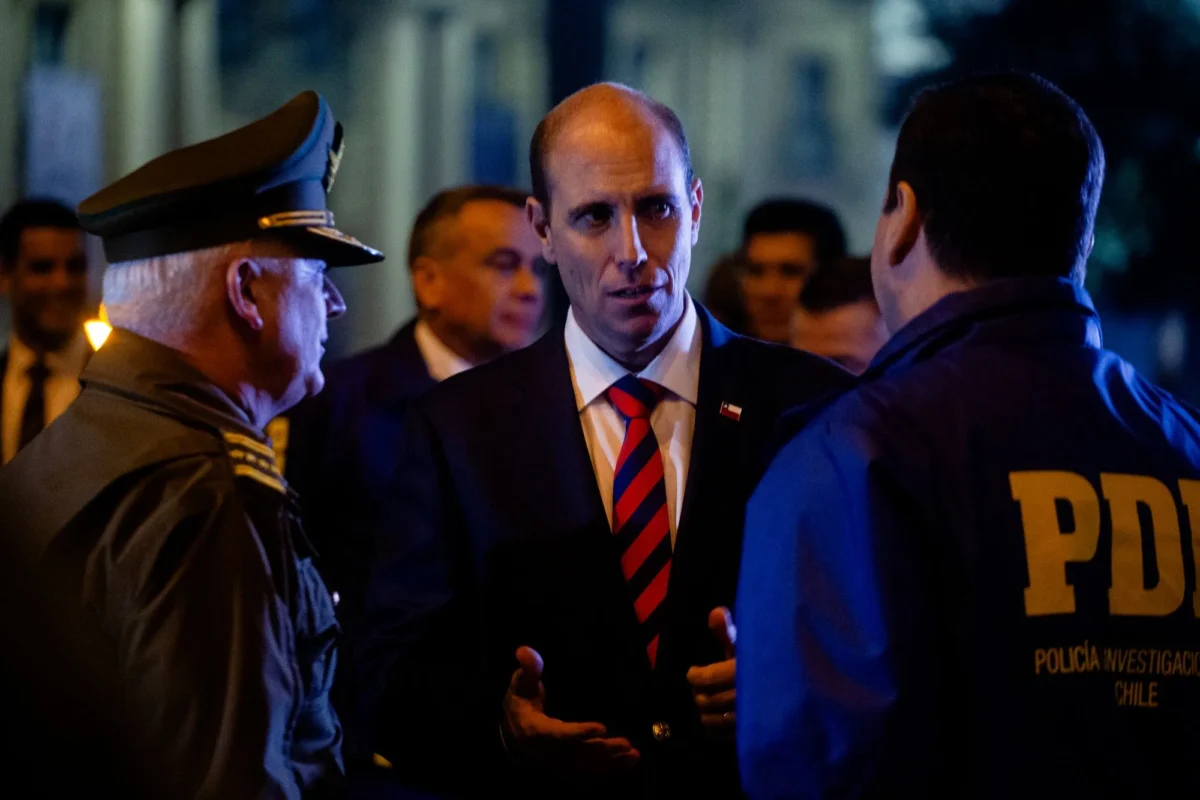
We are not talking about institutions that need to be re-founded, as some wanted in the past, but they do require adjustments so that, both individually and collectively, they are more effective and efficient.
The purpose of this column is to indicate what changes or modernizations we need to implement in the two police forces that Chile has, as well as regarding the Public Ministry, because we need to be more effective and efficient in our efforts against organized crime and delinquency. These three institutions are the foundation and operational capacity with which the State of Chile seeks to provide public security.
Our police forces, each nearing 100 years of existence, and, moreover, on June 19, the Police of Investigations (PDI) will celebrate its 93rd anniversary, the date on which it separated from Carabineros to take the form we know today, that of a police force with its own personality and identity that enjoys high prestige.
Carabineros is already in the year of its centenary, which will be celebrated in April 2027 since Carlos Ibáñez Del Campo separated the Carabineros regiment from the Chilean Army, an institution from which it inherits its military tradition that accompanies it to this day, giving it a unique culture and character, and like the PDI, it leads the indicators of institutional satisfaction measured by Cadem.
The Public Ministry was established with the criminal procedural reform of the late 1990s and began to take shape in the first decade of this century. Its function is to investigate and carry out the prosecution of crimes so that the courts can determine the responsibility of those who committed them, and to protect victims and witnesses. It is an autonomous body, and therefore does not belong to any of the three branches of government. It is not part of the Government or Executive Branch, the Judiciary, or the Legislative Branch (National Congress).
Despite the occasional problems that the PDI and Carabineros sometimes present regarding corruption, these institutions, according to Plaza Pública de Cadem, enjoy good public recognition to the point that they usually lead alongside the Fire Department, followed by the Armed Forces. The Public Ministry, for some reason, does not have such high recognition, but it is clearly better evaluated than the political world, with some prosecutors enjoying high popularity due to the results they achieve.
The good news is that we are not talking about institutions that need to be re-founded as some wanted in the past, but they do require adjustments so that, both individually and collectively, they are more effective and efficient.
Let us start with Carabineros. It is said that we need more Carabineros, which is something we all agree on, but the truth is we do not know how many and where. Carabineros does not disclose its numbers and staffing. We talk about freeing Carabineros from administrative and ceremonial duties, but we do nothing. In a survey conducted in 2025 by AthenaLab both the general public and experts support focusing on what is their own and not on guarding the La Moneda palace, military parades, equestrian and musical performances. This is clearly stated on pages 36 and 37 of the survey, but let us be clear, if we want and need more Carabineros let us start by having them dedicate 100% of their time to their role as the preventive police, on the streets of Chile preventing the occurrence of crimes.
To the surprise of many, the prefectures and police stations of Carabineros do not have goals or objectives to meet regarding crime and offense reduction, something that occurs not only in Las Condes but throughout Chile. They report everything they do, keep metrics, and generate the STOP that helps us all know if we are improving or not, but strangely, I do not see them feeling responsible for crime prevention. For some reason I do not understand, they have units like OS7 and OS9 dedicated to tasks that are the responsibility of the PDI (investigative tasks). This becomes more significant if one understands that Carabineros, most likely not by their own will, are not fulfilling their constitutional role of guaranteeing and maintaining order and public safety in the territory of the republic. I do not see them being held accountable for this.
Continuing with the logic of each to their own, the PDI also has issues to review regarding its mandate, which includes the protection of authorities known as PPI, or having detectives stationed at airports, seaports, and land ports, validating the entry and exit of passengers. Clearly a waste of talent and state resources. The police attachés are another issue to review.
In the last significant legal reform made to the PDI, national authorities sought to focus more on what is currently important, organized crime. Article 1 of its LO states: “Its actions will be oriented towards the specialized investigation of all crimes, especially those that are complex and related to organized crime, contributing to preventing the perpetration of criminal acts and acts that threaten the stability of state agencies.” It could not be clearer. It is to be hoped that
Minister Martín Arrau once well established in his new role as Minister of Public Security, having taken command of the police forces, and ensured the operational continuity of the police, will be able to do what no one has wanted to do, which is to have some focus on prevention and others on investigation. It is a matter of efficiency and effectiveness, something that is logical and natural to an industrial civil engineer, something that will not arise from the institutions, but requires political will and strong leadership, something that, from what we have seen, is very characteristic of Minister Arrau. He will not hesitate. The main issue with the
Public Ministry apart from its autonomy is its staffing of prosecutors, as of May 31, 2026, it has 785 prosecutors (including the National Prosecutor and regional prosecutors), which is almost the same number of prosecutors with which they initially started. Clearly, the current criminal reality in Chile requires more prosecutors than were needed 30 years ago. It is common to see that there are crimes that cannot be investigated due to a lack of prosecutors or the capabilities of the Public Ministry, something that causes much frustration among the population, particularly for those who cannot afford a lawyer or who do not live in a municipality that can offer legal services. Apparently, the coordination between the Public Ministry and the Ministry of Public Security works, despite the constitutional autonomy of the former.
We have some cases that have demonstrated that the police and prosecutors can work well together and produce results. It is not absolutely clear if this can happen throughout the territory, but there are cases where it works, and when it does, the results are quite evident: criminals captured and imprisoned, less criminal activity. The three institutions need investments in cybersecurity, AI, and digital technologies, including interconnections between them and with the municipal security system.
We also need to protect them from being captured and infiltrated by organized crime, something they will seek to do in order to continue advancing in their installation process. This is much more than just paying them good salaries and implementing attraction and retention mechanisms. We are talking about the need to invest whatever is necessary in the counterintelligence functions that each of them requires. For every martyr, we have one who switched sides, something that cannot continue. Understanding that the Public Ministry is autonomous, we must find a way to integrate it into the national intelligence system, one in which the police are part of the system, but not the Prosecutor’s Office, which was not even left as a collaborating institution. Its lack of integration is a failure of the law enacted at the end of May 2026.
As a final message, please
each one in their own role, but working together and coordinated. The Chileans will be grateful if you do so and set aside the things that may be separating you.