Assessment of Kast and Arrau's Public Security Efforts
This article was translated automatically and may contain differences from the original. For reference, read the original.
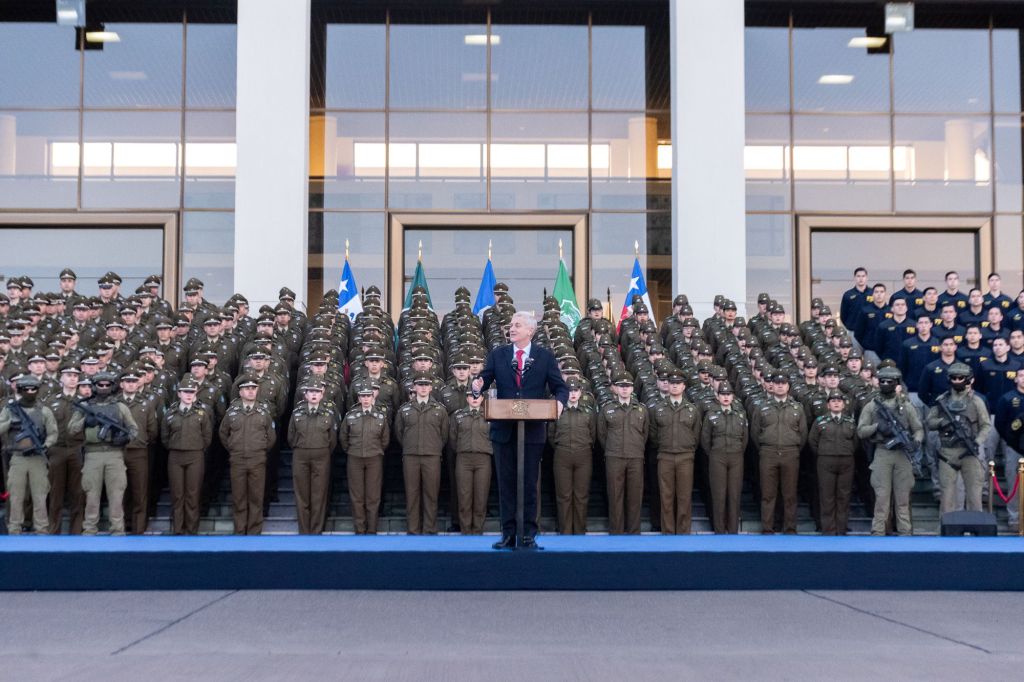
So far, we have focused on generating the capabilities we believe we need, but this has not been done under the guidance of a strategy, which may well exist, but if it does, it is not public.
On Wednesday, August 5, 2026, President José Antonio Kast announced on national television the presentation of the Agenda Against Organized Crime and Terrorism (ACOT), a fact that was formalized on Monday, August 10, 2026, when he signed along with some of his ministers the constitutional reform incorporated in the ACOT.
The ACOT is not the public security strategy; it is a list of legislative actions, all important, certainly, all aimed at enhancing the state’s capabilities in public security. This adds to the announcements made days earlier by Minister Arrau regarding the strengthening of Carabineros’ capabilities, a topic discussed in a column from a couple of weeks ago.
What we have seen so far in terms of public security from President Kast’s government is:
-A very firm presidential will in this matter, one that has been very clear in its support for Carabineros de Chile, PDI, and Gendarmería. The President appears comfortable acting and developing what was his main campaign concept. Without security, there is no freedom.
-Much management and pursuit of efficiency in the use of current police resources. Just look at how Martín Arrau is setting the pace for police work, a pace that the minister sets with his energy and long working hours. We are facing a 24/7 effort that has yet to show signs of waning and is producing results, not extraordinary, but results nonetheless.
-A plan to strengthen Carabineros de Chile, which, while moving in the right direction, falls short of closing the gap of 18,000 Carabineros that we estimate are needed, and does not address placing all police officers on the streets, not touching palace guards, the Carabineros Orfeón, the Green Squad, protection of authorities, and others of that nature, as if Carabineros were to focus solely on preventive work, with the PDI on investigative tasks and whatever the Public Ministry requires.
-A legislative agenda, the ACOT, which seeks to provide the necessary legal capacities for anti-crime and anti-delinquency work to be more effective and efficient. That is, like the plan to strengthen Carabineros, it aims to generate or improve capacities and resources.
-The absence of a public security strategy, one that indicates what is to be done and how to do it, with objectives, goals, purposes, and means to be used. So far, we have focused on generating the capabilities we believe we need, but this has not been done under the guidance of a strategy, which may well exist, but if it does, it is not public. Following Quiroz’s example may be a good idea. From the beginning, he outlined the objectives to be achieved.
-Related to the above, it is difficult to understand the need to use the Armed Forces to support public security efforts. As we are unaware of the objectives and the strategy, the reasons for their possible use are not clear, a matter that is even harder to understand considering the existing budgetary constraints and the limited availability of personnel. There are not enough soldiers and marines available for the efforts discussed in the press, especially considering that they are not originally designed for public security, except when the law allows it in states of exception, that is, under exceptional contexts, and in an exceptional manner. Everything indicates that their possible use could be carried out by Carabineros if they had the necessary numbers and capabilities like those of GOPE that they already possess.
-To maintain, refine, and make more effective and efficient the successful efforts being made at the northern and northeastern borders, as well as in the Southern Macrozone.
-To activate the Intelligence System created by the new Intelligence Law, with the challenge being to allocate the necessary resources and to interconnect the heart of the system, the National Intelligence Agency (ANI), with its main and cooperating parts. Without intelligence, we are nothing, nothing. And without intelligence, we will not succeed in reducing insecurity.
–Legislative initiatives related to pardons for those imprisoned for their actions during the so-called outbreak or in ’73 are not supported. The effectiveness of the police or the State of Chile could be diminished if those on the front lines do not see concrete actions in this matter beyond the support that President Kast and his government continuously express to them in public.
In summary, we are on the right track, with strong leadership from Martín Arrau, good intentions from the government, significant work from Carabineros, the PDI, and Gendarmería, but it is time to have a strategy with goals and objectives, clarity on the necessary resources, and how they will be used. Requesting military support without having the above is not advisable. We must always be clear about the purpose and what we seek to achieve.
RICHARD KOUYOUMDJIAN
Vice President AthenaLab