COMMENTARY | The Enthronement of Xi Jinping
This article was translated automatically and may contain differences from the original. For reference, read the original.
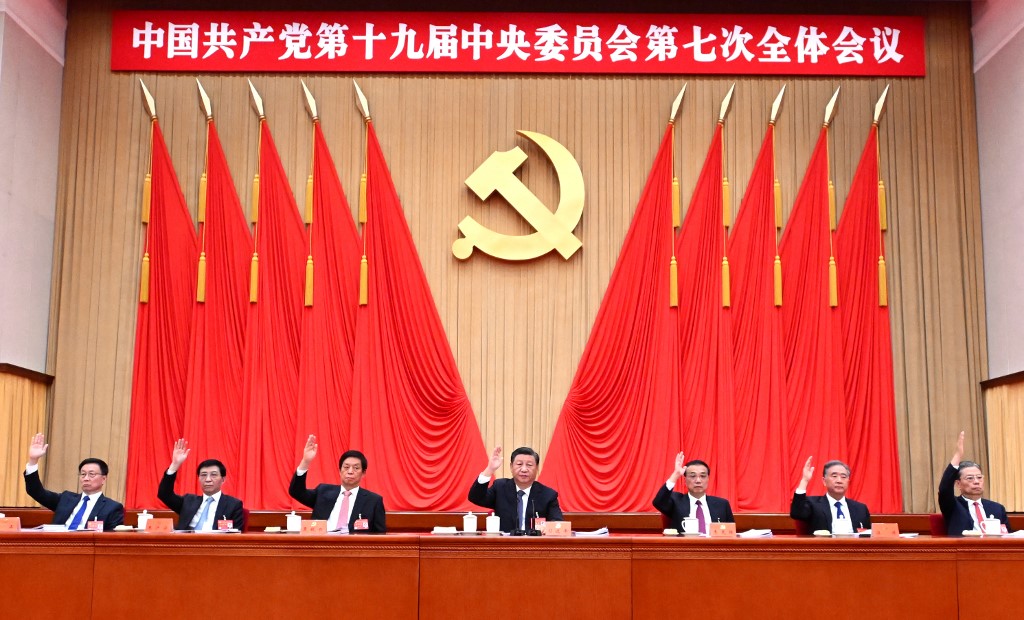
Next Sunday, nearly 2,300 delegates of the Communist Party of China (CPC) will gather in the vast halls of the Great Hall of the People in Beijing for a crucial week-long meeting. The XX Congress will determine the new design of the leadership of the ruling collective, which is expected to continue to be headed by the all-powerful Xi Jinping, who is thus projected toward a third term and much beyond.
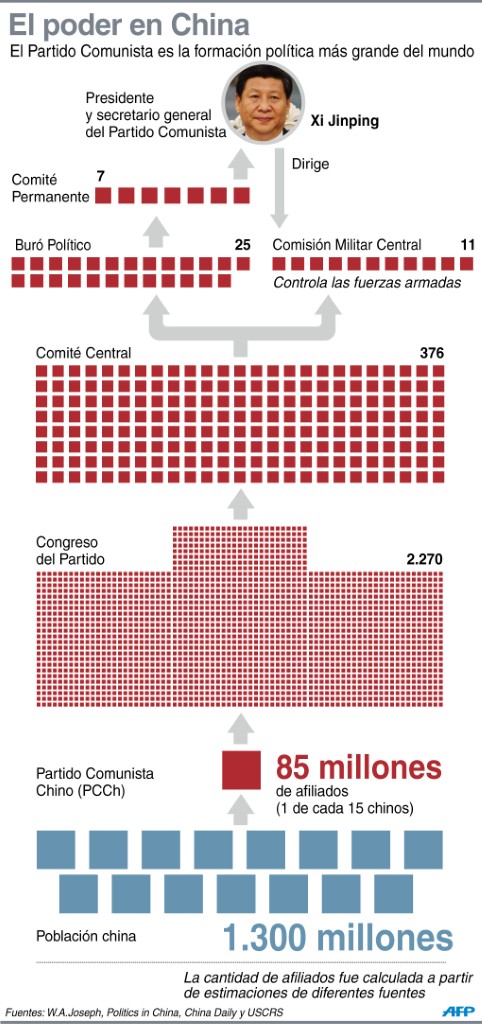
The meeting of the delegates of the world’s largest political party, with over 85 million members, is fundamental for electing the 25 representatives of the Politburo, which in turn selects the seven-member Standing Committee.
Following the excessive accumulation of power under Mao Zedong, who ruled from 1949 to 1976, the collective opted for a more collegial leadership style to prevent a single leader from dragging the entire country with their decisions. Since Deng Xiaoping left power in 1993, the highest Chinese leaders have held the position of General Secretary of the CPC for five years, with the option of being re-elected only once, giving rise to the decades of the engineers, exemplified by Jiang Zemin and Hu Jintao.
The idea of two consecutive terms as a limit, along with the retirement age limit of 67 years for officials, also ensured leadership renewal and a career completion horizon for senior cadres.
However, following a reform introduced in 2018, Xi can aspire to a third term and as many terms as he wishes at the age of 69, thus establishing himself as the most powerful leader since Mao. In addition to being the top party leader, the current Chinese leader is the president of the country, head of the Central Military Commission, and president of the National Security Council, and his thoughts have constitutional status.
It is very important to understand the role of the Communist Party in China, as it is above the nation as its driving force, and is considered key for a country that is undergoing transformation. Initially, its legitimacy at the macro level stemmed from its portrayal as the victor over the Japanese in World War II (a debatable version due to the role of nationalist troops) and as the unifier of the country after the “Century of Humiliation”; today, it derives from having lifted China from underdevelopment to a path of development. Therefore, at the micro level, it is now essential for managing the social changes that this entails. Xi, like his predecessors, is considered the “core” of the CPC.
As there will be no major novelty regarding the supreme leader, the attention of the conclave will be focused on the position of prime minister, as the current one, Li Keqiang, has announced his retirement. The person holding this position directs the country’s economic course, especially at a time when it has slowed down due to disruptions caused by the COVID-19 pandemic and the aggression of Russia against Ukraine.
Another position that could also yield novelties is that of Minister of Foreign Affairs, currently held by Wang Yi, who is 69 years old. Whether he continues or is replaced, the new appointee will face a very complex international moment, where Russia—its main ally—is waging a war of uncertain future that has only served to unite the West; where China’s global image seems to be sinking despite all efforts[1], and where the Belt and Road Initiative is beginning to consolidate with mixed results.
However, beyond all the announcements that may be made at the congress on Sunday, the so-called “Era of Xi” has been underway for a decade, and it is clear what it has meant so far:
1) Revitalization of the CPC
Xi’s goal was for the party to regain an ethical project character. To this end, he launched an anti-corruption campaign aimed at officials of all ranks (“tigers and flies”). There was a return to total centralization of power and an increase in control over society through technology and also the physical repression of dissenters. Ultimately, the leader’s thoughts became a source of doctrine.
2) Nationalism and Traditional Values
Xi promoted a revival of Confucian values to reinforce the concept of harmony and respect for authority internally. Externally, the national image was exacerbated through international organizations, businesses, and popular culture. Action films, such as “Wolf Warrior,” or donations of medical supplies during the pandemic sought to catapult China as a leader among less developed countries. The massive establishment of Confucius Institutes around the world to teach Mandarin and the promotion of Chinese studies programs in universities are also part of this axis.
3) “The Chinese Dream”
Since coming to power, Xi has focused on building what he calls “the Chinese Dream,” following the guidelines emanating from the XVIII National Congress of the CPC in November 2012, from which the government plans for the five-year periods emerge, although they are gradually adjusted as they are implemented.
“The Chinese Dream,” in simple terms, seeks to achieve a “modestly prosperous” society, without waste or luxury (US$ 20,000 per capita), where quality of life is obtained from good public services, given that coverage has already been achieved.
To materialize this desire, an ambitious reform plan was launched in 16 sectors, which included 60 chapters and 330 concrete measures. Additionally, two organizations were created: the National Security Council and the Office for Deepening Reforms.
The overall objective was to refine and develop the “socialist system with Chinese characteristics” and modernize the administration of the country. This entails having an economy less based on exports and more on domestic consumption, and expanding the service sector.
This also included a commitment to clean energy; relocating 100 million inhabitants; enhancing the configuration of 22 megacities connected by modern infrastructure; promoting the internationalization of local companies, and investing in cutting-edge technologies (artificial intelligence, robotics, wireless networks, and space technologies). Both the XVIII and XIX congresses of the CPC defined that more space should be given to the market, but without losing state oversight.
In this upcoming conclave, it is likely that the course of these reforms will be evaluated. After leading the world’s fastest industrialization process and achieving average growth rates of 10% per year, today the Chinese economy seeks an increase of around 6% per year, although only 5.5% is projected for 2022.
4) Fight and Win Wars
During Xi’s administration, it has become clear to the world that China is powerful and perhaps more than ever in its history. To protect the mercantile empire that now allows it to be the primary trading partner of over 130 countries, it has focused on building modern and powerful armed forces, more based on technology than on mass.
Its international positioning in a world it perceives as “multipolar” and “not suitable for hegemony” conceptualizes it as “peaceful development,” where “harmony” is achieved through gradual approaches that allow for shared prosperity, while avoiding direct conflict.
China today sees itself as a prosperous country, showcasing its military capabilities to the world while maintaining its distinctive values, but from a position of strength. This has been proven with the construction of bases in the South China Sea, in areas disputed by several countries, and with the expansion of the People’s Liberation Army Navy.
If those who argue that capabilities and behavior are not the same in military matters, the recent crisis in the Taiwan Strait, where China blocked the island it claims as its own by air and sea in retaliation for the visit of a high-ranking U.S. official, served to demonstrate that the modernization of the armed forces has borne fruit.
It is estimated that part of Xi’s legacy would be the annexation of the island; something that, according to senior U.S. officials, China’s military forces would be capable of achieving by 2027, just when the third term as General Secretary of the CPC is completed.
Regarding the United States, under the current Chinese leader, it has become clear that the goal is to end its military presence in Asia, currently based in South Korea and Japan. However, this strategic competition also extends to commercial, technological, and political spheres, where China aims to be seen as a peer, a position it is certainly reaching.
CONCLUSIONS
For all the above reasons, the conclave on Sunday is fundamental for the CPC and the world, which will witness the “enthronement” of a leader as strong as has not been seen in a long time and who is determined to stay with us for a long time. Even the President of the United States does not hold as much power today, as his decisions face checks and legal restrictions typical of democracies.
Latin America and Chile, in particular, must decide how to deal with an increasingly assertive China willing to exercise its power to defend national interests, especially when they encounter some form of opposition or complication. Increased political pressure arising from investments in strategic sectors of economies and trade dependencies, as well as the possible establishment of Chinese military assets in the region, should not be ruled out in this new period of the “Xi Era.” The role of the CPC in directing Chinese state-owned enterprises or its ability to align private ones with national objectives necessitates a better understanding of this collective, its members, and its functioning.
Finally, it is worth mentioning that the recent U.S. National Security Strategy[2] directly identifies and mentions China as the main global competitor, subtly criticizing the autocratic characteristics of the regime, respect for human rights, and the methods employed by the Chinese government to achieve global influence. The CPC meeting may also reveal some guidelines on how Beijing will approach this rivalry and what it will mean for the world.
Juan Pablo Toro
October 13, 2022
BIBLIOGRAPHY
“China” (2012), Henry Kissinger
“The Chinese Dream and the World” (2013), Huang Huaguang and Luan Jianzang
“Governance and Administration of China” (2014), Vol. 1, Xi Jinping
“Belt and Road” (2018), Bruno Macaes
“Destined for War” (2018), Graham T. Allison
“Dangerous Decade: Taiwan’s Security and Crisis Management” (2019), Brendan Taylor
“The Invention of China” (2020), Bill Hayton
“China and Latin America: Keys to the Future” (2021), Jorge Sadh, editor
“Relations between Chile and China” (2021), A. Bórquez, D. López, and F. Muñoz, editors
“Xi-na in the Century of the Dragon” (2021), Jorge Heine
“The Long Game: China’s Grand Strategy to Displace American Order” (2021), Rush Doshi
[1] Pew Research Center (September 2022), How Global Public Opinion of China Has Shifted in the Xi Era. Available at: https://www.pewresearch.org/global/2022/09/28/how-global-public-opinion-of-china-has-shifted-in-the-xi-era/
[2] U.S. National Security Strategy, October 2022. Available at: https://www.whitehouse.gov/wp-content/uploads/2022/10/Biden-Harris-Administrations-National-Security-Strategy-10.2022.pdf