KEYS | Strategic Plan of the Armed Forces of Peru 2034
This article was translated automatically and may contain differences from the original. For reference, read the original.
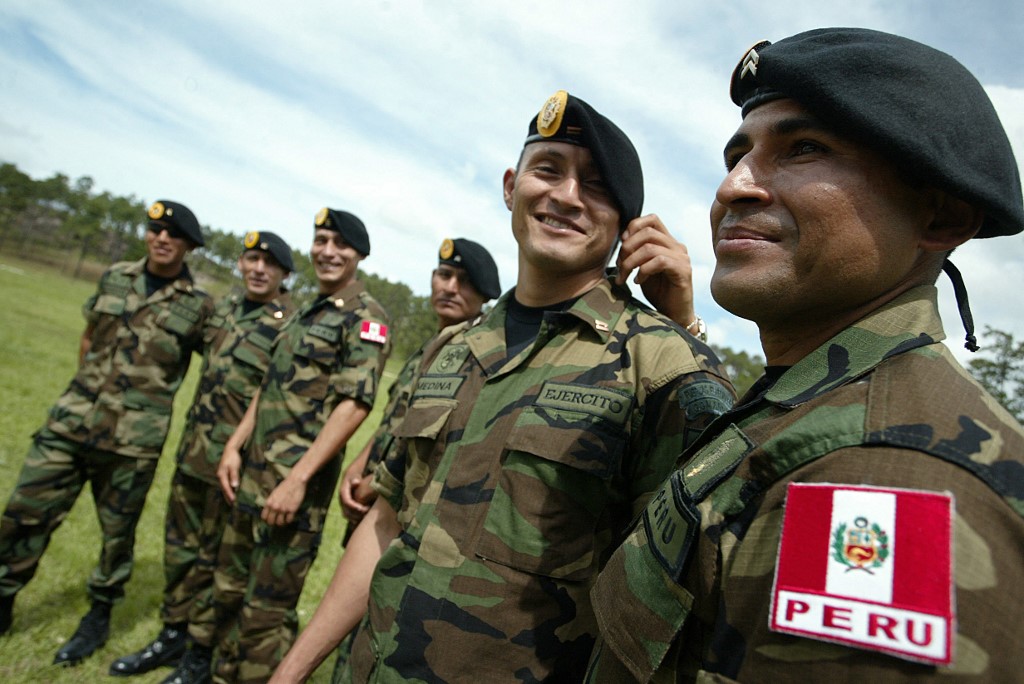
In recent days, the Peruvian government officially announced the approval of the strategic plan aimed at improving its military capabilities by 2034. Despite the sensitive nature of the topics that this document should include, which renders its content highly classified for security reasons, it is possible to draw some conclusions from the Supreme Resolution 073-2022-DE[1], published in the official newspaper of the neighboring country.
MILITARY POWER
In general terms, according to the Military Balance 2018, published by the International Institute for Strategic Studies (IISS), Peru would have an active force of 81,000 personnel, distributed as follows: Army 47,500, Navy 24,000, and 9,500 in the Air Force. Its main weapon systems can be summarized as follows:
- Army: More than 240 T-55 tanks (about one-third in storage), 96 AMX-13 tanks; 1,011 pieces of artillery of various types and calibers, most of which are towed, with over 30 multiple rocket launchers of 122mm (BM-21 and Type 90); and helicopters of various functions, primarily Russian Mi-17.
- Navy: 6 German class 209 submarines; 7 frigates; 6 corvettes; as well as a significant number of smaller vessels.
- Air Force: 20 Mig-29 in various versions; 12 Mirage 2000 in two versions; 18 Su-25 (various versions); 18 attack helicopters (16 Mi-25 and 2 Mi-35); in addition to training and transport aircraft and helicopters.
RECENT MILITARY ACQUISITIONS
Since the beginning of the 21st century, according to data obtained from the Stockholm International Peace Research Institute (SIPRI), Peru’s main military acquisitions have focused on portable air defense missiles (from China); 122mm Type 90 Multiple Rocket Launchers (27 from China); 16 MM-40 Exocet anti-ship missiles (France); 12 German torpedoes; diesel engines for its surface naval units and submarines; Spike anti-tank missiles in LR and ER versions (Israel) and Kornet (Russia); 4 Lupo frigates from Italy (between 2005-2007); 2 Po Hang corvettes from South Korea (2016 and 2021); 2 Mi-35 attack helicopters (Russia); along with a significant number of smaller aircraft and helicopters for combating drug trafficking.
OPERATIONAL SITUATION
Considering the recent “Latin American Defense Yearbook 2022,” published by the Edefa Group, the Peruvian Armed Forces are facing a complex operational situation, resulting from the gradual decrease in budgets over the years and an aging military arsenal, which has led to significant deterioration and a consequent loss of operational capabilities. This is almost a common trend for armed institutions in the region; budgets have not increased, but tasks and responsibilities have. For example, the situation of the Air Force’s combat aircraft is highlighted, noting that the Mig-29s (in various versions) are in reserve, while the Su-25 aircraft are undergoing major maintenance inspections.
CAPACITY FUNDING
An important aspect to highlight is Law 28.455, which establishes the fund for the Armed Forces and the National Police. This legal framework creates a permanent source of funding for National Defense, derived from a percentage “of the royalties received by the National Government” from lots 88 and 56 of Camisea (an important natural gas exploitation field), as well as from any generated interests and other revenues available to the executive branch. These revenues are distributed 25% to each branch of Defense, along with 25% for the National Police. The designated uses for these resources are: acquisition of equipment aimed at modernizing the forces; upgrading and technological renewal of operational systems; repair and maintenance of various platforms. However, the global economic outlook is not positive, so the final outcome of the resources that the Peruvian government will ultimately have and the viability of the plan will need to be evaluated and weighed over time.
POLITICAL SITUATION
The current president of Peru, Pedro Castillo, took office in July 2021. Since assuming control of the government, the head of state has been immersed in a series of problems and crises of various kinds, making it almost impossible to govern and implement his program. Additionally, there is a difficult internal security situation, which has even led the government to deploy the Armed Forces for public order tasks in support of the National Police, something that President Castillo likely never imagined before arriving at the Palacio Pizarro. Despite the scenario of political instability, along with other phenomena affecting Peru—and also other states in the region—such as the economic crisis, irregular immigration, organized crime, and terrorist violence in the VRAEM (Valley of the Apurímac, Ene, and Mantaro Rivers), the country has been able to think strategically and project an essential function such as Defense in the long term.
STRATEGIC PLAN
As mentioned at the outset, this plan is classified, so there is limited knowledge of its content. However, some points can be highlighted. First, the plan underwent various stages, emphasizing the control and evaluation phase conducted by the National Security and Defense Council of Peru, culminating in its final approval by the president, which indicates the existence of a national security architecture that supports the work of the Executive Power. Second, the plan has a time horizon extending to 2034, meaning it will far exceed the current government, becoming a state policy. The administration falls under the Ministry of National Defense, through the Joint Command of the Armed Forces, which means that investments will be controlled by political power. Fourth, the objective of the plan responds to the need to improve the operational capabilities of the armed forces, addressing the requirements expressed by the Defense institutions, based on the tasks assigned by the state, where technical response must prevail.
REGIONAL IMPACT
When more information is available, this initiative should be evaluated not only in terms of its benefits for the recovery and development of the capabilities of the Peruvian armed forces but also in how it affects the strategic balance of the region. The recovery and incorporation of weapon systems—with the necessary doctrinal, educational, training, and cultural adjustments—will likely impact security dynamics at the South American level in the medium and long term, considering that Peru shares borders with five countries.
CONCLUSIONS
- Together with the financing law that creates the fund for the Armed Forces and the National Police, this initiative calls for reflection on the need for relatively stable funding to ensure the operational capability and availability of military forces. This is considering that, over time, the number of tasks that the armed forces have had to assume has increased, while their budgets have not.
- This contrasts with what has occurred in Chile, as there was a similar source of funding (all indications suggest that the Chilean case was analyzed by Peruvians as a reference), which was repealed and replaced by a methodology that does not necessarily ensure long-term funding, as required by the programs needed by the armed forces.
- Regardless of the structure and scope of the plan, it will have a direct positive effect on the strategic capabilities of the Peruvian armed forces, whether by recovering systems or incorporating new platforms.
- This will impact the strategic balance at the regional level and, particularly, for Chile, which will require monitoring and evaluation with a forward-looking perspective. In this context, the use of practices such as comprehensive balance constitutes a truly useful tool, reinforcing what was stated in AthenaLab’s document No. 19 on “Net Assessment”[2].
- In any case, thinking strategically helps countries, as it allows for long-term visualization, defining priorities, especially when resources are limited and must be maximized.
- Peru demonstrates that having a security architecture provides tools to political power in its role of directing national security and defense, offering a framework upon which to promote national policies and strategies, as AthenaLab outlined in its document No. 18 “The Security of the State of Chile”[3].
- Finally, it should be emphasized that, regardless of internal political upheavals, the functions of security and defense must be treated as state policies, at the highest level of national leadership, supported by a modern architecture, transcending successive governments and being assumed as long-term strategic tasks, always inspired by the greater good of the Nation and guided by national interests.
Marcelo Masalleras, researcher at AthenaLab
October 18, 2022
[1] Diario El Peruano. Formalize the “Strategic Plan to Improve the Joint Military Capabilities of the Armed Forces by 2034.” Supreme Resolution No. 073-2022-DE. Available at https://busquedas.elperuano.pe/normaslegales/formalizan-el-plan-estrategico-para-mejorar-las-capacidades-resolucion-suprema-n-073-2022-de-2115442-2/
[2] AthenaLab (October 2022). Document No. 19 | Net Assessment: A Tool for National Defense, a Topic Regarding Power. Available at: https://www.athenalab.org/documento-no19-net-assessment-herramienta-para-la-defensa-nacional-un-tema-respecto-del-poder/
[3] AthenaLab (August 2022). Working Document No. 18 | The Security of the State of Chile. Available at: https://www.athenalab.org/documento-de-trabajo-no18-la-seguridad-del-estado-de-chile/