ANALYSIS | Japan's new security strategy is about defense, not offense
This article was translated automatically and may contain differences from the original. For reference, read the original.
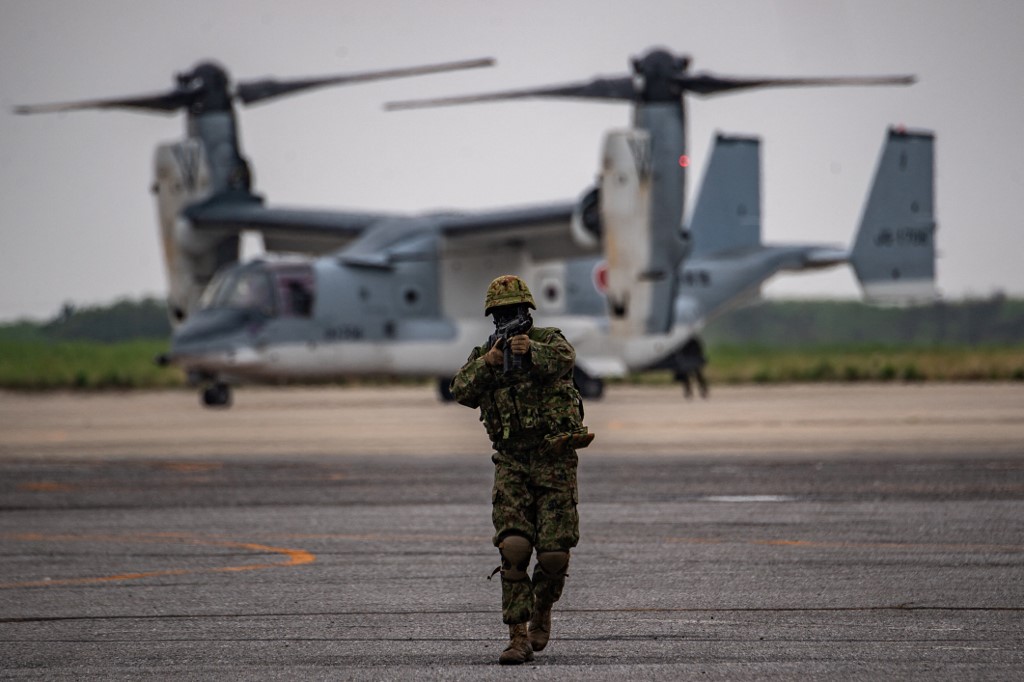
Last week, Japan unveiled its most significant shift in security policy and defense spending since the post-war era.
Three new documents were established to redefine the country’s strategy, the requirements of a new posture, and the planning priorities for acquisitions over the next decade. In revealing them, Prime Minister Fumio Kishida made it clear that the premise of the documents is an acknowledgment that the international order is currently facing significant challenges.
From Europe to the Indo-Pacific region, state actions threaten to undermine the rule of law to its core.
Russia’s war against Ukraine violates fundamental sovereign territorial rights. Military coercion and systematic interference from China have raised the specter of the use of force in other unresolved disputes. As Japan’s new strategy points out, the actions of these two permanent members of the UN Security Council are fundamentally changing the context of Tokyo’s approach to national security.
Many headlines have focused on Tokyo’s ambition to double its defense budget to 2% of GDP, suggesting that this may not align with the country’s constitutional commitment to renounce war as a means of resolving international disputes. Some observers specifically see Tokyo’s decision to prioritize counterstrike capabilities aimed at degrading an opponent’s ability to launch multiple waves of missiles against Japan as particularly problematic in constitutional terms.
These perceptions, however, reflect a misunderstanding of the Constitution, conflating the nature of security policy with the means to achieve it.
In Japan, the “potential for war” is beyond the scope of national defense. This leaves the current government with the task of clarifying how capabilities relate to this notion. Furthermore, while the budget increase is notable, it does not equate to a doubling of defense spending, as it includes the recapitalization of budget items that were previously categorized elsewhere, such as the Japan Coast Guard.
Crucially, the selective focus on money and missiles distracts from three crucial developments reflected in the new documents.
First, they reflect a worldview based on realpolitik. The military, political, and economic competition for the survival, if not the reaffirmation, of authoritarian regimes such as those in Moscow, Beijing, and Pyongyang is defining international politics. This demands a comprehensive response in which the configuration of future economic prosperity and the guarantee of a stable military balance are two sides of the same coin. Consequently, Japan’s new strategy prioritizes the integration of diplomacy, economics, and military power. It recognizes military strength as a governance tool capable of producing effects alongside foreign aid and economic connectivity projects.
In this sense, the new strategy represents the culmination of the late Prime Minister Shinzo Abe’s doctrine of establishing a proactive Japan; it would consolidate this legacy by formalizing the commitment to defense in promoting prosperity in a contested world.
This leads to a second important development. In a world of realpolitik of war and coercion where the boundaries between offense and defense have blurred and societies are considered potential targets, the center of gravity of a defense-oriented policy must shift.
For the first time, a Japanese defense strategy document has introduced the notion of flexible deterrence operations as the first line of defense. Whether to protect offshore islands, prevent confrontations in the Taiwan Strait, or stop missile attacks from the Korean Peninsula, Japan’s defense posture aims to increase the costs of considering any such actions.
This is why the transformation of Japan’s military command structure with the establishment of a permanent joint headquarters represents a crucial step in enhancing the country’s defense command capabilities. Along with promoting greater air and maritime integration, both among different Japanese agencies and with the U.S. military, Tokyo is translating existing efforts into stronger intelligence, surveillance, and reconnaissance capabilities and an improved capacity for integrated target selection.
When combined with counterstrike plans for specific areas such as missile and cyber capabilities, Japan’s options will make it more difficult for opponents to use coercion. This points to a third development. Closer military collaboration between the U.S. and Japan is likely to facilitate the consolidation of existing trends in cooperation with partners such as Australia, India, the United Kingdom, France, and NATO.
On one hand, Japan will continue to foster collective action among ad hoc “minilateral” groupings, as well as institutionalized forums like the G7, to promote initiatives for prosperity, economic resilience, and cybersecurity and maritime security. On the other hand, beyond collaboration with Washington, Japan’s new strategies indicate a desire to seek operational cooperation and industrial opportunities to strengthen national resilience, support collective deterrence efforts, and favor defense exports to support its partners.
Reciprocal defense access agreements with Australia and the United Kingdom are paving the way for more substantive training and operations. Agreements such as the Global Combat Air Program with the United Kingdom and Italy announced this month for the joint development of a next-generation combat aircraft mark Tokyo’s entry into cooperative development of significant military capabilities.
It remains to be seen how the Japanese government will fund this strategic shift, as tax increases remain controversial. However, there is no doubt that Japan’s new security documents serve as a powerful reminder that in today’s contested world, the business of national security requires that the first line of defense becomes a collective effort brought closer to where the opponent is.
Alessio Patalano
Professor of War and Strategy in East Asia at King’s College London and visiting fellow at the Royal United Services Institute.
December 22, 2022
*Originally published on the Asia Nikkei site and reproduced with the author’s permission.
** The comments and opinions expressed in this document represent the views of the authors, not necessarily those of the institution.