COMMENTARY | Security and Defense Policy of Colombia: Progress, but with Many Implications
This article was translated automatically and may contain differences from the original. For reference, read the original.
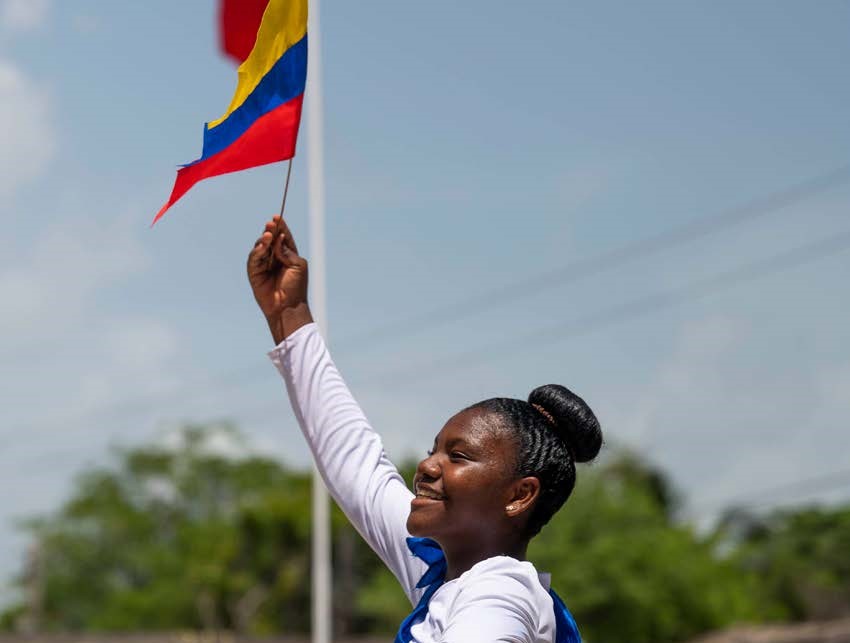
Colombian President Gustavo Petro launched this week his “Security, Defense, and Citizen Coexistence Policy” (PSDCC)[1], the first document of its kind produced by a leftist government in that country, which aims as a priority the “protection of life.”
At first glance, it is evident that this document merits recognition for compiling many of the well-known diagnoses regarding the roots of violence in Colombia and then defining strategies to achieve them based on four basic objectives.
Conceptually, Petro’s government had already embraced the idea of human security, which relates to the integrity of individuals and many factors associated with their well-being; however, this will always be difficult to implement. This explains why the PSDCC, at times, emphasizes aspects of development and justice that are not typically associated with the Ministry of Defense.
For the current administration, the internal conflict has undergone a “mutation” due to the failed implementation of the peace process with the Revolutionary Armed Forces of Colombia (FARC), where the state did not occupy the spaces left by that guerrilla group and following the demobilization of the paramilitaries of the United Self-Defense Forces of Colombia (AUC).
ILLEGAL ECONOMIES. The text states that “illegal economies,” such as drug trafficking, illegal mining, fuel theft, timber trafficking, and extortion, fuel the various forms of violence that are resurging in the country, threatening to reverse the progress achieved by both military and police forces as well as peace negotiators in recent years.
While President Álvaro Uribe (2002-2010) referred to illegal groups lacking any ideology as Emerging Bands and Criminal Bands (Bacrim), and Juan Manuel Santos (2010-2018) classified them as Organized Armed Groups (GAO), a term maintained by Iván Duque (2018-2022), Petro’s policy refers to them as “multicrime groups” to indicate that they engage in various criminal activities.
The PSDCC focuses on four objectives:
1. To provide conditions of security and protection for life, personal integrity, and property, with special emphasis on territories contested by criminal organizations.
2. To contain deforestation and contribute to the protection and preservation of biodiversity and water resources.
3. To safeguard territorial integrity, sovereignty, national independence, and constitutional order.
4. To strengthen the Public Force in its human talent, legitimacy, and capabilities to support the transformation of territories.
In other words, military and police forces should focus on protecting people and then targeting multicrime groups, which have a significant capacity for recycling. This represents a different approach from that taken by Uribe, Santos in his first term, and Duque, who maintained an offensive against guerrillas, where their weakening only resulted in increased security for citizens.
Given that “illegal economies” are now the center of gravity, there is a strong emphasis on dismantling them through the interdiction of illegal products, destruction of criminal infrastructure, and immobilization of illicit assets, with particular interest in money laundering.
DRUG TRAFFICKING. Of course, there is a special mention of drug trafficking, where Colombia is currently experiencing record levels, with over 200,000 hectares planted with coca and an estimated production of 1,400 tons of cocaine. This is the result of increased productivity in the production of the alkaloid, the multiplication of gangs dedicated to the business, and, although the text does not state it, the fact that during the previous peace process with the FARC, eradication efforts slowed in areas with rebel presence.
The PSDCC emphasizes the need to lift farmers out of poverty—which drives them to plant illicit crops as a means of subsistence—more than capturing the leaders of criminal groups, assuming that fundamentally there is a development problem. Therefore, voluntary eradication with community agreements is validated as a tool, but without ruling out forced actions.
TOTAL PEACE. Perhaps one of the greatest complexities arises from the fact that this policy is intended to be implemented alongside the so-called “Total Peace,” an initiative through which Petro seeks a negotiated solution with armed groups, but based on territorial foundations, so that efforts are sustainable over time and do not lead to the recycling of gangs.
The government is currently seeking to resume dialogue with the National Liberation Army (ELN), some dissidents of the FARC, and the Gulf Clan (now self-styled as the Gaitanista Self-Defense Forces of Colombia), but none of these groups have shown sincere interest in “Total Peace.” The ELN, a binational guerrilla group based in Colombia and Venezuela, through its leader, Antonio García, has stated that Petro is not leftist and has never been revolutionary, among other things.
DEFENSE. In the specific field of Defense, the PSDCC identifies the need to recover capabilities in light of the obsolescence of some equipment and advocates for continuing programs to replace the Air Force’s “strategic fleet” (the successor fighters to the Kfir) and to build new “integrated surface platforms” for the Navy (four frigates based on Damen’s Sigma 10514 model).
It also asserts that it is necessary to review the promotion system within the forces, all amid the retirement of 100 officers, including generals and colonels, since Petro took office last August. Additionally, it proposes advancing the elimination of mandatory military service.
INTERNATIONAL COOPERATION. In terms of cooperation, the aim remains to deepen ties with the North Atlantic Treaty Organization, the United Nations, and the Organization of American States. The United States is not directly mentioned, a country that has played a central role in Colombia’s security since 2000 with an investment of about $10 billion in training, intelligence, and equipment.
NEW STRUCTURE. The PSDCC proposes the creation of a “Coordination System for the Dismantling of Multicrime,” where police, prosecutors, financial entities, customs, and courts converge, but it does not specify which entity will be in charge. Overall, the document highlights the need for an inter-agency approach among civilians, police, and military.
DIALOGUE AND MORE DIALOGUE. While the participatory origin of the PSDCC is emphasized at all times, the element of “citizen coexistence” that completes the name of the policy is also highlighted, which is considered essential to legitimize state action. It is true that dialogue has been lacking in Colombia’s history, but opening it at the local level means initiating lengthy processes with communities that urgently need security solutions and guidance in many cases. Although the country has a semi-federal structure, security continues to be applied nationally, given the existence of a single police force, for example.
CONCLUSIONS
The PSDCC is a contribution as a document because it articulates a vision and identifies that “security is a political issue,” while attempting to address it. It has few basic objectives, but they are clear. It also recognizes the significant recycling capacity of armed groups and the need to occupy the spaces they leave when they lay down their arms; this is a way to avoid repeating the mistakes of Santos, who even predicted that it would be easier to combat drug trafficking without the FARC in a state of war.
However, the excessive emphasis on community dialogue and the resolution of structural development problems goes far beyond what a security and defense policy can aspire to. And therein lies the greatest problem arising from the human security approach.
When the country is awash in coca, a much more radical action will be needed to combat drug trafficking. This year, for example, the Police stated that its goal for eradicating illicit crops was 20,000 hectares, a 60% reduction from the target of 2022 (50,000), which was not met.
Moreover, achieving “Total Peace” is an aspiration and cannot be a condition, as its success is not guaranteed. The recovery of territorial control by the state must occur with or without dialogue with armed groups.
In terms of Defense, it is clear that the Air Force and Navy urgently need to replace their capabilities. However, just as certainty in resources is needed for this, the military forces also require trust and conviction regarding the political will to continue their efforts to regain security; a drive that in the past allowed for a reduction in violence and coca cultivation to historic levels. Highlighting the numerous times the issue of trust that military and police forces face among the citizenry is addressed, the PSDCC seems to take this into account and even shares concerns about the main actors responsible for its implementation.
Juan Pablo Toro V, Executive Director of AthenaLab
April 28, 2023
[1] “Security, Defense, and Citizen Coexistence Policy” of the Ministry of Defense of Colombia, available at: https://www.mindefensa.gov.co/irj/go/km/docs/pccshrcontent/Recursos%20MDN/Plantillas%20Documentos/Ministerio/CentroDocumentos/PoliticasSectoriales/PoliticaDefensaSeguridad/Recursos/PDS_2023_web.pdf