Clearing Myths About War
This article was translated automatically and may contain differences from the original. For reference, read the original.
Over the past few decades, ideas in the realm of international security, defense, and safety have evolved into pseudo “truths,” despite lacking substantial grounding. Assertions that labeled “conventional war” as obsolete, assumed that conflicts would be short, or believed that precision weapons would allow battles with minimal casualties are some examples. Based on what is occurring in Ukraine and other experiences, the accumulated myths from the last thirty or forty years of armed conflicts will be clarified.
MYTH NO. 1: Traditional war is virtually impossible (especially in regions like Europe)
The liberal current in international relations gained prominence since the late 20th century, thanks to the institutions and legal rules that were imposed in the international system. This led to the mistaken belief that war would be almost impossible, especially in developed areas like Europe. The weight of trade relations and energy interdependence would deter any potential conflict due to the associated economic costs. However, what happened in 2014 and more clearly from February 24, 2022, in Ukraine, demonstrates that cooperation disappears when vital national interests are at stake and, at the same time, there is the strength and determination to realize them. This was the case of Russia regarding Ukraine. War remains and will be a reality in the international system and a method—the most violent and destructive—for resolving disputes between states.
MYTH NO. 2: Ukraine will fall in a few days or weeks due to Russia’s superiority
Before the large-scale invasion, detected and reported by the United States and its allies, forecasts about the outcome of the war in Ukraine were predominantly favorable to Moscow. Not only that, but a relatively quick development, lasting a few days or weeks, was also anticipated. Reality told a different story.
On one hand, the will of the Ukrainian people and the performance of their armed forces were far superior to expectations, thanks to their ability to adapt quickly and appropriately to the challenges posed by Moscow’s troops. Similarly, it is estimated that Russian operational capabilities were overestimated, both in the integrated use of their ground units, air assets, communications, and electronic warfare. This was compounded by the erroneous impressions created by the displays of sophisticated weapon systems showcased in parades in Moscow’s Red Square. The Russian armed forces were not as technologically advanced; their cohesion and lack of experience in scaling operations were evident, as was the lack of a professional non-commissioned officer corps.
However, in the first year and a half of war, Russia and its military resources have been able to gather experiences and adapt their methods to the current scenario. The construction of extensive organized and fortified defensive positions, changes in command and control structures, and modifications in unit organization are just a few examples. This has resulted in a significant setback for the announced Ukrainian counteroffensive of 2023, which has not achieved the expected advances, although it is still ongoing.
MYTH NO. 3: Conventional wars will be short; precision weapons will reduce mortality in operations; strategic logistical and industrial preparations are overestimated
The experiences gained from conflicts fought in recent decades, such as those in the Falklands/Malvinas in 1982, the Persian Gulf in 1991, and the confrontations between Israel and its neighbors over the last 30 years, led to hasty conclusions about the duration of wars, how they develop, and the associated mortality.
All of the above impacted the preparedness of major Western powers for potential armed conflicts, which relied on the availability of sophisticated arsenals, albeit in relatively small numbers, as there was no perceived need to deploy large battle units on the ground. Worse still, the industrial bases that previously supported defense in strategic areas, such as ammunition manufacturing, were modified. To the point that it was only deemed necessary to generate sufficient stocks for training and a few days of operations, but not to sustain high-intensity operations. In this regard, it can be noted that while in 1993 there were 75 defense companies in the United States, by 2023 this number had reduced to 5 major companies.[1]
What has occurred since February 2022 has been a true wake-up call for the Western military industry regarding the ambitious task of logistically supporting Ukraine’s war effort. The countries of the North Atlantic Treaty Organization (NATO), which are involved in supplying military aid to Ukraine, have encountered serious problems in maintaining a secure and constant flow of ammunition, given the limited existing capacities—relative to the actual demand of the war—and the obligation to maintain minimum stocks to address contingencies in other potential theaters of operations.
On the other hand, the number of casualties in the current war could reach 500,000 soldiers, including the wounded and dead, according to a recent article in The New York Times.[2] The indiscriminate use of all types of ammunition by Russia against civilian targets, without adhering to minimum norms in the conduct of war, as well as the widespread use of conventional artillery by both sides throughout the conflict—and not the use of high-cost precision ammunition that is difficult to replenish—have contributed to generating massive casualties. The duration of operations, which have now accumulated more than eighteen uninterrupted months, undermines the idea of a short war. Apparently, when states with similar capabilities face each other or are matched through external support from third parties, where it becomes complex to generate significant operational differences, the stagnation of operations and the consequent attrition become a reality, where the future of the war will depend on the capacity for resilience and replenishment of capabilities and, above all, the will to fight.
MYTH NO. 4: In modern war, technology makes a decisive difference
It has been asserted that traditional weapons such as infantry, artillery, and armored vehicles have lost relevance compared to the importance of small special forces units or air power, as well as that “cyber” has become the new way of waging war.
First, it must be stated that, as in ancient times and throughout history, weapons and technological ingenuity have been of great importance; however, they cannot replace the centrality of the human factor. It is always people who operate the systems, and having a well-trained professional corps will always yield better results than one that is not. Second, while weapons are fundamental, they do not surpass the importance of moral strength and the will to fight, as demonstrated by the Ukrainian people and armed forces.
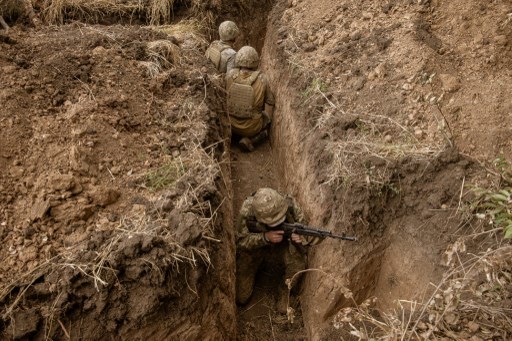
What distinguishes the ongoing operations are attacks and infiltrations by small Ukrainian infantry units into Russian defense lines; continuous and permanent use of conventional artillery by both sides (range, precision, and volume); employment of combat engineer units, which are very limited in number due to scarce availability; and armored assets in reserve waiting for an opportunity to exploit infantry success. In summary, nothing new.
The freedom of action that air power enjoyed in Western operations over the last 30 years is not a general reality. On the contrary, as observed in Ukraine, where both air forces have been largely neutralized, it has meant that ground fires remain the most relevant support bases. In other words, if there are not sufficient means to generate large-scale and sustained air operations integrated with other domains of the battlefield, air power is restricted, and only a few states are capable of exploiting it with full freedom of action.
The cyber domain is a separate case. While there were high expectations regarding the capabilities of cyber weapons, particularly those of Russia, for now, they have acted more as enhancers of other domains of war rather than as the predominant factor, as was assumed.
In the last year and a half, while some sophisticated weapon systems have been deployed, the truth is that most equipment has been conventional. It seems that only a small handful of countries—even with limitations—are capable of deploying precision weapon arsenals and other advancements in quantity and time. The rest, the vast majority of states, must focus on determining a prudent, convenient, and economically feasible balance between technology and conventional means.
MYTH NO. 5: A war on the other side of the world does not affect us; it is not our problem
The economic, energy, and political effects of the war in Ukraine have made it clear that what happens on the other side of the world affects all countries. While globalization has provided opportunities for economic, financial, and communication integration, it has also created new dependencies. Supply chains are closely interconnected, and commodity prices are very sensitive to geopolitical events, especially in the case of oil and gas. The economic sanctions imposed on Russia and Moscow’s embargo on Ukrainian grain exports, among other measures, have affected the economies of countries in Africa, America, Asia, and Oceania, despite the distance separating them from the war.
FINAL CONSIDERATIONS
- The fog surrounding the war and the rapid evolution of operations necessitate the need to take a step back and not rush to draw easy, much less absolute conclusions. This is especially true when it comes to its implications for states and armed forces.
- While the character of war may change, given the context and a particular development, its ultimate nature remains unchanged over time: it is a violent clash of wills.
- Technology is extremely relevant, especially for those states capable of being at the forefront of its development and possessing sufficient arsenals. But the rest of the countries that do not enjoy this condition must necessarily adapt to their national reality.
- Developing and maintaining a strategic industrial capacity that provides a certain minimum level of autonomy in sensitive areas, such as ammunition, has become a relevant factor.
- The human factor remains the primary element in armed struggle, whether because those who operate the technology are people or due to even more valuable elements such as moral strength, the will to fight, and cohesion to face great challenges.
- The duration of operations in a war has been and will continue to be determined, among other things, by the capabilities of the belligerents, the feasibility of sustaining the war effort, the attrition to which the conflicting parties are subjected, the will to fight of the nations, and the relevance of the interests at stake, much more than by predetermined models.
- Each state must define the type of force it will develop according to its strategic reality and the “truth” of its budget. While it is important to observe what happens in the rest of the world, it is more crucial to draw conclusions based on the specific characteristics of the countries, their culture, size, and environment.
- The assessment of the scenario, including the capabilities of opponents, is a fundamental task for states and their political and strategic leaders, in order to reduce the possibility of underestimating (Ukraine) or overvaluing (Russia) potential adversaries. The Net Assessment emerges as an alternative for conducting a continuous evaluation in this regard, as proposed by AthenaLab in working paper No. 19 (See at: http://www.athenalab.org/wp-content/uploads/2022/10/DT19-NET-ASSESSMENT.pdf)
Marcelo Masalleras, researcher at AthenaLab
September 14, 2023
Photo: France Presse
[1] John Barrett, “You go to war with the industrial base you have, not the industrial base you want”. War on the Rocks. Available at: https://warontherocks.com/2023/08/you-go-to-war-with-the-industrial-base-you-have-not-the-industrial-base-you-want/
[2] See at: https://www.nytimes.com/2023/08/18/us/politics/ukraine-russia-war-casualties.html#:~:text=A%20lack%20of%20rapid%20medical%20care%20has%20added%20to%20the%20toll.&text=The%20total%20number%20of%20Ukrainian,tries%20to%20seize%20more%20territory.