DT31 | The Illegal Arms Economy: The Other Illicit Business Challenging the State of Chile
This article was translated automatically and may contain differences from the original. For reference, read the original.
- by Pilar Lizana
- Research & Data
Tráfico de Armas
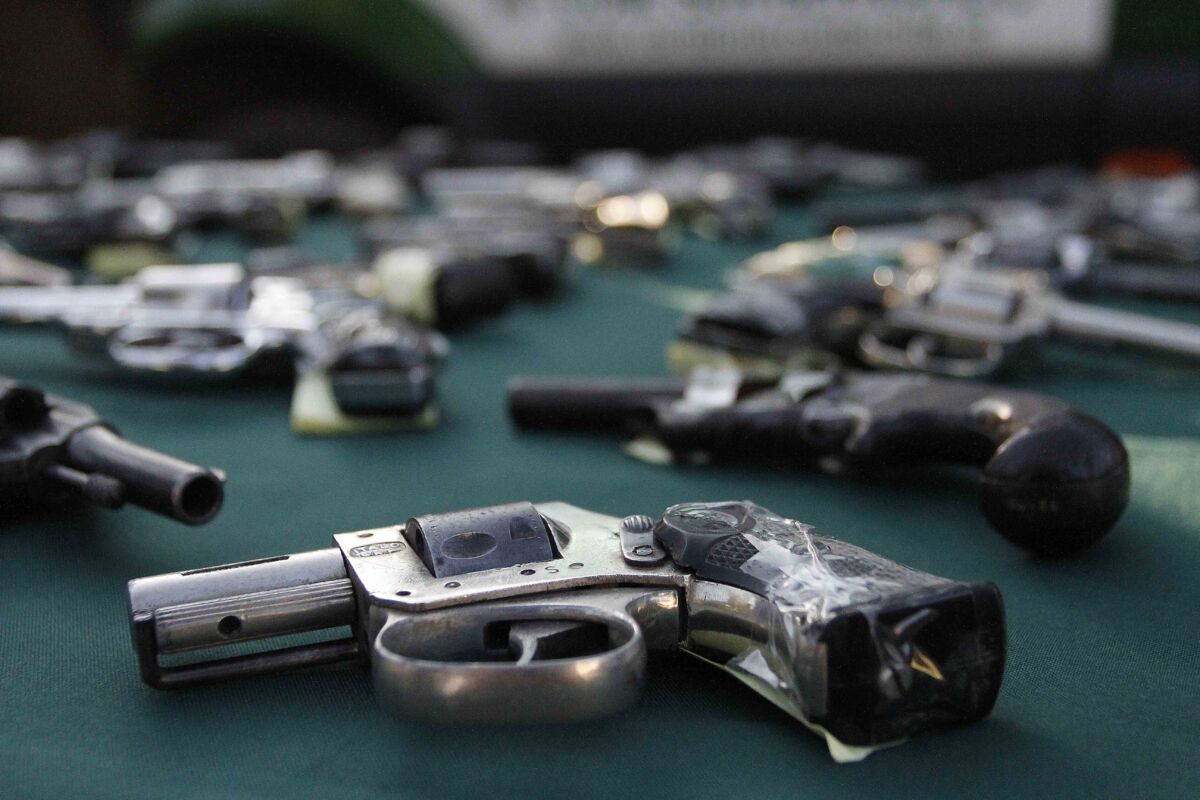
The violence stemming from the illicit use of firearms increases public fear due to the impact of each deadly confrontation between rival gangs. In this context, firearms serve both as a tool and a market. They are distributed through networks established by organizations to meet the criminal demand for them, which are even acquired on the dark web and paid for in cryptocurrencies.
Illegal firearms pose a significant challenge for states, which, depending on the level of crime penetration or surrounding conflict, must contend with markets of varying sizes. The institutional weakness exploited through corruption makes the state even more vulnerable to this illegal market, as it must not only deal with the networks generated by the illicit economy but also combat the violence resulting from the use of the acquired product.
Today, global flows connect virtually the entire world, and internal insecurity becomes a problem alongside organizations that satisfy the demand for firearms wherever it arises.
Important north-south routes integrate with other regions, defining a scenario of illicit arms trade in which Chile is embedded, driven by strong criminal activity from large internationally connected cartels.
Ports, airports, and land border crossings have gradually transformed into points of illegal firearm entry, which, once inside the country, connect with domestic routes that meet demand in the north, center, and south of Chile, seeking any diversion point to the black market to acquire them. This represents a variety of phenomena that collectively construct the criminal economy of arms, which exploits significant weaknesses in oversight and territorial control, as well as the knowledge and capabilities of the formal market.
Chile has legislation regulating the use of firearms, ammunition, and explosives. It is also part of international agreements on this matter; however, like other countries worldwide, the lack of registration, artisanal production, and illegal entry generate a large number of so-called “ghost” firearms, which require different resources to pursue.
In this context, it is worth questioning the role of “civilian firearms.” Recent policies regarding gun control and organized crime have proposed limiting civilian access to firearms; however, it has been observed that the phenomenon is much more complex than that. Such firearms represent one in six incidents associated with arms trafficking in the country. In Chile, there is less than one firearm per person, and phenomena such as artisanal production, modification, and illegal entry pose significant challenges for the state, as there exists a latent business opportunity where the high price paid in the black market appears as an attractive element.
In this context, it could be argued that public policies aimed at addressing civilian access to firearms are not adequately addressing the underlying problem, overlooking significant phenomena such as Chile’s role as a transit country for firearms seeking to reach larger criminal groups, or the illegal entry of such firearms.
What scenario does the country face regarding arms trafficking? Where are the vulnerabilities? What are the failures? What drives this illegal economy? These are some of the questions this study seeks to answer, which aims to review the illegal arms economy in Chile.
To this end, a descriptive investigation was developed based on global reports on arms trafficking, statistical data from various national institutions obtained through the Active Transparency process, institutional databases, and interviews with public sources associated with the pursuit and investigation of arms trafficking and the oversight of legal firearms, who requested anonymity. This allowed for positioning Chile within the global landscape of the illicit arms market, understanding the national reality and legislation, and identifying challenges in combating arms trafficking.
Finally, it is important to note that one of the limitations of the study relates to the difficulty of accessing information on illicit firearms and the fact that there is still no standardized record of illegal firearms in Chile, which may result in duplicated institutional information.
Additionally, it is relevant to highlight that global data on arms trafficking is not updated to the year 2023. In this regard, the 2020 Global Study on Arms Trafficking, published by the United Nations Office on Drugs and Crime (UNODC), was used, which is prepared based on responses to a questionnaire completed by countries participating in the UNODC’s illicit arms trafficking monitoring initiative. Currently, there is partial data for 2022; however, the global report that evidences the evolution of the illegal arms economy is the one published in 2020, which is based on information collected between 2016 and 2017. Additionally, there are other reports on firearm ownership that face the same limitation, as their most current information also corresponds to the year 2017. Other initiatives use open sources to collect events related to the use of firearms. While they are relevant for understanding a regional panorama, they do not achieve statistically comparable data with official figures.