DE7 | Japan: A Growing Strategic Actor in the Indo-Pacific; Opportunities for Chile
This article was translated automatically and may contain differences from the original. For reference, read the original.
- by Juan Pablo Toro
- Research & Data

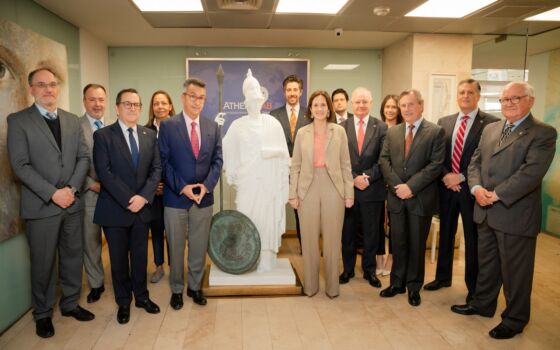
On the occasion of the visit of the Japan Maritime Self-Defense Force (JMSDF) Training Squadron to Valparaíso, AthenaLab and the Embassy of Japan in Chile held a seminar to explore new opportunities for cooperation in security and defense between the two countries.
The event titled “The Role of the JMSDF in Japan’s Strategic Posture” featured speakers including the Japanese Ambassador, Ito Takako; the commander of the Training Squadron, Rear Admiral Watanabe Hiroshi; the director of the Chilean Navy’s Strategic Studies Center, Vice Admiral (R) Jose Luis Fernández; and the executive director of AthenaLab, Juan Pablo Toro.
During the seminar, AthenaLab presented the special document “Japan: A Growing Strategic Actor in the Indo-Pacific,” prepared for the occasion, which explains the new posture of the Asian country, adopted in response to changes in the international context and its determination to be a factor of stability and security amid these transformations.
The more assertive behavior of China in its territorial disputes, Russia’s aggression demonstrated by the invasion of Ukraine, the constant threats from North Korea, and the neo-isolationist turn of the United States led Tokyo to strengthen its defense and reinforce its commitments to international security, the text states.
In this regard, Japan structured its efforts through the promulgation, at the end of 2022, of its National Security Strategy (NSS), a high-level document accompanied by the National Defense Strategy and a Defense Development Program. All remain in effect today and are updated annually through Defense White Papers, the most recent being for 2025.
Before the publication of the NSS, the government of Prime Minister Abe Shinzo (2012-2022) outlined Japan’s vision for a Free and Open Indo-Pacific, as an integrated space where international rules prevail, trade flourishes without impediment, and maritime democracies converge. Abe’s “grand strategy” consisted of a long-term plan to manage resources and actions to secure the country’s interests in a more volatile and risky global scenario. To this end, the use of all instruments of national power was established, including this time military power, which Japan had renounced for decades following its experience in World War II.
In this document, the main definitions of the National Security Strategy, the National Defense Strategy, and the Defense Development Program are examined. Subsequently, a brief mention is made of the architecture that supports the implementation of the decisions contained in those documents. Finally, its significance for Chile is established, in particular.
At the conclusion of the seminar, which was attended by officers of the Chilean Navy, led by Rear Admiral Agustín Pájaro, director of Planning of the General Staff, defense attaches, and academics, gifts were exchanged.
The president of AthenaLab, Nicolás Ibáñez Scott, presented a sculpture of Captain Arturo Prat to Rear Admiral Watanabe, highlighting the fact that there is already a bust of him at the Naval School of Etajima, which demonstrates the JMSDF’s recognition of his heroic character, just as Chile acknowledges the bravery of Admiral Togo Heihachiro. Meanwhile, the Japanese officer presented a plaque dedicated to the research center with the emblem of the Training Squadron.
Valparaíso, August 4, 2025.
Full document
Image gallery