DT35 | Maritime Capabilities: A Proposal for Chile
This article was translated automatically and may contain differences from the original. For reference, read the original.
How much to invest in defense and security is a question that every government aspiring to the well-being of its citizens should ask at least once during its term. The issue of defense is as old as the existence of the state, reflected in the famous rhetorical dilemma of “butter or guns,” which illustrates the dilemma governments face when allocating budgets to defense versus other priority areas such as health, education, and infrastructure, among others. One of the earliest recorded cases, still studied today in academies, is that of Themistocles and his historic achievement in convincing the Athenian people to invest the wealth from their new silver mines in Laurium to build a fleet of 200 triremes, rather than distributing the profits among the citizens of Athens. This case is studied because his gamble paid off; the Athenian naval fleet, under Themistocles’ command, defeated the Persian force, contributing to the victory of the Hellenic world over the Persian and to its survival as a city-state, at least for a time.
A national historical example was the decision of President Federico Errázuriz, who governed from 1871 to 1876, made in 1872 to order the construction of the armored ships “Cochrane” and “Blanco Encalada” and the gunboat “Magallanes” from Great Britain. This decision was made after the port of Valparaíso was bombarded with impunity by the Spanish squadron under Commander Casto Méndez Núñez on March 31, 1866, as the acquisition of these units marked the difference in maritime control and their influence in the Pacific War that occurred between 1879 and 1883. The national version of that Athenian vision was the so-called Copper Law; this national initiative from the early 20th century sought to initially provide the Navy, and later all the armed forces, with a continuous source of funding that would allow them to renew their equipment over time, which was not possible with the annual budget. Faced with the dilemma of “butter or guns,” the short-term vision and need for votes generally lead politicians to lean towards the former at the expense of the latter. Such laws aim to remove the financing of strategic capabilities from the annual discussion, which, by their nature, require years of investment, minimizing the risk the country incurs by not allocating these resources and the much more burdensome consequences that would arise if the public good and national interest represented by the security and defense of the country are not given the necessary importance.
Undoubtedly, ships are costly but necessary, and their purchase is usually associated with annual payments, requiring economic certainty regarding the ability to service the debt. Nevertheless, it was the Copper Law that allowed for the financing of the renewal of a series of ships and submarines, as well as aircraft and tanks, until it was finally replaced in January 2020 by the “Law on Financing Strategic Capabilities.” This latter law, which has a multi-year budget, must be approved by Congress at least every four years, allowing, in a way, for a baseline investment. Although it is early to assess the effectiveness of this new mechanism, it seems that, despite its initial good intentions, the replenishment of its funds has been subject to interpretations and controversies, ultimately leaving Defense with a reduced capacity for indebtedness and, therefore, uncertainty and risk in its strategic capabilities.
In the specific case of the Navy, this new Law serves to partially modernize its forces. With these funds, the aim is to finance renewal projects, although it has also recently been used for major maintenance of its ships, submarines, and aircraft, as well as war equipment, considering that the annual budget is no longer sufficient for the latter. It should be noted that, due to the nature of the law, it only allows for the execution of maintenance or renewal of combat forces, which is just one of the functions performed by the Navy.
The Navy, since its inception, has conceived of maintaining the role of police function and the tasks performed by the General Directorate of Maritime Territory and Merchant Marine (hereinafter DGTM or DIRECTEMAR) as part of its functions, which has been reaffirmed in the various versions of the National Defense Books of the Republic of Chile, and in which, unlike other countries, where the maritime police branch was born as a separate service or was separated later.
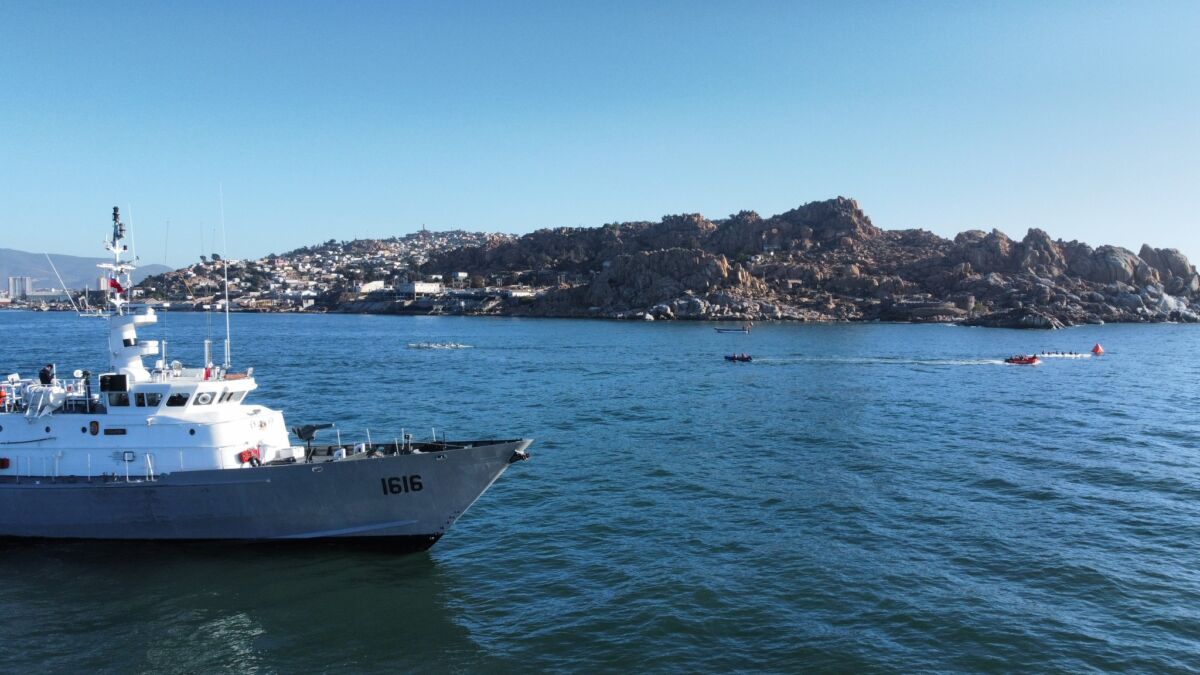
Indeed, today, for example, the institution has about 120 units afloat that perform a variety of functions. Some of them, such as frigates, submarines, and amphibious ships, have as their main task the defense of sovereignty; the other part, the vast majority (about 98), are vessels ranging from ocean patrol boats to coastal craft, whose functions are related to oversight and response to security issues occurring at sea and in national jurisdictional spaces, and which are dependent on and funded by DIRECTEMAR.
In practice, the Law on Strategic Capabilities allows for the maintenance of just over 15 combat ships and their support; the rest must be maintained with institutional funds. The other 98 units that depend on DIRECTEMAR must be maintained with the funds allocated by the Budget Law to that organization, whose resources for operating, maintaining, and renewing its forces are equivalent to 25% of the Navy’s budget, which is considerably limited for all the assets it possesses. This working document aims to demonstrate that the function performed by the DGTM and its current structure, under the Navy, is a success, and that, given the relevance of maritime capabilities, like the other capabilities of the Navy, they should have a financing mechanism that allows them to maintain and update their capabilities over time.