DT36 | SPDMM 2025: Comparative Visions from Australia, Chile, France, and New Zealand on the South Pacific
This article was translated automatically and may contain differences from the original. For reference, read the original.
- by C. Pajon; P. Peczar; A. Powles; y J.P. Toro
- Research & Data
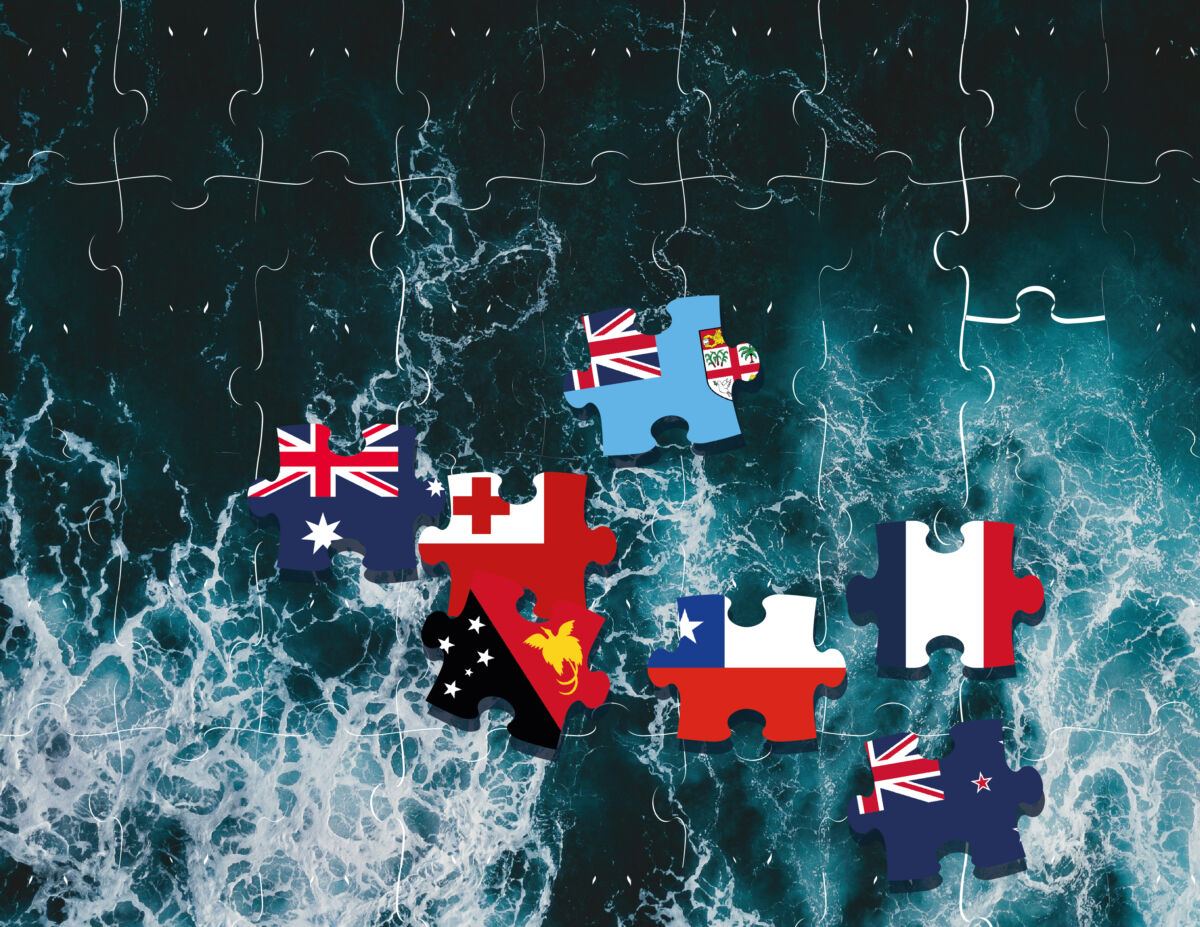
The geopolitical landscape of the South Pacific has consolidated in recent decades as a laboratory where the main challenges of the contemporary international order converge: competition among powers, the protection of global common goods, and the pursuit of maritime governance based on cooperation. The articles gathered in this work explore, from various perspectives, the processes shaping this strategic space and the responsibilities that fall on the coastal states. Together, they reveal that the South Pacific region is neither a peripheral nor passive territory, but a fundamental axis in the redefinition of global balance, especially due to its connection with Antarctica, maritime security, and the oceanic routes that link the Southern Hemisphere with the rest of the world.
For this reason, we asked maritime security specialist Paul P. Pelczar for his insights on the topic and to enlighten us regarding the Austral Entente. This would be a maritime framework based on values for cooperation among Australia, Chile, the French Forces in the Pacific, and New Zealand. It is conceived as an initiative led by Defense, but it enjoys broad governmental support, as maritime presence without alliances is insufficient. From his perspective, Commander Pelczar invites the four countries to share a coherent strategic vision for the South Pacific and the Southern Ocean, and urges unrestricted coordination, especially with regard to Antarctica, where he warns that this territory is increasingly exposed to subtle strategic competition.
The Executive Director of AthenaLab, Juan Pablo Toro, addresses in his text the competition among powers to gain influence over the South Pacific and its implications for Chile. This concerns the necessary commitment of its members and effective participation in the South Pacific Defense Ministers’ Forum (SPDMM), as this is how collective responses to the common problems facing the region are articulated, coordinating efforts in maritime security in this Pacific Ocean that already serves as the center of gravity for global affairs.
For her part, Céline Pajon, coordinator of the Pacific Program at the French Institute of International Relations (IFRI), outlines the key role that France plays in strengthening the operational relevance of the SPDMM in the region. She also emphasizes the optimization of its initiatives within the regional security architecture. At the same time, she highlights that this meeting of ministers needs to demonstrate its importance, as the region faces increasing geostrategic rivalry and heightened competition for influence. Furthermore, she asserts that the Pacific area is becoming more vulnerable to natural disasters and extreme weather events.
Finally, Anna Powles from Massey University in New Zealand explains the importance of the Pacific Response Group, endorsed in the SPDMM of 2024, as it represents the first formal multinational military asset in the region for humanitarian assistance and disaster relief missions in the Pacific Islands, a region highly vulnerable to disasters where such operations play an increasingly strategic role.
In conclusion, in this document, researchers from Australia, Chile, France, and New Zealand present positions that share a common horizon, such as safeguarding connectivity, stability, and sustainability of the ocean that unites us, and they maintain the idea that the SPDMM forum has the task of strengthening cooperation, both in maritime security and in humanitarian assistance activities, including military deployments in the context of these operations.
Vice Admiral (R) Ignacio Mardones Costa
Head of Development and Strategy, AthenaLab