Update on the U.S. Military Intervention in Iran | March 2, 2026
This article was translated automatically and may contain differences from the original. For reference, read the original.
- by Marcelo Masalleras, Alejandro Amigo & John Griffiths
- Analysis
DOCUMENT NO. 2 ATHENALAB | Monitoring the Evolution of the Conflict
WHAT HAS HAPPENED?
In the last 48 hours, the conflict between the United States, Israel, and Iran has escalated following a joint offensive against Iranian strategic facilities, including sites related to the nuclear program, command centers, military complexes linked to the Islamic Revolutionary Guard Corps (IRGC), naval bases, and vessels of the Iranian Navy. The Iranian response has included missile and drone attacks against U.S. bases in the Persian Gulf, indirect activation of fronts such as Lebanon through Hezbollah, and disruptive measures in the Strait of Hormuz. As of now, Tehran’s reaction has resulted in three U.S. casualties, along with the apparently accidental downing of three Western aircraft by friendly fire over Kuwait.
These events are aimed at achieving the objectives outlined in the weekend document: to pressure the regime to alter its nuclear ambitions, degrade Iranian strategic capabilities, and ultimately create conditions for regime change.
CHANGES IN THE STRATEGIC CONTEXT
1. Situation of the Iranian Regime
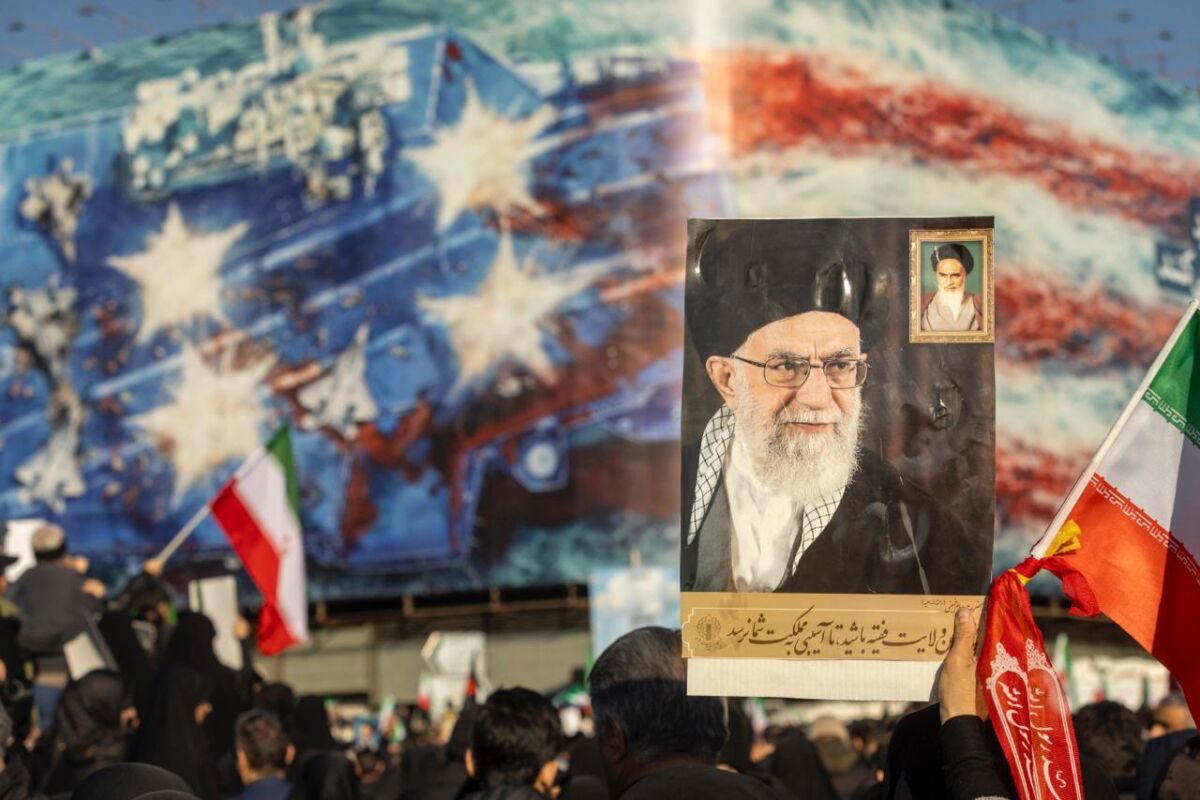
The confirmation of the death of Ayatollah Ali Khamenei, along with senior IRGC and Iranian General Staff officials, constitutes the most significant incident in the last 48 hours. The simultaneous decapitation of the religious, political, and military leadership has altered the internal power structure and activated formal succession mechanisms. In the short term, state leadership has been assumed by a triumvirate composed of the President of the Republic, the Speaker of Parliament, and the Chief of the Judiciary, in accordance with constitutional mechanisms provided for scenarios of supreme leadership vacancy.
At the same time, the IRGC has reinforced its centrality in security and defense management. So far, there is no evidence of institutional collapse, as security forces maintain internal control and have increased their presence in strategic urban centers. While there are manifestations of both nationalist support and dissent against the regime, the coercive apparatus remains cohesive. The official narrative has framed the attacks as external aggression, favoring a process of defensive consolidation rather than a visible fragmentation of the political system. Despite Iran facing a complex and deteriorating political, economic, and military situation, the change in authorities has not yet resulted in a regime change.
2. Military Response from Iran
As previously noted, Iran has executed attacks against U.S. bases in Qatar, Bahrain, Kuwait, and the United Arab Emirates. The regime’s reaction was more agile compared to the events of June 2025, demonstrating the preparedness of the Iranian military component prior to the weekend attack, which is different from what occurred in June 2025. So far, the effects of these attacks have been contained in terms of strategic damage and potential regional escalation, but they confirm Iran’s willingness to expand the theater of operations. Concurrently, launches toward Israeli targets have intensified, consolidating a direct exchange of fire between the two nations. It is estimated that the duration of Iran’s response will be associated with assessments of the damage incurred and the levels of weapon stockpiles.
Iran’s reaction must also include actions that have been executed and may continue to be executed by affiliated groups. Hezbollah was the first to launch attacks from southern Lebanon against Israeli positions. Although a larger offensive has not yet been configured, the Lebanese front has been activated and currently constitutes the main axis of regional conflict expansion. Israel’s response has included airstrikes on positions in southern Lebanon and Beirut.
Another aspect to consider is that the air defenses of Israel and the United States in the region are among the most advanced in the world, but they are not infallible. The high costs of interceptors and, above all, the potential saturation of attacks could increase costs for both countries and their regional partners. Additionally, while Russia is not in the best position to support Iran militarily, it can provide satellite information and transfer significant experiences in the mass use of drones like the Shahed-136, originally from Iran but extensively used by Moscow in Ukraine.
3. Strait of Hormuz
Iran has deployed naval units at strategic points in the Strait of Hormuz, causing operational disruptions in maritime transit. Although a formal permanent closure has not been declared—since even a few actions perceived as high risk are sufficient to interfere with transport through this route—commercial navigation has significantly decreased due to security risks, impacting international energy markets. The Iranian government is aware of the importance of this maritime route for global trade, particularly for hydrocarbons. While it maintains significant mining capabilities that could interrupt transit for a time, the regime’s decision on this and the repercussions in the capitals of other riparian states remain unknown.

INTERNATIONAL REACTIONS
– Regional actors with U.S. bases—Qatar, Bahrain, Kuwait, and the United Arab Emirates—have reaffirmed their cooperation with Washington; none have responded to the missile and drone attacks and have not announced restrictions on the use of those military facilities.
– International Organizations: The UN Secretary-General has called for an immediate cessation of hostilities and warned of the risk of regional destabilization. Additionally, the EU has expressed concern over the escalation and called for the resumption of diplomatic channels, emphasizing the need to avoid a broader regional conflict.
– Extra-regional Powers: China has condemned the initial operation as a violation of Iranian sovereignty and has promoted a negotiated solution. Russia has characterized the attacks as contrary to international law and has expressed political support for Iran. Meanwhile, the leaders of France, Germany, and England, while stating they are not part of the operation, have indicated their willingness to take action in defense of their interests in the region.
WHAT CAN WE EXPECT
– The attacks carried out on Saturday, February 28, should be interpreted as a new phase of an old conflict that was reactivated on October 7, 2023, when the Hamas group breached into Israel. Since that event, Israel and Iran have maintained a strategic dialogue that has intensified, including Iran’s missile attacks on Israel in October 2024, the Israeli retaliation at the end of the same month that destroyed most of Iran’s air defense capabilities; and, of course, the actions of the United States and Israel against nuclear, military, and political, military, and scientific leadership facilities in Tehran in June 2025.
– The continuation of the U.S. and Israeli offensive will depend on the fulfillment of the political objectives defined for the conflict, where they expect the Iranian regime to accept terms related to its nuclear program and its destabilizing actions at the regional level. As long as Iran does not change its strategic posture, it is likely that military pressure will continue in a calibrated manner for several days, even two or three more weeks.
– It is estimated that Tehran will continue to demonstrate institutional resilience in the short term, supported by the cohesion of the IRGC and formal succession mechanisms. In this context, it can be expected that Iran will seek to expand the conflict regionally and internationally to increase the costs of the U.S. and Israeli attack. While it has limited conventional capabilities, it still maintains a significant arsenal of missiles and, especially, a network of associated groups that could trigger isolated attacks on U.S. and Israeli interests in other regions.
– The priority of the ruling regime in Tehran will continue to be its survival, and therefore, the response to the attacks and the continuation of the conflict must consider this reality. Additionally, it should be noted that the nuclear aspiration is an essential goal linked to the regime’s survival and Iran’s strategic position.
– In contrast, the United States and Israel will seek to contain the direct participation of other countries, avoiding a regional expansion that involves other neighboring actors. Similarly, it should not be in the interest of the United States for the conflict to prolong over time, both for economic reasons associated with the cost of the offensive and for internal political aspects for Washington.
– For now, with the available information, it is not feasible to envision the collapse of the regime or its replacement, whether due to the power structures still governing, the hypothetical division of the armed forces, or the nascent or weak organization of a potential political and social opposition capable of challenging the regime.
– It is to be expected that in the future, sooner or later, negotiations will return if Tehran assesses that military pressure compromises its internal stability (the regime’s survival is the top priority). However, diplomacy could be reactivated under more demanding terms than those prior to the conflict.
FINAL CONSIDERATIONS
– It is estimated that the conflict will continue in the coming weeks, at least until Tehran decides to negotiate with the United States, including limiting its nuclear program. These timelines will depend on the pressure from the attackers, the internal stability of the Iranian regime, and the resources available to continue attacking targets beyond its borders.
– The objectives defined by the United States and Israel remain unchanged, with regime change being a secondary goal compared to the nuclear program and ballistic missile capabilities.
– There will be opposing pressure between Iran’s interest in expanding the conflict and its effects, as well as prolonging it for some time, and on the other hand, the view of Washington and Tel Aviv to contain it within Iranian geographical space and in the shortest time possible, to ensure that negotiations resume on terms defined by the U.S. government.
– The most immediate impact of the conflict is economic in nature. The reduction of transit in Hormuz has raised oil prices, which may translate into higher energy costs and inflation for hydrocarbon-importing countries like Chile.
– From a diplomatic perspective, Chile must avoid importing the conflict into the internal sphere or expressing alignments that compromise its future capacity for action, especially with less than two weeks until the change of government.
– Finally, it cannot be ruled out that Iran seeks to expand the confrontation toward U.S. or Israeli interests globally, which increases the overall level of strategic risk to which Chile is not excluded.
Marcelo Masalleras, Alejandro Amigo & John Griffiths
March 2, 2026