International Order, Geopolitics, and Business
This article was translated automatically and may contain differences from the original. For reference, read the original.
- by Santiago Schmidt
- Guest Contributions
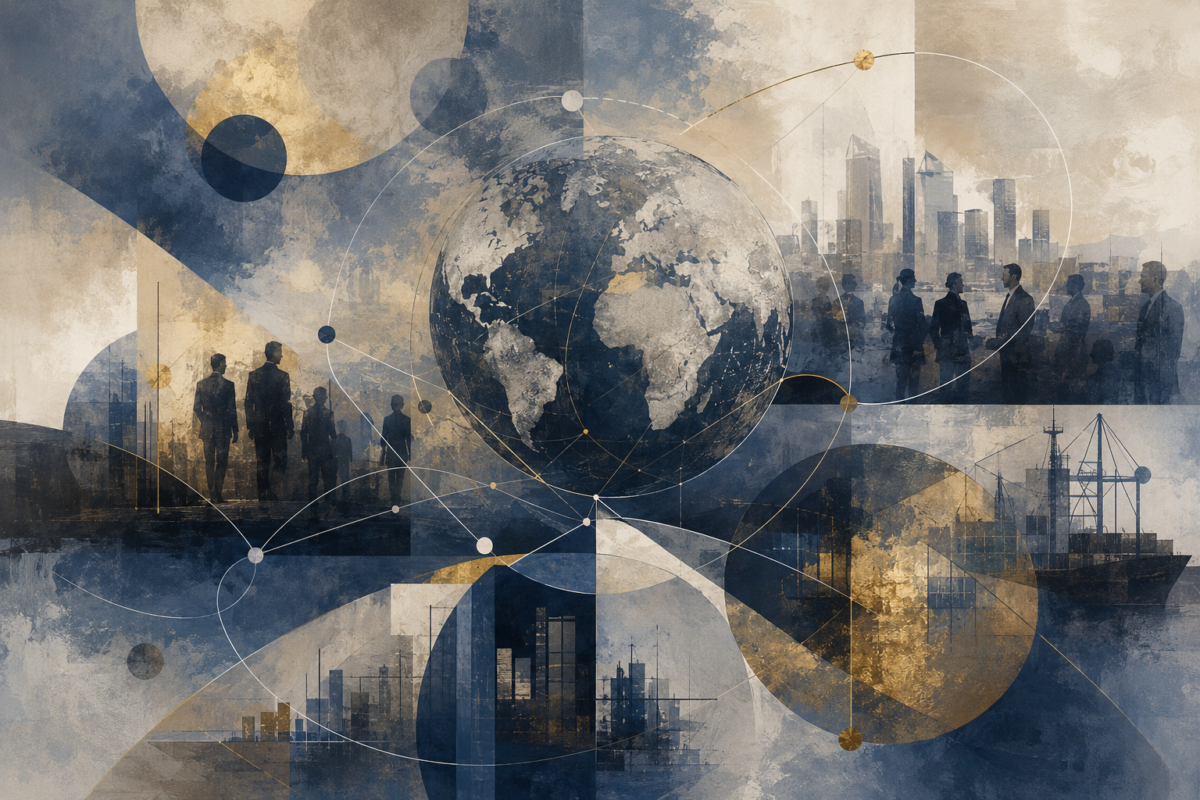
In the current context, the idea of a world order based on rules has come into question, with a noticeable trend towards fragmentation, instability, and an increase in the use of force. This scenario has led to geopolitics gaining fundamental importance in clarifying the events occurring in the world and their causes. Certainly, the business sector has not been left behind. An increasing number of companies are weighing geopolitical criteria through reports or organizational structures to have a better navigation chart in the face of uncertainty.
Companies operating in a fragmented global environment must recognize that behind every market, every border, and every resource lies a geopolitical logic that can open opportunities or generate risks. Therefore, understanding these dynamics becomes an essential tool for anticipating scenarios and making the most informed decisions possible.
Thus, multinational companies are no longer just seeking to expand into new markets, but are also looking to shield themselves from state decisions that directly affect their operations, such as the ban imposed by China on the purchase of Micron chips, or the restrictions that the U.S. government placed on Huawei. These episodes illustrate how the new international scenario compels companies to thoroughly review their global supply chains, the location of their production plants, and their direct investment plans. Certainly, all these aspects are conditioned by logics that go far beyond trade.
Reconfiguration of Power and the Role of Business
Undoubtedly, events such as the COVID-19 pandemic, Russia’s large-scale invasion of Ukraine in 2022, the trade war declared by President Trump during his administrations, and the intense confrontation currently taking place in the Middle East have highlighted the fragility of the international system and global supply chains. Disruptions of such magnitude have led private sector operators to increasingly internalize the risk of exposure to certain markets from an investment perspective, but primarily from a trade perspective.
Moreover, the conception of power as something that solely derives from states through their hard power, that is, their military, economic, and political capabilities, has evolved. Indeed, there are now organizations that shape international reality with power equal to or greater than that held by some states in terms of resources, technological capabilities, influence, armament, among other factors[1]. The recent incident between the U.S. Department of Defense and the AI company Anthropic clearly illustrates how technology corporations directly influence the strategic defense and foreign policy decisions of states.

In this context, large technology companies are no longer considered neutral businesses, but rather strategic actors capable of providing competitive advantages to their states in the technological arms race[2]. Given that companies have become protagonists of the changes redefining the world order, the perspective they adopt today must be much broader than in the past.
Corporate Responses to Geopolitical Risk
Companies have not only taken on a more prominent role on the international stage, but the growing uncertainty has compelled them to reflect on how to navigate geopolitical threats to their operations, driving them to seek strategies that strengthen their resilience. In this sense, this analysis has become a key element for operating in a world where conflicts and tensions are constantly intertwined, forcing companies to develop a more panoramic view of international affairs and their interconnections.
The gradual disintegration of a rules-based world order has led to the emergence of an expanding corporate trend, which consists of the need to anticipate risks from a geopolitical perspective. To this end, certain companies have resorted to creating the position of Chief Geopolitical Officer[3]. The central mission of this position is to prevent and manage risks through an anticipatory vision and continuous monitoring of the international political landscape. This aims to provide the company with contingency plans in the face of various crises, ranging from armed conflicts to disruptions in supply chains.
Currently, some multinational companies, such as Amundi, Deloitte, BlackRock, and Meta, among others, have specialized personnel to address these issues. In some cases, such as Boston Consulting Group, it was decided to introduce a Geopolitical Center into their organizational structure[4], whose fundamental mission is to assist senior executives in anticipating, understanding, and managing the risks and opportunities arising from an increasingly uncertain international environment.
It is not surprising that in the “Global Risks Report 2026”[5], prepared by the World Economic Forum, geopolitical risks are highlighted with a higher percentage (graph 1), such as armed conflicts between states (14%) and geoeconomic confrontation (18%). Both risks also appear in the short-term projection made by the same study through a perception survey.
Graph 1

In this scenario, it seems that these variables will increasingly be considered at the board and C-level, as noted in a report by the consulting firm Ready 2 Digital (R2D)[6], which identifies geopolitical fragmentation as one of the megatrends that will shape the 2026 agenda. For organizations exporting to multiple markets, it is no longer sufficient to understand the political or economic dynamics of each region; they must also anticipate how these tensions may impact the critical infrastructure of international trade.
Implications for Chile
The geopolitical tensions affecting multinationals do not remain at the global level but directly impact open economies that are highly dependent on foreign trade. In this sense, Chile faces a complex landscape that combines risks and opportunities. On one hand, it must confront the uncertainty of an international context characterized by economic, regulatory, and global value chain fragmentation. On the other hand, it has the opportunity to capitalize on the global energy transition, which drives increasing demand for copper, lithium, rare earths, and renewable energy sources. The possession of these resources in our territory is precisely what places us in the spotlight, as their use relates to the material basis of the most advanced technologies, from semiconductors and lithium batteries to AI systems and cutting-edge military equipment.
At the same time, it should be noted that, according to projections made by the International Monetary Fund (IMF), the volume of global trade in goods and services is expected to moderate to 1.9% in 2026, due to a highly uncertain environment[7]. This figure is significant for a country like Chile, where a very high percentage of its GDP is explained by international trade in goods and services[8].
Overall, it is essential for companies in Chile to act proactively and incorporate elements such as geopolitics into their strategic decisions. Exposure to international tensions is no longer a distant risk but a reality that companies are experiencing daily. Only those companies that understand this new dynamic and adapt their business models will be able to transform uncertainty into a competitive advantage.
[1] Global Foreign Policies Review Journal: “Geopolitics of Connectivity in the 21st Century and the Changing World Order” (M. Zafar, 2024): https://www.researchgate.net/publication/387913701_Geopolitics_of_Connectivity_in_the_21st_Century_and_the_Changing_World_Order
[2] The Coming Wave: Technology, Power, and the Great Dilemma of the 21st Century (M. Suleyman, 2024)
[3] World Economic Forum (Dixon, 2025): https://es.weforum.org/stories/2025/07/por-que-toda-empresa-necesita-ahora-un-jefe-de-geopolitica/
[4] Boston Consulting Group: https://www.bcg.com/press/19june2024-bcg-center-for-geopolitics
[5] World Economic Forum, “Global Risks Report 2026”: https://reports.weforum.org/docs/WEF_Global_Risks_Report_2026.pdf
[6] https://www.df.cl/las-cinco-megatendencias-que-marcaran-la-agenda-de-los-directorios-y-que
[7] International Monetary Fund. “World Economic Outlook (2025)”: https://www.imf.org/-/media/files/publications/weo/2025/update/july/spanish/text.pdf
[8] Central Bank of Chile: https://www.bcentral.cl/w/blog/100-anios-de-politica-economica-y-comercio-exterior-de-chile
Note: The ideas presented in this article are the responsibility of the author and therefore do not necessarily represent the opinion of AthenaLab or its members.
by Santiago Schmidt
Psicólogo titulado por la Universidad de los Andes, con diplomas de postítulo en Estudios Internacionales y Política Comercial del Instituto de Estudios Internacionales de la Universidad de Chile. Diplomático de carrera, egresado de la Academia Diplomática de Chile Andrés Bello, actualmente desempeñando funciones en el gabinete de la Dirección General de Asuntos Consulares del Ministerio de Relaciones Exteriores de Chile. Participó en el seminario “Comprendiendo el contexto y desafíos de un mundo en conflicto” de AthenaLab, en enero de 2025.
Want to publish with us? Review our guidelines for external contributors.
View submission guidelines