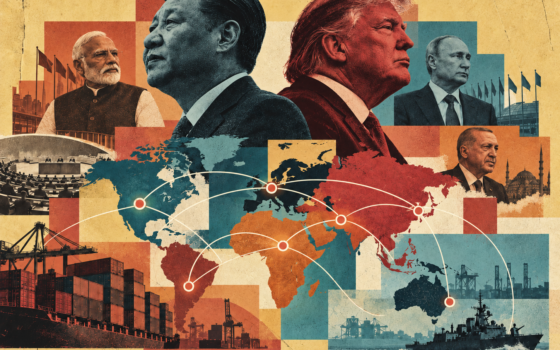
Chile must have a voice where the rules of cyberspace are written.
This article was translated automatically and may contain differences from the original. For reference, read the original.
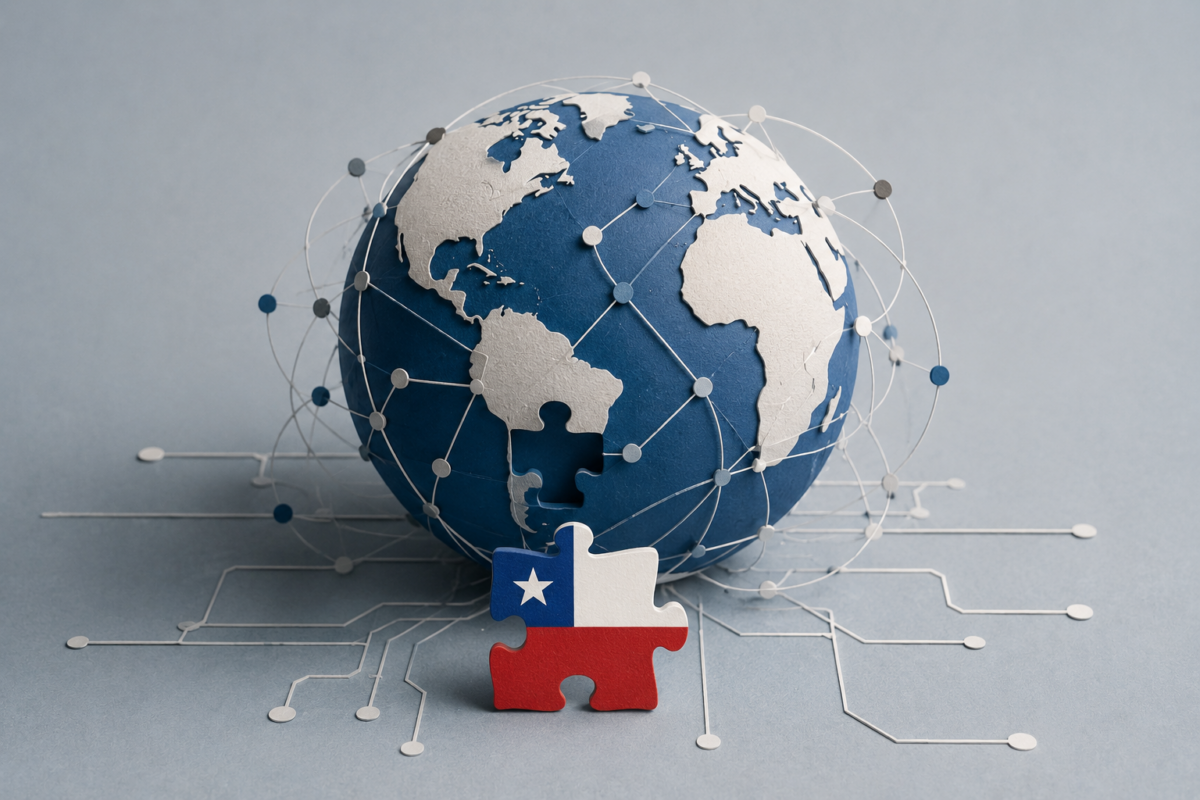
The rules of cyberspace are already being written. The question is whether Chile will arrive with its own position or end up accepting the rules drafted by others.
Over the last decade, Chile has built an advanced cybersecurity architecture by regional standards. It has a Cybersecurity Framework Law, a National Cybersecurity Agency, national and defense capabilities for incident response, a National Cybersecurity Policy for 2023 to 2028, and a regime for operators of vital importance that protects essential services. Various international instruments place it among the most mature in the region in this area.
However, this strength coexists with a strategic gap: Chile has yet to publish a national position on how it interprets and applies international law in cyberspace. This absence matters. More than thirty-five states have already published national positions on the application of international law in cyberspace. Brazil did so in 2021, through the official United Nations compendium A/76/136. Costa Rica published its position in 2023, and Colombia joined in 2025. Chile actively participates in multilateral forums, but still lacks an official document that organizes its legal, political, and strategic position.
The problem is no longer one of absence. Chile is not absent. On March 30, 2026, the Chilean representation at the United Nations participated in the organizational session of the new Permanent Global Mechanism on ICT security. There, it supported capacity building, international cooperation, and the application of international law. This was an important step. But now comes the decisive step: transforming diplomatic interventions into national policy.
The international law applicable to cyberspace is not constructed through a single treaty. It emerges progressively from the United Nations, from doctrinal processes such as the Tallinn Manual, from state practices, and from the national positions that each country publishes. The new permanent UN mechanism will be the stable space where rules for responsible behavior, cooperation, technical assistance, and the application of international law will be discussed. Chile must enter that space with its own voice.
The gap can be understood through the Trillium model of Digital Power. Digital sovereignty rests on three interdependent pillars: governance, infrastructure, and cybersecurity. Chile has made progress in all three. However, it has yet to fully develop the intersection node between governance and cybersecurity, where cyber diplomacy resides: the space where the state defines which principles it will defend in cyberspace, under what rules it will act, and how it will protect its strategic interests.
A published national position is not an academic exercise, but rather an instrument of foreign policy and national security. It guides diplomats, provides coherence to the state’s international actions, strengthens coordination among the Foreign Ministry, Defense, Intelligence, and Cybersecurity, and contributes to the development of international law.
Chile also has a concrete doctrinal opportunity. It can propose that the obligation of due diligence in cyberspace be proportional to the actual technical capacity of each state. It is unreasonable to demand that a state with medium capabilities meet the same standards of detection, attribution, and prevention as a major cyber power. The obligation must exist, but its scope should be measured according to objective capabilities. This approach, inspired by the principle of common but differentiated responsibilities recognized in the 1992 Rio Declaration, constitutes an Ibero-American contribution to the international debate on governance and stability in cyberspace, which Chile can defend with technical authority and legal legitimacy.
An institutional architecture for Chilean cyber diplomacy
Proposing a national position without defining who will draft it is like proposing a text without a responsible party. Chile needs to advance simultaneously on three institutional fronts. First, designate the Foreign Ministry as the leading entity for drafting the national position, through its General Directorate of Legal Affairs, in coordination with the ANCI, Defense, and Intelligence. It should operate under an explicit presidential or ministerial mandate, with a defined timeline and consultation with academia, the private sector, and civil society. The Dutch model, where the Ministry of Foreign Affairs coordinates with Defense, Justice, and Interior under parliamentary mandate, is an applicable reference for the Chilean case.
Second, create a permanent institutional figure for cyber diplomacy within the Foreign Ministry, with the rank of ambassador on a special mission, dedicated to coordinating Chile’s position in the UN Permanent Global Mechanism, in the OAS, in EUROLAT, and in digital bilateral relations. Spain created this figure in 2020 and has consolidated it as an irreplaceable coordination node.
Third, institutionalize a stable inter-agency mechanism for cyber diplomacy that periodically brings together the Foreign Ministry, ANCI, Defense, ANI, Science and Technology, and Finance, to keep the position updated, prepare Chilean interventions, and monitor applicable international law. It can operate under the Undersecretariat for Foreign Relations, with a rotating technical secretariat.
This architecture does not require major legal reforms. It requires political will, clarity of mandate, and institutional continuity between governments. It is the capacity that a medium-sized state needs to build before the rules of cyberspace are finished being written without it. This effort should not remain isolated. Chile can project an Ibero-American agenda for digital trust and provide it with a concrete vehicle: the Ibero-American Cybersecurity Summit, which will be held in Santiago every October, the month of cybersecurity, and its founding instrument, the Santiago Declaration. Its operational core, the Ibero-American Digital Shield, proposes voluntary public-private cooperation and confidentiality to share information on threats where no laws currently require it. The SEGIB and the OAS are natural venues for this.
Chile has a diplomatic tradition, institutional stability, and a serious track record in security, defense, and cybersecurity. However, in cyberspace, influence is not inherited: it is exercised. It is exercised with a national policy, institutionalized capabilities, coordinated public policies, and sustained presence where the rules are constructed.
The question is no longer whether Chile should participate. It already participates. The question is whether it will participate with its own policy, with a defined institutional responsible party, and with a published doctrine, or whether it will accept, by omission, the rules that others draft. Chile must have a voice where the rules of cyberspace are written. And it must have it now.