Repercussions of Petro's Victory on Regional Security
This article was translated automatically and may contain differences from the original. For reference, read the original.
- por Juan Pablo Toro
- Actualidad estratégica
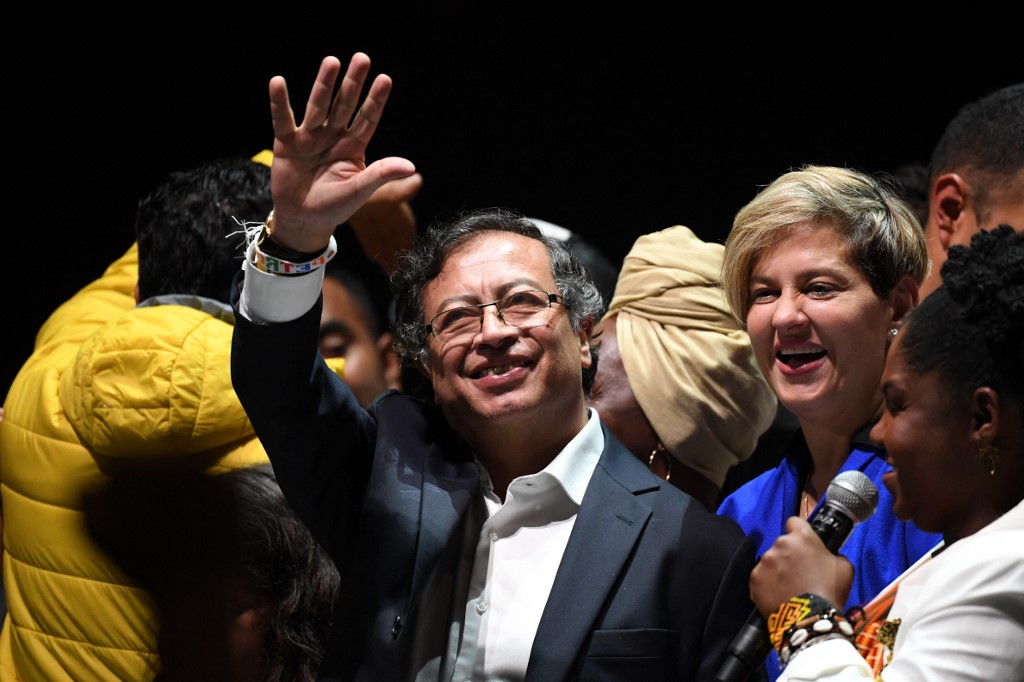
Gustavo Petro’s victory not only raises questions for Colombia itself, which has never had a president from a leftist party, but also opens many inquiries about the impact that the arrival of a former guerrilla leader at the Palacio de Nariño will have on regional security.
As the world’s historical leading producer of cocaine and a fertile ground for narco-insurgencies, this country is also the best and closest partner of the United States in security matters. Over the past two decades, it has received more than $11 billion in aid for anti-narcotics and counter-insurgency efforts. This has primarily translated into the provision of military equipment, training, operational planning, and intelligence.
Beyond the advisors, agents, and undercover operatives circulating in Colombia, the Andean nation has even been the only country in Latin America to recently host a U.S. Security Force Assistance Brigade (SFAB), demonstrating the closeness of its military forces.
It is also crucial for monitoring the illegal activities of the Venezuelan dictatorship, which poses a threat to Colombia and exports insecurity throughout South America through uncontrolled migratory flows and the expansion of its criminal groups (such as El Tren de Aragua, for example).
While Petro distanced himself from the so-called Bolivarian Revolution during the campaign—of which he had a public closeness, especially when Hugo Chávez was alive—the now-elected president faces a significant dilemma regarding his promise to normalize relations with his neighbor.
It is a fact that Nicolás Maduro’s regime allows the presence of Colombian guerrillas in its territory; it is armed and advised by Russia and has unclear ties with Iran. The military and police forces of Colombia not only understand this reality well and suffer from it daily in border areas, but they have also shared information with friendly countries regarding this situation.
RESPICE POLUM
As expected, Washington sent a warm message congratulating the winner of Sunday’s elections, looking forward to “strengthening” relations. In his speech, the victorious candidate called for “co-responsibility” in combating climate change; that is, if the northern country is a major emitter of greenhouse gases, it must assist the countries that absorb them through their forests and jungles.
During the campaign, Petro did not antagonize much with the United States, as it made little sense with Joe Biden in power rather than Donald Trump. However, the bipartisan consensus that has allowed aid to Colombia to flow is likely to fracture with a leader who has more in common with Cuba, Nicaragua, and Venezuela, regimes with which he wants to engage in dialogue “without exclusions.” It was not very auspicious that the well-connected Colombian ambassador to the United States and former Defense Minister, Juan Carlos Pinzón, resigned immediately yesterday.
With varying degrees of emphasis, the doctrine of respice polum (or “of the North Star”) bequeathed by President Marco Fidel Suárez (1918-1921) has been a constant in Colombia’s foreign policy for the past 100 years. In simple terms, it states that the country should look north, seeking a friendly and prioritized relationship with the United States. This translates into intense political, commercial, and security ties. It remains to be seen how much Petro is willing to change this, as he proposed in his triumphant speech that “Latin America should integrate more decisively.”
ANTI-DRUG POLICY
Regarding the crucial anti-drug policy, the elected president promotes a “green policy,” meaning a more environmentally friendly approach to the substitution of illicit crops. These programs have, in fact, been implemented for decades, but they must necessarily be complemented by the rapid destruction of such crops; otherwise, the rate of expansion is greater.
Today, Colombia is producing a record of more than 1,000 metric tons of cocaine per year, according to figures from the United Nations Office on Drugs and Crime, an argument that serves both those who claim that the frontal anti-drug policy yields no results and those who insist on intensifying the fight that was subdued during the peace process with the Revolutionary Armed Forces of Colombia, promoted by President Juan Manuel Santos (2010-2018).
On the other hand, the future leftist leader has expressed doubts about the extradition mechanism, stating that he prefers that detainees first serve their sentences in the country before facing U.S. justice; although the latter is the great fear of drug lords, guerrilla leaders, and paramilitary leaders.
In this regard, it is worth recalling the resounding failure of the “hugs, not bullets” policy of Andrés Manuel López Obrador, the leftist president of Mexico who attempted to reframe the fight against drugs from a social perspective but found himself needing to grant more and more power to the military to confront cartels that only understand the language of force.
NON-NATO ALLY
During the recent campaign, the achievement of President Iván Duque in having Colombia designated a major non-NATO ally went almost unnoticed, an institution that has gained significant prominence due to its role in response to Russia’s aggression against Ukraine. In practice, this will allow the Andean country to purchase weaponry from the bloc more easily and access its technology.
While the Atlantic Alliance has already requested support for Colombian Army deminers to train their Ukrainian counterparts, it is known that the Air Force of the Andean nation faces the urgent need to replace its combat aircraft due to the imminent retirement of the Kfir. In this context, the F-16 has always been a natural candidate. This alignment, not only with the United States but also with NATO itself, is likely to be tested during Petro’s administration.
Given Colombia’s role in regional security, the fight against drugs, and the containment of Venezuelan activities alongside the United States, the political shift brought about by Petro will have significant repercussions in a Latin America already battered by political instability, economic crisis, and social discontent, all amid a wave of criminality that takes advantage of these circumstances.