Rimpac 2022: More than Just an Exercise
This article was translated automatically and may contain differences from the original. For reference, read the original.
- by Juan Pablo Toro
- Strategic Affairs
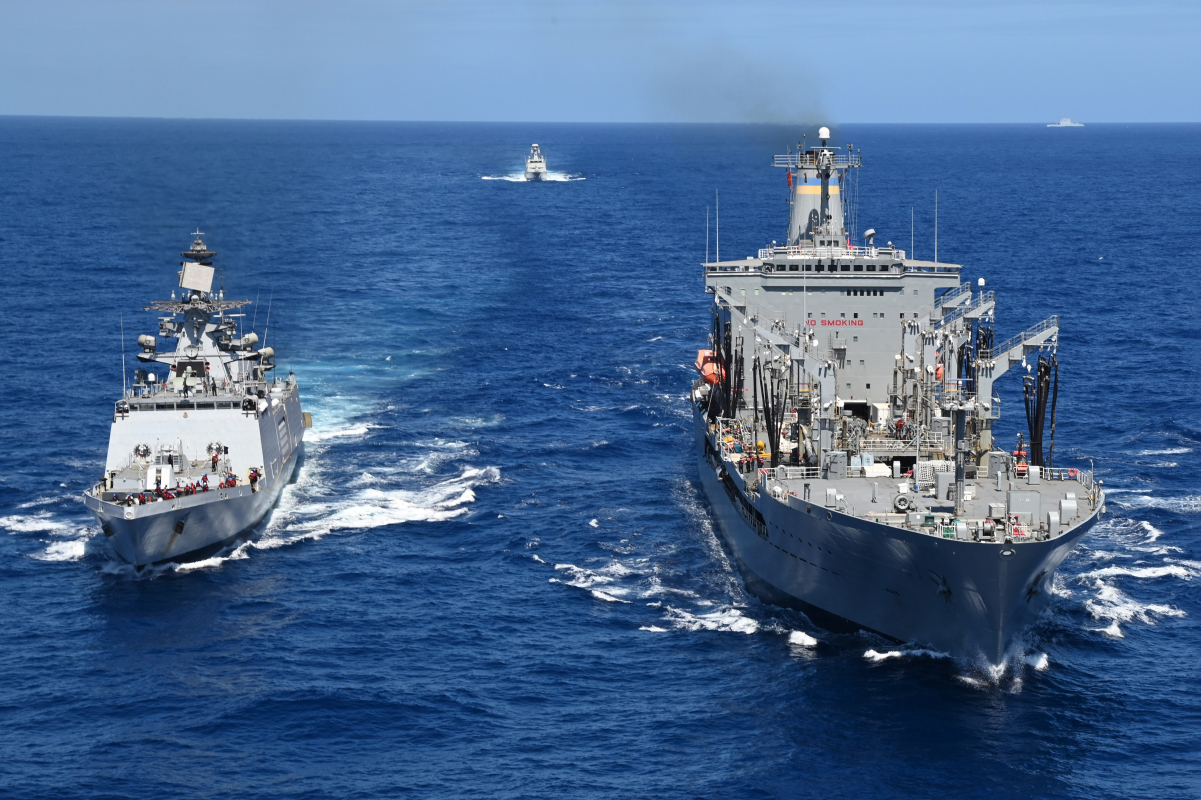
Known as the largest naval exercise in the world, this year is considered “historic” for Rimpac, as it has returned to pre-pandemic deployment levels, debuted the MQ-9A Reaper drone, and is taking place amid an ongoing war that underscores the need for well-trained navies.
However, perhaps the most important aspect is not the gathering of forces from 26 countries, with 38 ships, four submarines, 170 aircraft, and 25,000 troops near the shores of Hawaii at the behest of the United States Navy. The exercise is merely a means, not an end in itself. It is crucial to understand this, particularly when a high-ranking defense official expresses caution regarding the impact that Chile’s and other regional countries’ participation may have on China, or when a veteran diplomat at a forum dismisses the relevance of the Indo-Pacific concept.
So, back to basics. In the third decade of the 21st century, nearly 80% of global trade is conducted via maritime routes, and no power is capable of acting hegemonically over the oceans. This means we depend on the openness of the seas for trade, and no one seems able to guarantee it alone.
Therefore, it is essential to understand that the stability of various maritime spaces today is fundamental to maintaining the rules-based international order, or what remains of it. When some countries unilaterally decide that the best way to satisfy their interests is to seek maritime dominance, even curtailing the freedom of navigation of others, a problem arises. This is not a hypothesis. It is precisely what Russia is doing with its fleet by blocking Ukraine’s sovereign access to the Black Sea, as a result of an invasion that violates all known international norms.
Now Rimpac comes into play. It trains in a combined manner in the two basic dimensions in which the maritime domain relates to the international order. The first refers to naval warfare against hostile forces, which pertains to the distribution of power among states and the determination to alter it. The second focuses on interdiction operations against non-traditional threats such as drug trafficking, piracy, and illegal fishing, which of course violate a series of maritime law norms.
Thus, Rimpac’s proposal is that in the eventual challenge posed by a state that decides to seek maritime dominance to impose its will unilaterally, contravening accepted international norms, a coalition of navies can be quickly assembled to confront the threat. Preferably in the Pacific, although it increasingly forms a whole with the Indian Ocean (over 30 states have strategies incorporating this concept, including Australia, the United States, France, and Japan). India is participating in this year’s maneuvers with a frigate.
If a country adheres to the law of the sea and respects international rules, it would have no reason to view the exercise as a potential threat. China even participated in two iterations until its invitation was rescinded due to its actions regarding disputed islands and reefs in the South China Sea.
The navies participating in the naval exercise share the fact that they are in a very relevant geographical space, but above all, the conviction that freedom of navigation and respect for international rules are key to collective prosperity. This is part of Chile’s external legal tradition and also a necessity for the development of an exporting country.