Revisiting the Other 50 Years... and the War in Ukraine
This article was translated automatically and may contain differences from the original. For reference, read the original.
- by Juan Pablo Toro
- Strategic Affairs
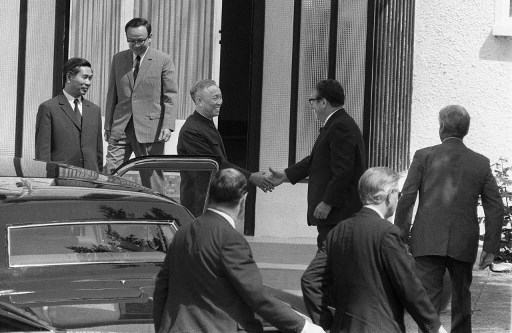
1973 was a very complex year. Not only for Chile, but globally. Events occurred that left an indelible mark on recent history, including the signing of the Paris Peace Accords between the United States and North Vietnam, and the Yom Kippur War, which pitted several Arab countries against Israel.
VIETNAM. In January of that year, after arduous negotiations, teams led by Henry Kissinger and Le Duc Tho managed to agree on the complete withdrawal of U.S. forces from South Vietnam, the release of American prisoners of war, and the respect for the independence of the Vietnamese people through free elections. This agreement paved the way to end the brutal conflict, which was framed within the so-called Domino Theory, which posited that if one country in a region became communist, others would follow suit, falling like dominoes.
YOM KIPPUR. In the case of the Yom Kippur war (the holiest day of the Jewish year), Egypt and Syria attacked Israel during Yom Kippur to attempt to regain territories lost in the Six-Day War of 1967. After initial rapid advances by the Arabs, the Israelis counterattacked, pushing enemy forces back even within their borders. The superpowers of the time, the United States and the Soviet Union, supported their allies with arms and intelligence, but also sought to prevent a greater escalation in a key oil-producing region for the global economy.
Indeed, since the war fought in October 1973 did not yield conclusive results, six years later Israel and Egypt signed the Camp David Accords, which opened a new era of peaceful relations between recent belligerents and remain a model for any similar initiative in the Middle East. Under this pact, the Israelis agreed to withdraw from Sinai, and Cairo recognized the Jewish state and provided logistical support.
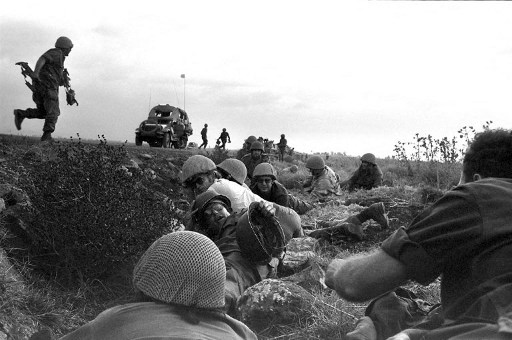
WIDE-SCALE WARS. In both cases, these were large-scale wars across all fronts (land, air, and naval), with many casualties and the direct or indirect involvement of great powers. Nevertheless, durable peace agreements were reached, which, while involving very difficult concessions, managed to turn enemies into partners. The current closeness between the United States and Vietnam regarding tensions in the South China Sea, or the intelligence cooperation between Israel and Egypt in the face of jihadism, are proof of this.
Now, as we reach a year and a half of the confrontation between Russia and Ukraine, observing what occurred in those two conflicts to draw certain lessons is an interesting exercise, keeping in mind the differences in each case.
NEGOTIATIONS. To some extent, the opposing parties must be convinced that they cannot win the war outright to sit at a negotiation table with any prospect of agreement[1]; negotiators must have the highest support from their governments to establish compromises (Kissinger and Le Duc Tho were even awarded the Nobel Peace Prize in 1973); the presence of a reliable mediator, or broker, can also be of great help (the case of the United States at Camp David); in final stages, the top leaders of the countries must publicly engage in peace negotiations to lend them strength (Menachem Begin and Anwar Sadat); it is not always necessary to suspend all hostilities to converse, but it seems to be the initial and necessary condition to build trust (tactical flexibility based on strategic outcomes); and finally, it is good to identify potential saboteurs, or spoilers, of the agreements in advance (Sadat was criticized by his Arab peers for making peace with the Israelis, and an Islamist command assassinated him in 1981).
Today, it seems that Russia and Ukraine are far from any negotiation. Kiev demands that Moscow withdraw from all its territory, which is logical, as it is an illegal and unprovoked invasion. Meanwhile, President Vladimir Putin has failed to overthrow Volodymyr Zelensky or destroy all Ukrainian military forces. Therefore, perhaps his minimum goal is to retain the areas annexed by his troops—now protected by a consolidated front line.
However, revisiting Indochina and the Middle East 50 years ago can provide valuable lessons on how to end a war, especially when the Ukrainian counteroffensive is not progressing as anticipated and Putin cannot retreat further without jeopardizing his hold on power. At least in the international arena, it seems feasible to internalize lessons from history.
[1] It remains a subject of debate to determine who won the Vietnam War between 1965 and 1975. On one hand, U.S. troops defeated the communist forces of the North and the Viet Cong in all major battles and suffered far fewer casualties throughout the conflict. On the other hand, the North Vietnamese army ultimately captured Saigon in 1975 and unified the country after the negotiated American withdrawal two years earlier, which is a significant political victory.