Chile in the Face of the Geopolitics of Critical Minerals: Lithium, Cobalt, and Rare Earths
This article was translated automatically and may contain differences from the original. For reference, read the original.
- por Juan Pablo Toro
- Publicaciones
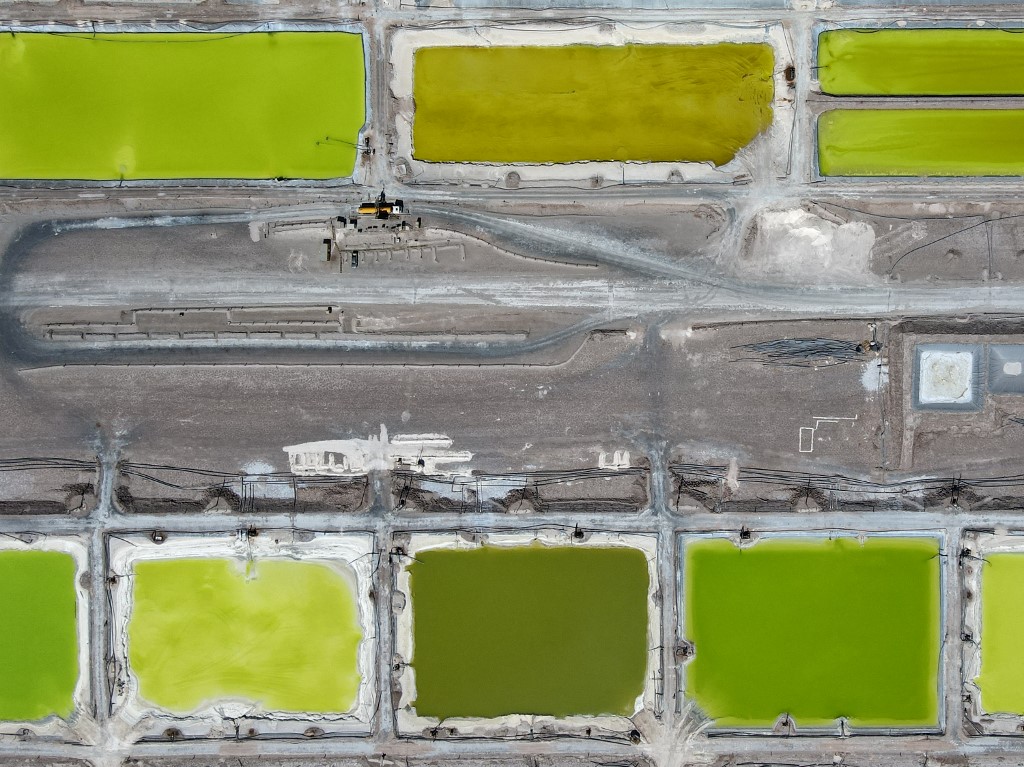
On one of the outer edges of the Atacama Desert stands a lithium refining plant operated by SQM. This is a company that is predominantly Chilean-owned, although 22% of the ownership belongs to the Chinese group Tianqi.
On one of the outer edges of the Atacama Desert stands a lithium refining plant operated by SQM. This is a company that is predominantly Chilean-owned, although 22% of the ownership belongs to the Chinese group Tianqi. Just 14 kilometers away, a road leads to similar facilities operated by the American company Albemarle. Amid the dust that seeps between pipes, conveyor belts, storage tanks, evaporation ponds, and trucks coming in and out, a growing competition for this essential mineral for the energy transition emerges.[1],. Its massive use depends, among other things, on the widespread adoption of electric vehicles, which are already the subject of a tariff war between Beijing, Brussels, and Washington due to discrepancies regarding what is considered their true production cost.
Along with lithium, minerals such as cobalt and rare earth elements play a crucial role today in technological industries, from everyday electronics to defense. The eagerness displayed by powers such as the United States, China, Japan, and the European Union[2] and others to obtain these resources has them seeking agreements with producers or promoting projects[3] to ensure their access, in a world where supply chains are considerably more fragile than previously thought; as demonstrated by the pandemic and later confirmed by the Russo-Ukrainian war. During a recent visit to our country, the Minister of Industry and Mineral Resources of Saudi Arabia, Bandar Ibrahim Alkhorayef, stated: “Our interest is in partnering with countries like Chile to explore the possibility of accessing lithium, and in Saudi Arabia, processing it.”[4]. Undoubtedly, an important and surprising statement coming from one of the world’s largest oil producers.
As consumer countries of these minerals focus on promoting “reliable trade” among like-minded nations and implementing “risk reduction” policies (“de-risking”), by redirecting business to safer markets, producers are presented with a unique opportunity to capitalize on the new prominence they will gain by being at one end of key supply chains, beyond the economic rewards themselves.
If we review history, energy sources — and everything related to them — and political power have always gone hand in hand; it is clear that without oil or natural gas, the strategic importance of the Middle East would be different. Therefore, concepts such as “extractive foreign policy,” “extractive diplomacy,” “raw materials diplomacy,” or “mineral security” begin to account for the possible use of natural resources as levers of influence and attention.
If acted upon strategically, a “new place” can be obtained on the interest maps of powers, as they discover that where resources exist, there are also determined, reliable, and secure counterparts in their new role in combating climate change and new industries. If they are skillful, countries should stimulate the development of projects around these minerals and not sabotage them with counterproductive decisions.
“The transition to green energy emerges as a basic pillar in the future of international relations and national affairs,” considers the head of the Strategic Forecasting Division of Joint Command Norfolk of the North Atlantic Treaty Organization, Gergely Németh[5].
The fate of critical minerals such as lithium, cobalt, and rare earth elements is already inextricably linked to the national security strategies of various states. The more concentrated the markets and the less robust the supply chains, the greater the influence of their controller and the higher the potential for disruption.
Given that Chile possesses lithium, cobalt, and rare earths, there is an urgent need to reflect on how these materials can impact the country’s role in the world. This will require the exercise of “extractive diplomacy” with all the new opportunities it offers. However, it begins with understanding the link between the green energy boom and geopolitics. First, the following questions must be addressed.