Key Aspects of the New Ministry of Public Security
This article was translated automatically and may contain differences from the original. For reference, read the original.
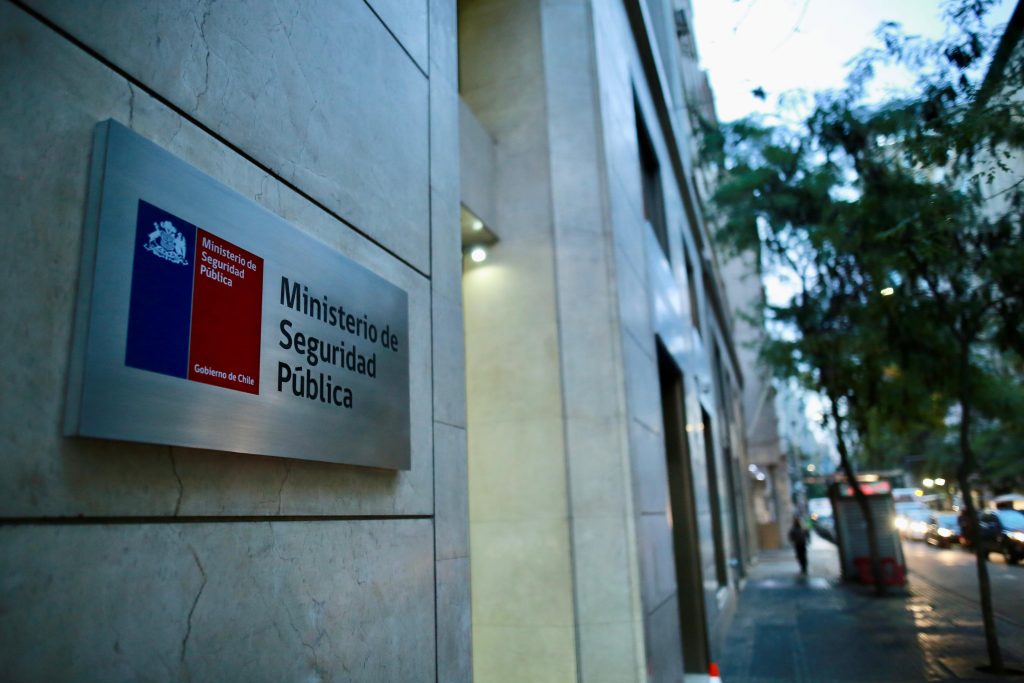
In light of the recent law that established the Ministry of Public Security, which aims to coordinate actions to address the main threats facing the country, AthenaLab reviews the scope and challenges of its implementation in the current public security context.
The recent Law No. 21,730, which created the Ministry of Public Security, establishes a new system focused on coordinating preventive actions and those against individuals who threaten public security, in order to address the main threats facing the country. There is a current consensus that the fundamental challenges in security are organized crime and drug trafficking. This is confirmed by various surveys that objectively measure these types of crimes, as well as those that subjectively assess the public’s perception of them.
Consequently, the main aspects of the new law are reviewed in the context of current public security, and the challenges of its implementation are identified.
Main Aspects and Contents of Law No. 21,730
Structurally, this law separates the public security responsibilities that were previously housed within the Ministry of the Interior. This allows for the establishment of a new ministry entirely focused on public security and crime prevention. To this end, it must formulate short-, medium-, and long-term public security policies and strategies.
For this reason, the dependency of the Public Order and Security Forces—Carabineros de Chile and the Police of Investigations—is transferred to it, in accordance with the Constitution and the Laws. Additionally, the Cybersecurity Agency falls under its jurisdiction.
This ministry creates two subsecretariats: the Subsecretariat of Public Security and the Subsecretariat of Crime Prevention.
The creation of the Ministry of Security implies the existence of a Public Security System. This system can be defined as the working space among various institutions responsible for public security to prevent crime and combat it in a coordinated and cohesive manner. The following institutions should be considered among the main ones:
- Carabineros de Chile
- Police of Investigations
- Municipalities
- Public Prosecutor’s Office
- Regional Governments
- Gendarmerie
- National Intelligence Agency
- Sectoral Ministries
One of the innovations to improve the integration of various actors is the creation of the Integrated Police Coordination Center (Cicpol), along with the Integrated Emergency Response System (Sirac). This center must operate and function with enhanced capabilities for control, integration, and coordination, to consolidate efforts, focus them, and be more efficient and effective in its primary mission. Consequently, the text defines two principles: inter-institutionality and interoperability.
Similarly, Cicpol identifies the integration of the various police forces in the following areas:
- Identification of risk situations for security
- Coordination of complex police operations
- Interoperable information exchange, both among system members and between public or private entities, as applicable.
These tasks will be decentralized into macro-zonal units, under the charge of a general officer from the Public Order and Security Forces, specially designated by the Ministry of Public Security.
Additionally, two councils are established: the National Public Security Council and the National Crime Prevention Council.
The members of the National Public Security Council include:
- Ministry of the Interior
- Ministry of National Defense
- Ministry of Finance
- Ministry of Justice and Human Rights
- National Prosecutor
- General Director of Carabineros de Chile
- Director General of the PDI
- National Director of Gendarmerie
On the other hand, the National Crime Prevention Council includes:
- Ministry of the Interior
- Ministry of Finance
- Ministry of Social Development and Family
- Ministry of Education
- Ministry of Housing and Urban Development
- Ministry of Women and Gender Equity
- General Director of Carabineros de Chile
The law also establishes a National Public Security Policy, which must explicitly include a crime prevention strategy, victim protection and support, and measures to combat and protect against organized crime and terrorist acts, among others. The National Public Security Policy has, as its general objective, to implement a public security system that promotes the design and execution of evidence-based public policies to reduce violent crimes and fear among citizens. In other words, it addresses both the objective and subjective dimensions of the notion of security.
This central policy to combat organized crime will be structured around ten action axes:
- Axis of new governance. Institutional strengthening and state intelligence.
- Axis of dismantling the economy and organized crime.
- Axis of reducing the firepower of criminal organizations.
- Axis of addressing organized crime in penitentiary facilities.
- Axis of legislative agenda against organized crime.
- Axis of strengthening institutional equipment and technology capabilities to confront organized crime.
- Axis of institutional training and human capital development to confront organized crime.
- Axis of preventing corruption and co-optation of public institutions.
- Axis of increasing effectiveness in confronting organized crime through police reform.
- Axis of promoting international cooperation and coordination.
Overall, this new law additionally establishes Regional Public Security Councils, which will be key to addressing the various threats impacting the national territory with different emphasis and diverse nature. Regions do not necessarily share the same logics and dynamics of public security. Therefore, the diverse nature of risks and threats will lead to the development of various public security plans, appropriately tailored to each reality, prioritizing and focusing the various available resources.
Public Security Context
If we analyze the various national and international public security indices related to Chile, it is evident that in the last decade the country has faced a security crisis triggered by the increase in homicides and the actions of groups associated with organized crime, both local, regional, and transnational. Consequently, approximately 9 out of 10 Chileans perceive this type of threat as the main public security problem. This also demonstrates how attractive the country is to these transnational organizations, which have been facilitated in their actions by a phenomenon of mass immigration that did not have timely adequate security safeguards, and which these same gangs have even exploited, due to the immense porosity and extent of our borders.
Thus, this new law and the creation of the Ministry of Public Security and its corresponding system constitute a well-received measure in the need to generate a greater climate of public security for the country.
The current public security context is highly influenced by structural conditions in our country that did not facilitate adequate institutional action, along with the transnational nature of some threats. For this reason, interstate cooperation to coordinate against this scourge will be a fundamental aspect.
Final Considerations
The structuring of this new ministry, entirely dedicated and focused on public security, is viewed very positively. Undoubtedly, conditions could be created for greater integration of all involved institutions, as well as for better coordination in combating organized crime and the main threats to public security.
It is important to mention that changes must be accompanied by a strong cultural push that truly involves a change in attitude when it comes to integrating and cooperating, especially among the various institutions. One of the areas where this is more complex, among others, is in the institutions dedicated to intelligence.
Additionally, while this legal initiative establishing a new ministry and, within it, two specialized organizations, such as the National Public Security Council and the National Crime Prevention Council, is viewed positively, it will be relevant to observe that the country is building a security architecture from the bottom up (bottom-up), which will imply, in the very near future, the need to align, integrate, and incorporate the highest security structure needed and required, such as the National Security Structure, along with its respective Intelligence System.
This system, currently nonexistent in the country, will require the establishment of a National Security Council, with its respective organization, which must coordinate institutions at the state level to address the risks, threats, and also opportunities that are being faced and will be faced. In other words, having a modern national security structure is a necessity that cannot be postponed any longer, for the good of Chile, its national interest, its security, and development. This must now guide, from the highest levels down to the lower structures (top-down), the national security effort that is essentially political and involves the country, coordinating efforts to ensure both its external and internal security and directing the national intelligence system—an integral part of that system—with all its capabilities toward that effort.
por John Griffiths
Jefe de estudios AthenaLab