Ukraine takes its drone war deep into Russian territory
This article was translated automatically and may contain differences from the original. For reference, read the original.
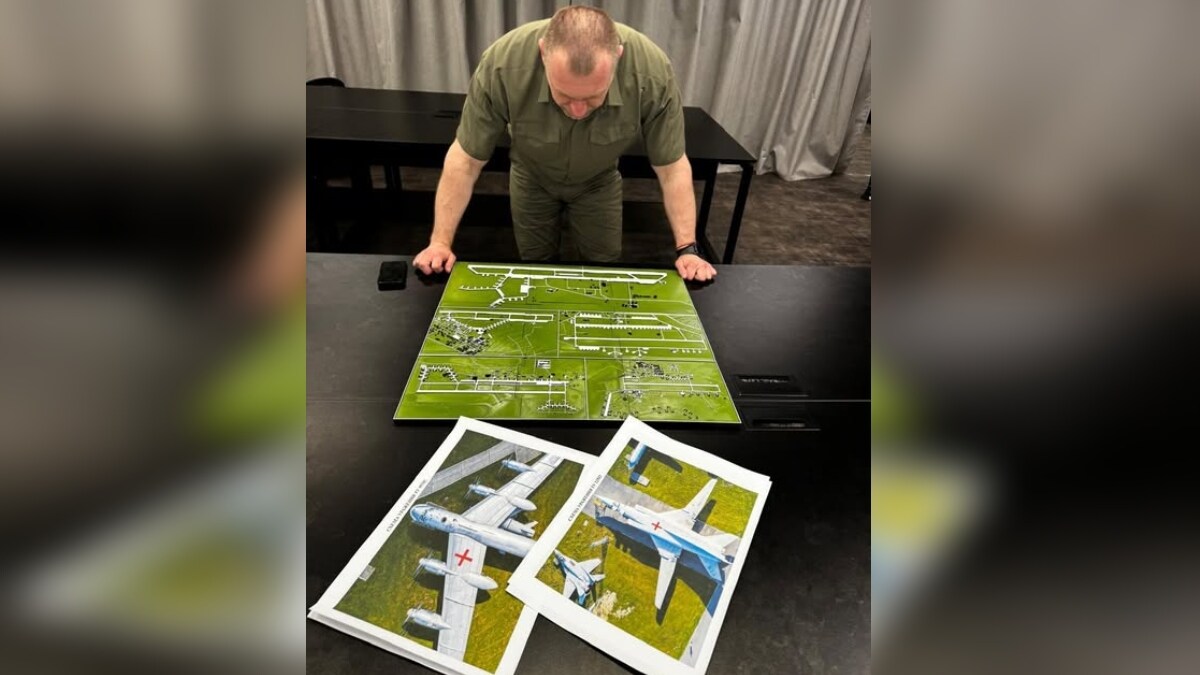
El jefe del Servicio de Seguridad de Ucrania, Vasyl Malyuk, observa imágenes que ayudaron a planficar el ataque a Rusia.
On June 1, Ukraine carried out the most significant long-range attack to date in its war with Russia. Utilizing over a hundred drones, the operation, known as “Web,” struck at least five military air bases within Russian territory. The offensive was executed by infiltrating trucks carrying the drones, resulting in considerable losses of Russian aerial assets with a significant strategic impact.
According to Ukrainian intelligence sources, the preparation for this complex operation extended over a year. Russia has condemned the attack, labeling it a terrorist act. This incident occurred at a crucial moment, just before peace talks were set to resume in Istanbul, Turkey, and following massive Russian bombings on Kyiv.
To date, we can identify the following main aspects of this offensive and surprising action by Ukraine:
KEY NO. 1 | DEEPER ATTACK INTO RUSSIAN TERRITORY
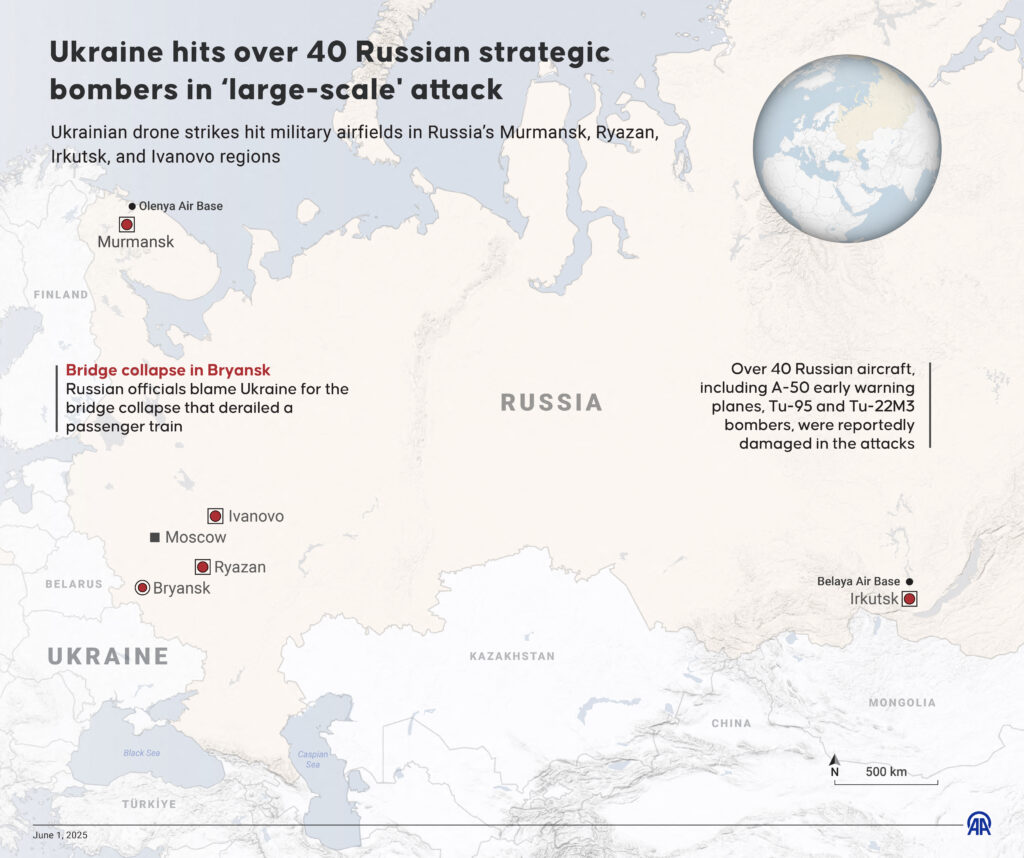
- Ukraine claims to have completed its largest long-range attack in the war with Russia on Sunday, having used drones smuggled into Russian territory to launch a series of significant strikes against at least 40 Russian warplanes at five military bases.
- The affected bases are reported to be Olenya (northwestern Russia, 1,585 km from Moscow), Ivanovo (251 km northeast of Moscow), Dyagilevo (290 km northeast of Moscow), Belaya (Siberia, over 4,000 km from Moscow), and Ukrainka (Siberia, over 5,800 km east of Moscow). Russia confirmed the Ukrainian attacks in five regions, labeling them a “terrorist act.”
- Ukrainian President Volodymyr Zelensky stated that the SBU security service used 117 drones in the so-called “Web” operation.
KEY NO. 2 | LOSSES OF STRATEGIC MATERIAL FOR RUSSIA
- Although the figures for damaged Russian aerial assets have not been officially disclosed, it is estimated that around 40 aircraft were affected.
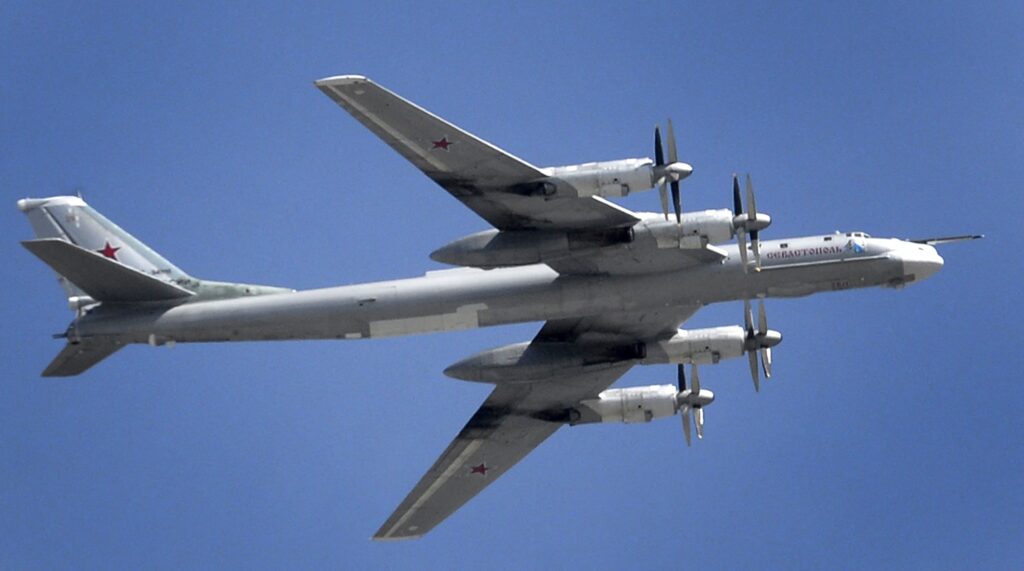
- In videos circulated on social media by Ukrainian forces, about eight Tu-95 bombers are visible (Bear), one Tu-22M3 (Backfire) and several other aircraft destroyed, likely including an A-50U early warning aircraft. Two Tu-160s (Blackjack) have also been mentioned as affected.
- The aforementioned material is no longer manufactured in Russia, making its replacement unlikely in the short or medium term. In fact, many of the affected aircraft date back to the Soviet era.
- Ukrainian sources indicate that the damage inflicted on Russia would amount to 34% of its strategic bombers, with an estimated cost of around $7 billion.
- The damaged material had been primarily used to attack targets in Ukrainian cities and territory.
KEY NO. 3 | IMPACT OF THE ATTACK ON PEACE TALKS
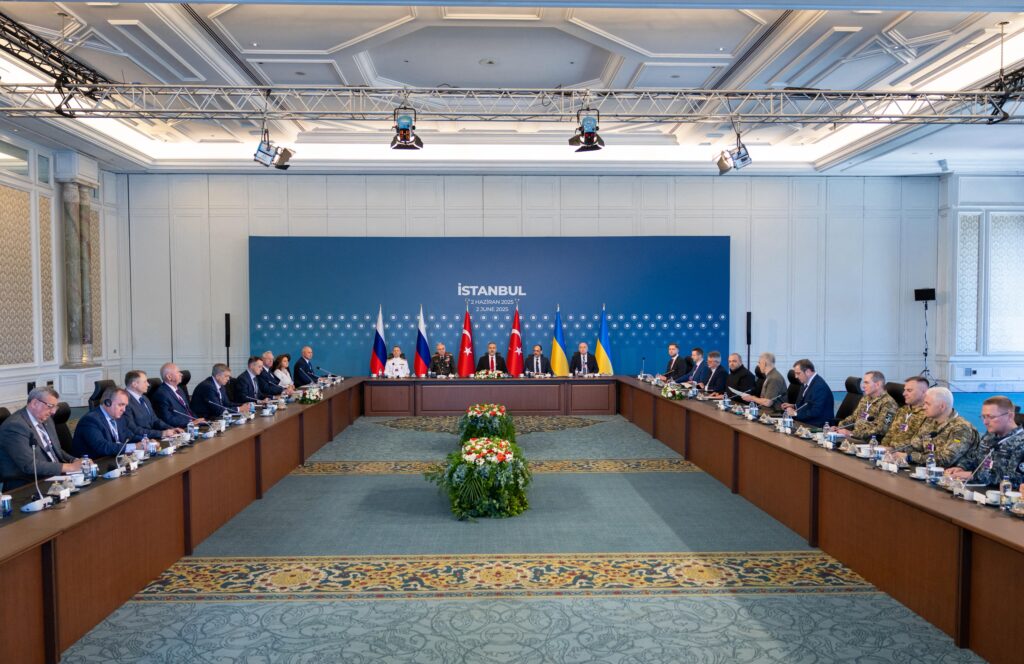
- Following an initial round of peace talks, which concluded with a large-scale prisoner exchange between the two countries, the second round began this week, but this time against the backdrop of a Ukrainian attack deep into Russian territory and a resumption of bombings against Kyiv.
- As is customary in negotiations during conflicts, parties often escalate their attacks to negotiate from a position of greater strength.
- Russia informed Ukraine during recent peace talks that it would only agree to end the war if Kyiv ceded large territories and accepted limits on the size of its military, according to a memorandum published by Russian media.
- The terms, formally presented in negotiations in Istanbul, highlighted Moscow’s refusal to compromise on its longstanding war objectives, despite calls from U.S. President Donald Trump to end the conflict in Ukraine.
- Ukraine insists on a complete cessation of hostilities as a basic condition.
KEY NO. 4 | ATTACK REFLECTS THOROUGH PREPARATION AND EXECUTION
- Ukrainian intelligence sources (SBU) informed the press that organizing the attacks took a year and a half.
- The targets attacked within Russian territory, using infiltrated means and high technology through drones—costing a few hundred dollars—implies thorough planning and intelligence preparation, as well as logistical means to carry it out.
- This demonstrates Ukraine’s capability to mount such attacks, additionally using surprise to strike Russian strategic targets.
KEY NO. 5 | RELEVANCE OF TECHNOLOGY AND SURPRISE
- This attack demonstrates a level of sophistication not previously seen during the current conflict.
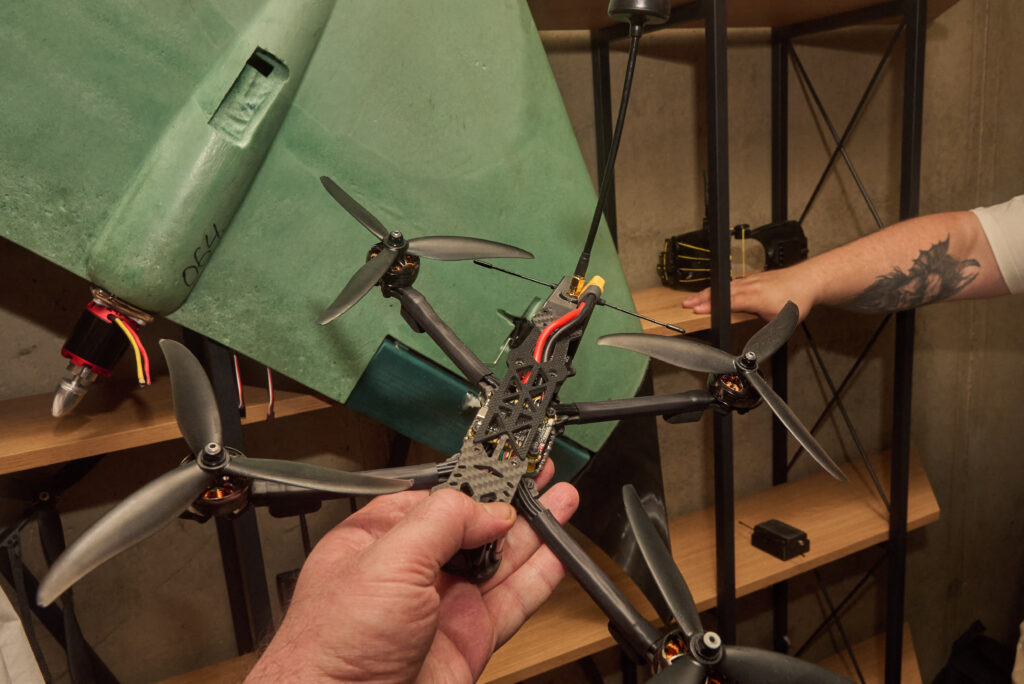
- It reflects that the use of technology alongside surprise can produce devastating effects at a low cost. Kyiv has successfully employed both domestically produced and foreign-purchased drones to attack Russian armored vehicles, troops, and vessels.
- Ukraine’s bold drone attack sends a crucial message to Russia and the West regarding Ukraine’s unconventional capabilities.
- Ukrainian intelligence sources (SBU) previously informed the press that last Sunday’s attack was carried out with drones hidden in mobile wooden cabins, with remotely operated roofs on trucks, which were brought close to the air bases and fired “at the opportune moment.”
- Zelensky also stated that all individuals involved in the operation had been safely evacuated from Russia prior to the attacks.
- The Ukrainian operation highlights the importance of constant innovation in a conflict.
- It is estimated that the executed operation required significant resources and technology for image processing, as well as for detection and location.
John Griffiths Spielman
June 3, 2025