From Global Rearmament to Regional and Local Rearmament
This article was translated automatically and may contain differences from the original. For reference, read the original.

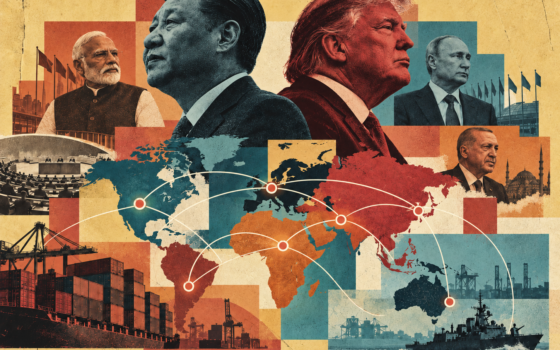
In times of transition in the international order, the competition and confrontation among great powers is one of its main characteristics. This typically means that the number of conflicts and wars increases in both number and intensity on a global scale, as evidenced by the current international situation. On the other hand, in the European context, an increase in defense budgets has been announced, based on the previously described geopolitical and strategic context, particularly in NATO member countries.
At the regional level, it is a fact that various countries are in the process of increasing investment in national defense, given the perceptions of global and regional security and the impact that these realities have on their national interests. At the neighborhood level, the political will of Argentina and Peru to strengthen their defense capabilities in the short term is noteworthy, aiming to at least recover and enhance their land, maritime, and air capabilities.
Nonetheless, Chile should, in its reflection and strategic thinking, address the impact that the current global situation could have on the defense of its sovereignty and, at the very least, on the maintenance of its current strategic capabilities. A primary consideration to note is the impact that the competition and confrontation between China and the United States will have on our national interests. At a minimum, the following points of interest should be mentioned—among others:
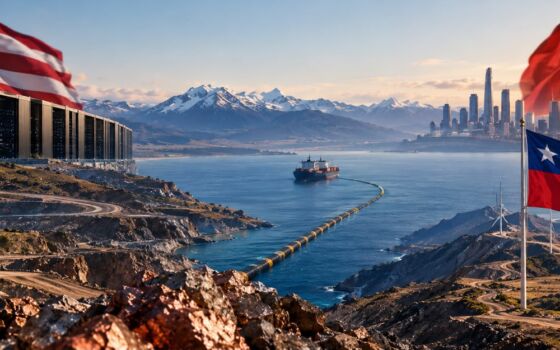
- The dominance and relevance of the current interoceanic routes over which Chile exercises sovereignty and influence: the Strait of Magellan, Beagle Channel, and Drake Passage. Additionally, control over an extensive continental maritime zone and territorial sea, rich in maritime resources and geopolitical significance.
- The increased activity in Antarctica, particularly in the area where Chile has defined sovereignty. The superpower that controls the poles (North and South) will have greater advantages in strengthening its maritime position as a global actor.
- Furthermore, Antarctica is a key location for strengthening and increasing global satellite networks and communications from a terrestrial platform.
- In any case, Chile is a key factor from the perspectives of logistics and communications with the Antarctic continent, with Punta Arenas being the most relevant port to ensure this condition, as well as having the most suitable airport to realize the aforementioned.
- The need to ensure effective border control over all territory and maritime and aerial spaces.
The effort to think strategically in order to better defend our national interest is a collective effort, where governments, private entities, and civil society are all relevant actors, with the national defense of Chile being one of them and a fundamental actor, additionally in the realization of effective sovereignty and as enhancers of national unity and cohesion.
On the other hand, the regional and national security situation has imposed—over the last decade—a greater scope of missions on the Chilean Armed Forces, in a context of reduced budgets and smaller personnel allocations. Therefore, our national defense, represented by the three branches of the Armed Forces, should not diminish its material or human capabilities in the previously defined context, unless we deliberately wish to weaken our strategic condition. Consequently, addressing their needs, requirements, and appropriate funding becomes a key aspect to avoid undermining the capabilities achieved over decades, as well as to face this new strategic context, global, regional, and neighborhood. This is because there is a growing demand from society to involve the armed forces in new tasks for longer periods, which not only affects personnel but also reduces the operational lifespan of systems incorporated for military functions, which have dual-use for other purposes.
The above takes on special interest given some recent national news and other not-so-recent reports regarding the non-fulfillment or postponement of funding commitments for the strategic capabilities of the Chilean armed forces, established in the new multi-year funding model. Stability and predictability in this area have been essential for defense and were characteristics of the funding system in place until a few years ago, a characteristic that allowed, in times of uncertainty, the recovery and development of strengths that have been fundamental. However, the systems and platforms that enabled the advancement of more modern and updated armed forces were mostly acquired second-hand, thus requiring adequate levels of maintenance or, ultimately, planning for their replacement due to obsolescence.
Our neighbors have every right to strengthen their defense, but national authorities have the obligation not to neglect the capabilities achieved over decades, maintaining the degrees and strategic advantages obtained, which give Chile greater freedom of action to face the risks, threats, but also the opportunities that the international system imposes on our country. As we approach the discussion of the Public Sector Budget Law for the year 2026, it demands from institutions and state powers, particularly from the National Congress and its members, a strong sense of responsibility to safeguard national interests. Neglecting this condition typically implies, in the short and medium term, a greater cost due to a lack of political foresight, with serious impacts on the operationality and capabilities of our armed forces.