The Rearmament of Europe: Great Ambitions Facing a Challenging Landscape
This article was translated automatically and may contain differences from the original. For reference, read the original.
- por José Tomás Tenorio
- Colaboraciones externas
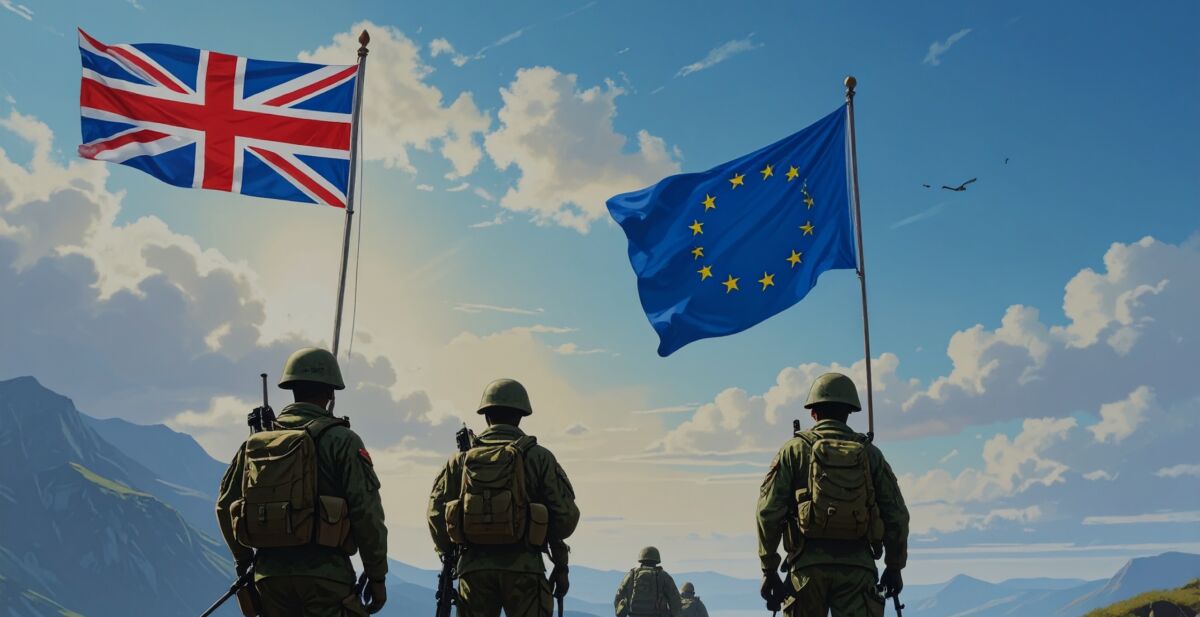
Europe is at a pivotal moment for the future of its defense. Since Russia launched a large-scale invasion of Ukraine in February 2022, it has become evident that President Vladimir Putin is willing to employ massive force to achieve his strategic objectives. The continent has seen the prevailing idea since the end of the Cold War—that it could continue to benefit from the so-called “Peace Dividend”—fade away, as it maintained limited military structures and continuously reduced defense spending to favor other key areas for national development.
While the European response was not as forceful during the early years of the war, when there was unwavering support from the United States for Ukraine and for the defense of the continent—except for the United Kingdom—the return of Donald Trump to the White House in 2025 changed the landscape. The U.S. president’s criticisms regarding Europe’s heavy dependence on Washington in military matters and the doubts he casts about his commitment to collective security served as a catalyst for European leaders to decide to transform their defense.
The continent thus understands that it must not only prepare to face a Russia that, according to estimates, could pose a direct military challenge to Europe as early as 2027, should the war in Ukraine end this year, but also must ready itself for a scenario in which it has to defend against this and other potential threats without U.S. support.
In recent months, the major military powers of the continent and the European Union (EU) have made a series of announcements regarding new strategies and multimillion-dollar investments to enhance their armed forces and achieve the desired strategic autonomy that would allow them to deter any attempt at aggression, or, in the worst case, to effectively repel it.
This is not merely about a quantitative increase in military budgets, but rather a qualitative transformation affecting the internal organization of European armed forces, their defense industrial and technological base, and intra-European cooperation. There is a need to review doctrines, accelerate technological innovation to prepare their armies for new forms of warfare, and strengthen their critical supply chains.
However, the ambitious goals set for European rearmament risk encountering significant difficulties caused by decades of disinvestment in the military sector. The reduction of defense industries in the countries of the continent, the size of their armed forces, and their military capabilities in general raise important questions regarding how effective European rearmament can be.
This report aims to analyze the challenges facing Europe and raise key questions that could determine the success or failure of this rearmament: what strategies and decisions are the main European countries adopting to address this cycle; what are the main obstacles—industrial, fiscal, political, and human—that need to be considered; and whether the pursuit of strategic autonomy for Europe can be compatible with efforts to keep the United States close within the framework of the North Atlantic Treaty Organization (NATO), to further enhance its deterrent capacity against Russia.
This analysis focuses particularly on six countries: the United Kingdom, France, Germany, Poland, Spain, and Italy, which concentrate the largest military capabilities and defense industry in the continent, and which, with differing approaches and decisions, can shape the overall direction of European rearmament. Nevertheless, the analysis of Europe as a whole is also part of this report, aiming to identify key points shared by the countries in the region that will also be decisive for the future of rearmament.
Finally, this report also looks at the opportunities that European rearmament opens up outside the continent, with a special focus on Chile and how the state can take advantage of this transformation in European defense, whether to access a renewed market for second-hand equipment, which is expected to become available as Europe renews its arsenals with new military systems, or to engage in joint development projects.
¿Quieres publicar con nosotros? Revisa nuestras normas para colaboradores externos.
Ver normas de publicación