Militarized Borders: A Solution That Does Not Address the Underlying Problem
This article was translated automatically and may contain differences from the original. For reference, read the original.
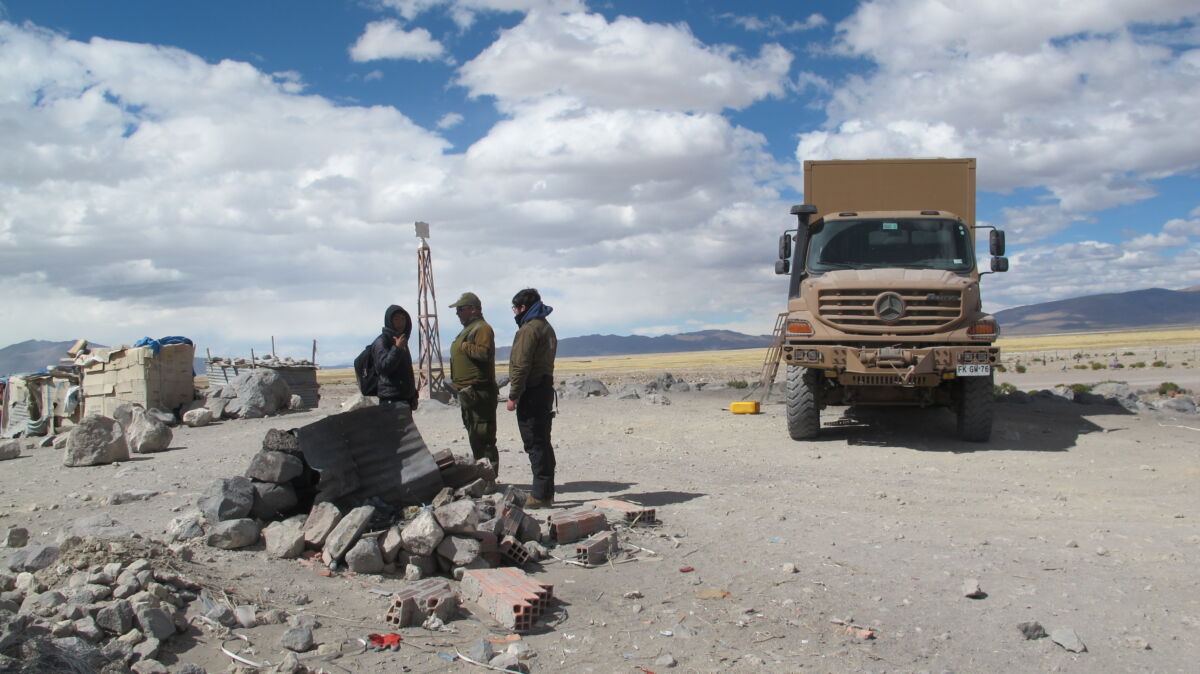
Militarizing the border, if implemented in isolation, is a shortsighted solution. For an effective security strategy, it is imperative to go beyond mere force deployment and address structural causes.
The recent announcement by President Gabriel Boric to deploy the Armed Forces through a supreme decree at the border to conduct identity checks, registrations, and even arrests in flagrante delicto, while also avoiding the three-year renewal of the mandate that allows their deployment, sounds powerful and aims to convey firmness. However, behind the military apparatus and the security rhetoric lies a costly public policy with questionable effectiveness, at best.
Any policy of this magnitude must be rigorously evaluated, especially when it involves granting police functions to institutions that, by constitutional mandate and training, are not designed for such tasks. The fundamental question is unavoidable: is this the appropriate mechanism?
The answer seems to emerge from the official data itself. A transparency request to the Joint Chiefs of Staff reveals an eloquent figure: between January and April, under Decree 78, 42,715 people were checked. Of that critical mass, only 35 were arrested. This represents 0.08% of the total. These statistics are not merely a curious fact, but a powerful indicator that should raise all alarms. The immense logistical and human deployment carried out by the Armed Forces—combined with their operations in the southern macrozone due to constitutional states of exception—has resulted in marginal effectiveness in their declared objective of directly combating crime at the border.
Valuing the role and discipline of the Armed Forces is one thing; employing them in tasks for which they are neither designed, nor trained, nor equipped is quite another, as it is not their primary function. The extremely low arrest rate strongly suggests that their presence, in the terms proposed, functions more as a visual deterrent—a political palliative—than as a structural solution to the border problem. The message is clear: we are facing a strategy that confuses military presence with effectiveness in security.
In the context of a serious public security crisis, citizens demand real solutions, not mere performances. The low number of arrests demonstrates that, without a profound redefinition of the comprehensive border control strategy, this measure will only serve to mask the magnitude of the challenge. This strategy must involve more refined police intelligence, strengthened international coordination, and an attack on criminal networks at their source.
Militarizing the border, if implemented in isolation, is a shortsighted solution. It is akin to reinforcing the front door of a house while leaving the back and side doors wide open. For an effective strategy, it is imperative to go beyond mere force deployment and address structural causes. This involves: first, reviewing the legal framework to effectively classify irregular entry; second, establishing credible deterrent measures on the ground; and third, creating a comprehensive registration system that allows for swift expulsions and successful redirections. Only then can irregular migration be truly disincentivized.