Growing Tension Between China and Japan Is Here to Stay
This article was translated automatically and may contain differences from the original. For reference, read the original.
- by Juan Pablo Toro
- Strategic Affairs
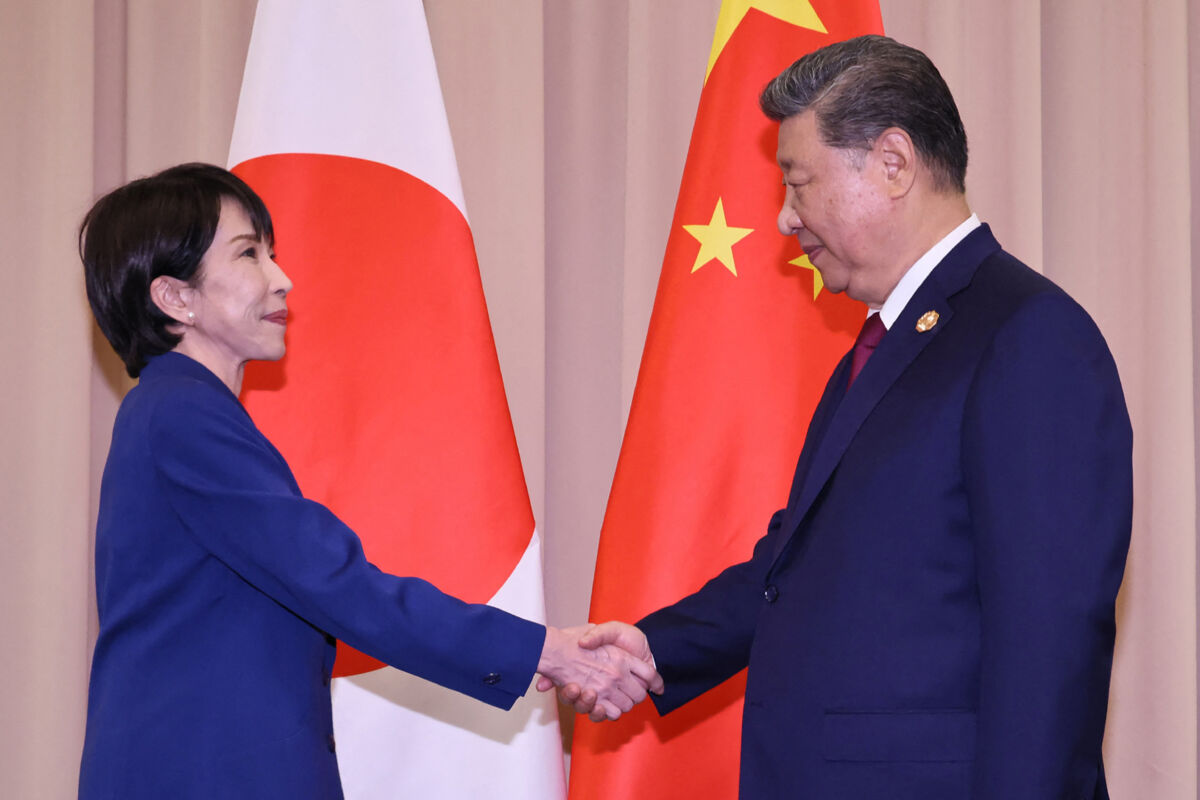
The Japanese economy requires open and secure maritime routes to function, and its westernmost island is only 100 kilometers from Taiwan, hence its concern about what may occur there.
With only a month in power, Sanae Takaichi is already facing her first neighborhood crisis, after the Japanese leader stated that in the event of a Chinese aggression against Taiwan, the country would have to mobilize military forces to ensure its survival.
Beijing’s outrage was swift. The consul general in Osaka, Xue Jian, went so far as to say that it was necessary to ‘cut the throat of that meddler,’ in a post that has since been deleted from platform X. Since then, messages of varying intensity have urged the Prime Minister to retract or prepare to pay for her audacity.
Tensions have escalated with deployments of Chinese ships and aircraft around the disputed islands, while bilateral tourism has plummeted. Indeed, governments are warning their citizens to exercise caution if they are in the opposing country. The Tokyo stock market is also feeling the impact, and Beijing is preparing to impose bans on imports of marine food products from Japan.
However, Takaichi merely made transparent a truth: to ensure the permanent flow of hydrocarbons from the Middle East and the export of high-tech products to international markets, the Japanese archipelago requires open and secure maritime routes. Given that Yonaguni—its westernmost possession—is only 100 kilometers from Taiwan, the potential capture of Taipei by China would create a new neighborhood that could compromise free transit through the Miyako Strait.
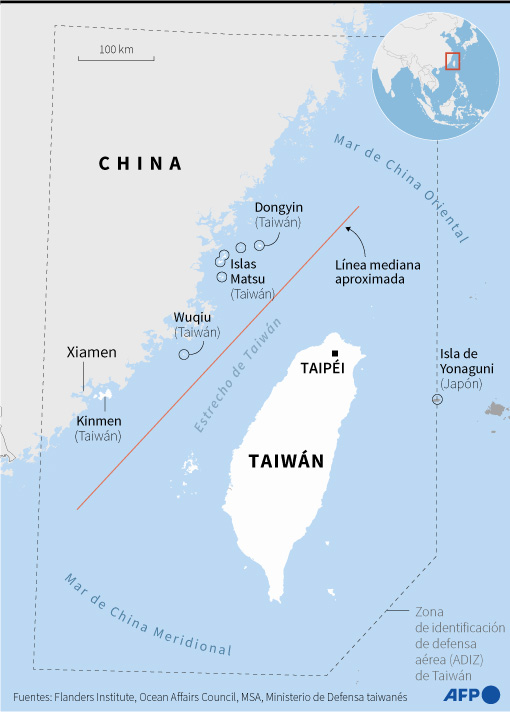
While diplomatic attempts are underway to ease the worst tensions in decades, the current scenario validates Japan’s National Security Strategy, which, at the end of 2022, identified China as the ‘greatest strategic challenge’ to achieving Japan’s peace and security, both due to its international positioning and its military and non-military activities.
Moreover, Takaichi is a faithful continuator of the legacy of Prime Minister Shinzo Abe, who articulated the vision of a Free and Open Indo-Pacific (FOIP), which is essentially a defense of the rules-based world order, of economies that advocate for unobstructed foreign trade, and of maritime democracies against authoritarian land powers.
In fact, Chinese propaganda newspapers, such as The Global Times, have emphasized that the conservative Prime Minister must abandon the FOIP doctrine, which prepared Japan to utilize all instruments of national power—including military ones—to navigate a more dangerous strategic environment.
Along with embracing the FOIP, Takaichi announced upon taking office that she would fulfill the ambitious goal of allocating 2% of GDP to defense spending, which, with $320 billion, would place Japan third among the countries that invest the most in this area. Currently, Tokyo is executing an accelerated naval construction program and developing unprecedented counterattack capabilities, based on the acquisition of cruise, anti-ship, and anti-air missiles.
In this regard, the Prime Minister has not innovated in assessing the impact that a potential Chinese occupation of Taiwan would have on Japan, as previous governments have expressed themselves in the same terms. What has changed is the way Beijing has weighed its statements, which occur when she has been in office for a very short time—and it is easier to weaken her—when she achieved a good understanding with U.S. President Donald Trump at the G-7 summit—key to maintaining the military alliance—and when Xi Jinping is advancing a purge of high-ranking military officials—complicating any large-scale operation. As is well known, appealing to the nationalist sentiment of the Chinese population is very easy when it comes to their Japanese neighbors, whose history is controversial.
Currently, the two opposing Asian powers have a territorial dispute over a group of islands that Tokyo calls Senkaku and Beijing calls Diaoyu, but their rivalry dates back centuries, when both territories were ruled by emperors with divine connotations. The most direct antecedents, in any case, are found in China’s defeat in the conflict of 1894 and 1895. This conflict resulted in Taiwan coming under Japanese control for five decades. Then came the Japanese imperial occupation of continental Chinese territory—including the Nanjing massacre—which only ended with the atomic conclusion of World War II in the Pacific.
Therefore, the tension of these days will take some time to dissipate, because the structural scenario is permanent. The encirclement around Taiwan is tightening every day due to the exercises of the Chinese Navy and Air Force, which openly rehearse how to impose a quarantine around the democratic island, which Beijing considers a ‘rebel province’ and whose future it treats as an internal matter. At the same time, there is a sustained increase in patrols in maritime areas and airspaces of the People’s Liberation Army close to Japan’s borders; some combined with Russian units.
Above all, the crisis currently facing the second and fourth largest economies in the world is testing conservative Takaichi, who during her campaign to become Prime Minister declared that her goal was to be the ‘Iron Lady,’ following the example of her admired Margaret Thatcher. This is a challenge that has come very early, perhaps too early.
Juan Pablo Toro
November 19, 2025