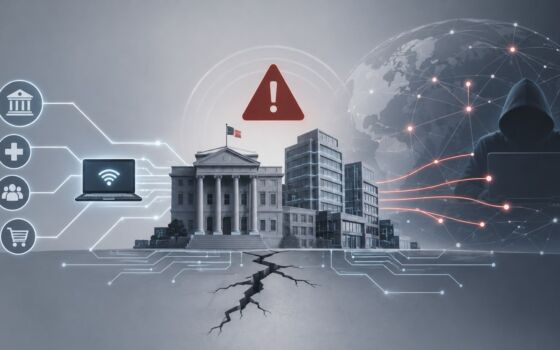
The Leader as Vulnerability: Character, Judgment, and Institutions in Times of Strategic Competition

The case of Jensen Huang, founder and former CEO of Nvidia, illustrates how a leader's private conduct can become a vulnerability for the organization they lead. After acknowledging an extramarital relationship to his employees, Huang faced scrutiny that intensified when U.S. media reported that the woman involved might be a Chinese intelligence agent.
The episode ultimately precipitated his departure from the company1, whose strategic value extends beyond the business realm given its central role in the technological competition between the United States and China. Beyond the specific circumstances of the case, what happened raises a fundamental question: what distinguishes the leader who protects the institution he leads from the one who, through his decisions and conduct, ends up exposing it?
The leadership of those who run large organizations is tested at the blurred boundary between the individual’s private sphere and the institution, where the leader’s judgment, private conduct, and inner circle become part of the vulnerability surface of the organization he leads. This type of leadership, exercised at the strategic level, is defined as the process of aligning people, systems, and resources to achieve the organization’s vision while enabling an adaptive and innovative culture capable of gaining advantage in a competitive environment2.
For those who lead organizations at that level, whether a government, a company, or a public institution, the power they hold weakens some of the external checks and leaves the leader’s own character as the last safeguard. That is why the leader who governs his institution is the one who learns to govern himself and to read the environment in which he operates. This ability rests on three dimensions: personal, situational, and institutional.
THE PERSONAL DIMENSION
In this dimension, a key factor is self-awareness, understood as the leader’s capacity to see accurately his strengths, his weaknesses, and the effect his conduct has on others. This attribute has an internal side, referring to clarity about one’s own values and reactions, and an external side, referring to how others perceive us; experience and power tend to erode the accuracy of both3. Moreover, at the top of organizations, leaders receive less honest feedback from their subordinates precisely when they need it most4. The Huang case shows how that vacuum operates. After more than three decades at the helm of Nvidia, it is reasonable to assume that those around him had few incentives to challenge him. A personal relationship with an executive from a client could exist without anyone compelling the leader to view it with the distance it demanded. Knowing oneself, however, is only the first step, because the leader must also be able to exercise restraint when power seems to authorize everything.
Temperance allows the leader to maintain consistency between the values he proclaims and his conduct. Success brings with it privileged access, control over resources, excessive confidence in one’s own abilities, and a loss of focus, conditions that explain why successful leaders commit ethical lapses they would previously have avoided5. Added to this mechanism is the allure of power, which manifests itself in the desire to belong to a privileged circle and leads people to give ground on matters they would never have accepted6. Research on the character of senior executives has shown that integrity is the trait most consistently associated with their performance7. In his letter to employees, Huang himself wrote that there is “no excuse” for what he did8, an acknowledgment that lays bare the gap between the integrity expected of someone leading a company of that magnitude and his own conduct. More than three decades of a distinguished career were thus placed under scrutiny because of an episode that occurred at the very top. A leader who knows himself and exercises restraint is better positioned to recognize that his own person is part of the environment his adversaries are watching.
THE SITUATIONAL DIMENSION
The strategic leader must lift his gaze from day-to-day management to detect in time the signals in the environment that anticipate risks and opportunities. A study of senior executives at global companies concluded that the leader’s attitude toward the periphery of the organization is the factor with the greatest effect on its capacity to anticipate change9. That vigilance often fails because executives operate with a ghost scenario, that is, an implicit view of the future that they never put to the test10. For whoever leads Nvidia, the environment includes a strategic adversary with the capability and the motive to approach the person who concentrates the company’s knowledge. According to the U.S. officials cited by The New York Times, that would have been the purpose of the woman with whom Huang had the relationship11. It is worth asking whether the analysis of the environment in which Nvidia’s leadership operated included its founder’s inner circle as an avenue of access, or whether that possibility was never put to the test. Detecting that exposure is the leader’s responsibility, although lasting protection against it depends on an organization capable of functioning without everything resting on him.
THE INSTITUTIONAL DIMENSION
This dimension is expressed in the leader’s ability to ensure that the organization he leads can continue to succeed after his departure. That requirement grows as the leader rises, because higher levels of responsibility force him to shift his attention from his own development to the long-term trajectory of the institution12. An organization’s vision usually extends beyond the tenure of whoever formulates it, which is why the leader must build teams that prepare his successors13. The best leaders develop a genuine interest in forming the next generation and place the long-term well-being of the institution above their personal interests14. Nvidia shows the cost of that omission, considering that Huang has led the company for more than three decades and, according to analysts cited by The Economist, the company has no natural successor. The loss of nearly $500 billion in market value in a single week gives a measure of how much investor confidence rests on a single person15. An organization that depends on its founder to sustain its value is exposed every time that leader’s conduct is called into question.
CONCLUDING REMARKS
The three dimensions converge on a single requirement for anyone who leads an organization at the highest level: to treat their own conduct as a matter of institutional security. The leader who protects his institution knows himself and exercises restraint when power offers him reasons not to, reads an environment in which his own person is a potential target, and, finally, builds an organization capable of outliving him. This requirement extends beyond the corporate world to those who lead ministries, armed forces, and intelligence services, whose leaders also concentrate sensitive knowledge and attract the interest of state actors. The Huang case is a reminder that, in a context of great-power competition, the leader’s integrity is part of the strategic capabilities of the institution he leads.
ALEJANDRO AMIGO
Senior Researcher, AthenaLab

References
- Reuters. (2026, November 12). Nvidia CEO Jensen Huang resigns in blow to AI boom he helped foster. https://www.reuters.com/business/retail-consumer/nvidia-ceo-jensen-huang-step-down-big-blow-ai-boom-2026-11-12/
- Galvin, T. P., & Watson, D. E. (Eds.). (2019). Strategic leadership: Primer for senior leaders (4th ed.). U.S. Army War College, Department of Command, Leadership, and Management, School of Strategic Landpower. Ch. 1, p. 2.
- Eurich, T. (2018). What self-awareness really is (and how to cultivate it). Harvard Business Review.
- Tost, L. P., Gino, F., & Larrick, R. P. (2013). When power makes others speechless: The negative impact of leader power on team performance. Academy of Management Journal, 56(5), 1465-1486.
- Ludwig, D. C., & Longenecker, C. O. (1993). The Bathsheba syndrome: The ethical failure of successful leaders. Journal of Business Ethics.
- Lewis, C. S. (1944). The inner ring [Lecture]. King’s College, University of London.
- Sosik, J. J., Gentry, W. A., & Chun, J. U. (2012). The value of virtue in the upper echelons: A multisource examination of executive character strengths and performance. The Leadership Quarterly, 23(3), 367-382.
- NVIDIA. (2026, November 8). A message to our company [Press release]. NVIDIA Newsroom. https://nvidianews.nvidia.com/news/a-message-to-our-company
- Day, G. S., & Schoemaker, P. J. H. (2008). Are you a “vigilant leader”? MIT Sloan Management Review.
- Lang, B., & Ramírez, S. (2024). How ghost scenarios haunt strategy execution. MIT Sloan Management Review. Ramírez et al. (2026).
- The New York Times. (2026, November 6). China’s Top Agency recruited woman who targeted Jensen Huang. https://www.nytimes.com/2026/11/06/us/politics/chinese-spy-agency-nvidia-jensen-huang.html
- Galvin, T. P., & Watson, D. E. (Eds.). (2019). Strategic leadership: Primer for senior leaders (4th ed.). U.S. Army War College, Department of Command, Leadership, and Management, School of Strategic Landpower. Epilogue (Galvin), p. 95.
- Galvin, T. P., & Watson, D. E. (Eds.). (2019). Strategic leadership: Primer for senior leaders (4th ed.). U.S. Army War College, Department of Command, Leadership, and Management, School of Strategic Landpower. Ch. 1, p. 5.
- Hernandez, M. (2008). Promoting stewardship behavior in organizations. Journal of Business Ethics.
- The Economist. (2026, November 11). There has never been a scandal like the Jensen Huang affair.