COLUMN | The U.S. and China: Elephant Fight
This article was translated automatically and may contain differences from the original. For reference, read the original.
El Mercurio, June 3, 2019
Singapore In light of the tension between the powers, Chile should seek a common position with Pacific countries to propose that a prosperous and secure region, based on rules, is beneficial for all.
Juan Pablo Toro V.
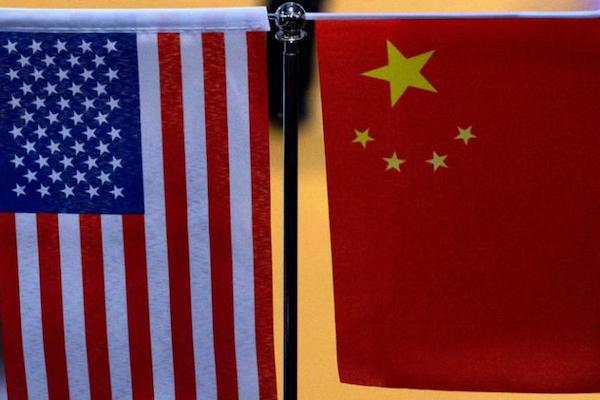
“When elephants fight, it is the grass that suffers.” This proverb, cited by Singapore’s Prime Minister, Lee Hsien Loong, became one of the most repeated phrases during the latest edition of the Shangri-La Dialogue—the most important security conference in the Asia-Pacific organized by the International Institute for Strategic Studies (IISS)—to describe the concern caused by the rivalry between the United States and China.
Now that the two largest global powers are engaged in a trade, technological, currency, and verbal war, anxiety was prevalent in this venue. Defense ministers, diplomats, experts, and journalists who came from France to Tonga agreed, with varying degrees of emphasis, that there is an upward pattern of hostility.
This is serious, as history still teaches. If measures are not taken to reduce friction, the parties may fall into “Thucydides’s Trap,” which arises from the structural tension caused by a rising power against an established power, ultimately leading to conflict (Athens versus Sparta, or Germany versus Great Britain).
Fortunately, this can be avoided if the real intentions of the rival are understood. Perhaps this was what led the defense ministers of both powers to choose the Shangri-La Dialogue to clarify their positions, even if it does not lead to reconciliation.
The U.S. Secretary of Defense, Patrick Shanahan, officially launched the Indo-Pacific Strategy here, an approach that, as its name suggests, includes India in the equation to counterbalance China.
The document indicates that this populous and prosperous region faces an increasingly confident and determined China that is even willing to accept some friction in pursuit of a range of political, economic, and security interests.
As it continues its economic and military rise, China “seeks regional hegemony in the Indo-Pacific in the short term and ultimately global preeminence in the long term,” the text states. This already poses a problem for the United States, which has been the dominant power in the region since the end of World War II.
Above all, it is noted that China is a “revisionist” country that, under the leadership of the Communist Party, undermines the principles of the rules-based international system while exploiting its benefits. For example, through the “militarization” of disputed islands in the South China Sea and the consequent restrictions on freedom of maritime and aerial navigation imposed in those areas.
The text, which must already be under study in foreign ministries and defense ministries across the Pacific, goes much further than Shanahan’s previous discourse last Saturday, when he stated that “the United States and China can still have a constructive relationship,” even amid tough competition, which is not the same as conflict.
The document was responded to the next day by Chinese Defense Minister General Wei Fenghe, who came accompanied by a large delegation of generals and colonels, who took advantage of each central or thematic conference to establish positions on issues such as cybersecurity or illegal fishing.
Wei, tremendously empowered, spoke of his country’s purpose to promote “peace and development” in the region, citing the Belt and Road Initiative as an example. But he also precisely outlined the red lines for foreign powers that, in his opinion, come from afar to cause problems whose consequences will be felt by those living in this part of Asia.
In the case of Taiwan, he stated that if anyone has the audacity to attempt to politically separate the island from the mainland, the Chinese armed forces “have no choice but to fight, bearing all the costs, all the costs, for national unity.”
And regarding the South China Sea, he asserted his country’s “legitimate right” to build bases on islands and reefs to “defend its territory.” He rejected the concept of “militarization” and explained that this was a response to the presence of external powers that, claiming freedom of navigation, threaten his country’s security with ships and aircraft. Although during the questions many representatives from Southeast Asian countries emphasized that these are disputed areas, Wei did not even flinch.
Amid the current tension from a trade war, he highlighted the meeting he held with Shanahan here, where they discussed cooperation, coordination, and communication. And just as his colleague did—who stated that the U.S. does not want conflict—Wei also combined good manners with warnings.
“If the United States wants to talk, we will keep the door open. If it wants to fight, we will fight to the end,” the general stated.
At this point, it is already clear that the bilateral relationship between the United States and China is the most important in today’s world. The way the two leading powers resolve their tensions will define the international environment for many years. And the main problem both nations face is the “lack of strategic trust,” in the words of the Singaporean Prime Minister.
Such opportunities to witness this level of direct exchanges are rare. Santiago will also have this opportunity. It is hoped that Chile will take note of what occurred in Singapore and use this time before the APEC summit in November to align positions with part of the “grass” (Australia, New Zealand, Canada, Japan, Singapore, Peru, Mexico, and South Korea, for example) to propose that a prosperous and secure (Indo or Asia) Pacific, based on political and commercial rules, is beneficial for all. Waiting naively for the elephants to come to an agreement or start fighting is not an option.
Juan Pablo Toro V. is the director of the AthenaLab Center for International Studies and Security.