The Armed Forces in the 2022 Constitution
This article was translated automatically and may contain differences from the original. For reference, read the original.
El Mostrador, November 17, 2020
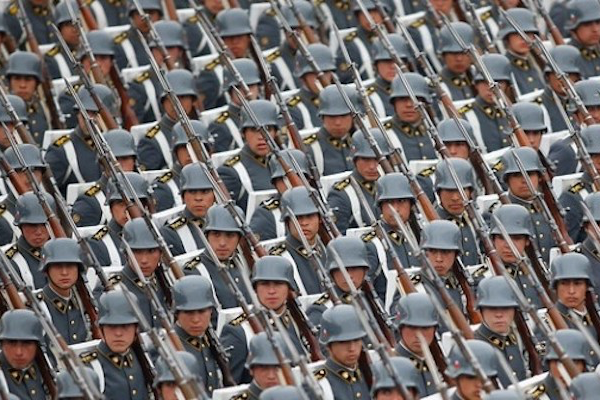
I understand the need for constitutional scholars to play a primary role in the process of drafting the Constitution, but I also believe it is necessary for the new Magna Carta to be richer in content than the 1980 version. I say this because the current one lacks a narrative; it does not state what the Armed Forces are called to protect, nor does it define what Chile is or, even less, the national interest. The Armed Forces require armament to fulfill their primary purposes, but we do not want them influencing politics or engaging in activities that are not their own, and that is something we want to be very well regulated in the Constitution, as well as ensuring that the use of violence is solely the responsibility of the State, with all the restrictions and safeguards that must be applied.
On Thursday, November 12, a very interesting discussion was held on the role of the Armed Forces and Law Enforcement. This debate, part of the Democratic Republic conversation series, was organized between El Mostrador and the Faculty of Law at the University of Chile, and featured speakers including Marisol Peña, Francisco Zúñiga, and Claudio Fuentes, with additional interventions from the director of this media outlet, Federico Joannon, Dean Pablo Ruiz-Tagle, and Felipe Abbott. If anyone wanted to ask questions or make comments, they had to do so via the chat tool available in the webinar.
The first thing I highlight is that one of the six chapters was dedicated to this topic, but unfortunately without the participation of experts in the Armed Forces or Law Enforcement. Can you imagine discussing education in Chile without Mario Aguilar and the Teachers’ College, or health without Izkia Siches and the Medical College? Well, that happened here, without invited experts, without the institutions and their ministry.
I acknowledge that Marisol Peña and Claudio Fuentes are familiar with the institutions, but they are not experts on the purposes, roles, missions, and organization of these institutions or on the traditional and modern threats that may complicate our lives in the future, as well as on the national interests that the institutes are called to defend. As a result of a comment I made, Dean Ruiz-Tagle committed to creating an additional chapter with the participation of experts, which is appreciated and demonstrates the seriousness with which this work is being undertaken.
I understand the need for constitutional scholars to play a primary role in the process of drafting the Constitution, but I also believe it is necessary for the new Magna Carta to be richer in content than the 1980 version with its multiple revisions. Why do I say this? Because the current one lacks a narrative; it does not state what the Armed Forces are called to protect, nor does it define what Chile is or, even less, the national interest.
I understand the legal role that the Constitution plays, but in its 2022 version, we are asking it not only to be the principal and highest-ranking law; we want it to state what Chile is and who Chileans are. We want it to identify where we come from and where we want to go; we want it to take into account everyone—those who have been, those who are, and those who will be—regardless of their social, religious, ethnic background, or geographical location. We want it to encompass everything that is our country, leaving nothing out, and we want it to do so because the Armed Forces have the primary mission of protecting and defending Chile and Chileans, its territory, its sea, its airspace, and the marine subsoil, its exclusive economic zone, and the national interest, wherever it may be located.
Having defined the purpose of the Armed Forces—including the additional roles that may arise from their versatile capabilities or the need for them to participate or not in Constitutional States of Exception—we must address the issue of the appropriate and correct use of force by the institutions. This begins with understanding that the monopoly on the use of force belongs to the State, which delegates it to the institutes and the police, and, in rare exceptions, to value transport services or organizations of that type.
The use of force cannot be permitted to other types of organizations, as it confers extraordinary powers to those who possess it, which by their nature must be limited and highly regulated, and directed solely to achieve the purpose for which they are designed. There are plenty of examples—both in Chile and elsewhere in the world—of the misuse of the power of arms, whether by the Armed Forces or by criminal, terrorist, and insurgent organizations, or by governments that maintain themselves in power through the use of arms.
The Armed Forces require armament to fulfill their primary purposes, but we do not want them influencing politics or engaging in activities that are not their own, and that is something we want to be very well regulated in the Constitution. We also want to ensure that the use of violence is solely the responsibility of the State, with all the restrictions and safeguards that must be applied, and not as suggested by Jorge Costadoat in his column on Saturday, November 14, in this media outlet, where he allows for the possibility of legitimizing the use of violence, based on examples such as our War of Independence and the Votive Temple of Maipú, erected as an offering to the Virgin of Carmen.
I argue, unlike Claudio Fuentes, that everything important related to the use of force by the armed institutions must be defined in the Constitution, including their organization, dependencies, leadership, and selection and admission of their members. This issue is too important to be left to laws of lesser rank, and it is something that all Chileans must agree upon.
I invite everyone to participate in the discussions leading up to the formation and operation of the part of the constituent assembly that addresses the topic of national defense, the roles and purposes of the armed institutes, and their organization. This is something that experts, institutions, and the people of Chile need to agree upon, and where constitutional scholars will help us give it a logical and appropriate legal form, while being clear that we need a narrative that makes absolutely clear why we have Armed Forces and why this must be in the Constitution. On October 25, Chile asked for content over form; it asked for a shared narrative rather than a legal document, and it asked for everyone to participate, which, in my opinion, includes the Armed Forces, which certainly have much to contribute and offer.
I conclude this column by inviting you to look toward the future and not through the rearview mirror, as Felipe Abbott’s question forced us to do—concerned that we might not experience another 1924 or 1973—because if we do, we will remain stuck in the past and will not advance toward the Chile that we all deserve, and we will remain in the Chile that divides us and from which we want to evolve.
Richard Kouyoumdjian
Vice President AthenaLab