Crime and Official Contradictions
This article was translated automatically and may contain differences from the original. For reference, read the original.
El Líbero, January 7, 2023
Focusing on interagency work is urgently needed to address security challenges; however, this coordination should be framed within a national strategy.
The year-end pardons did not go unnoticed. The extensive criminal records of those pardoned confirmed doubts about the real concern of the President for security. Gone are the phrases like “we will be relentless in the pursuit of crime” or “in a rule of law, violence is unacceptable.” It seems that the dogs were merely companions and that the rule of law surrendered to the criminal. The result: a high disapproval of Boric’s management and the highest level of perceived insecurity.
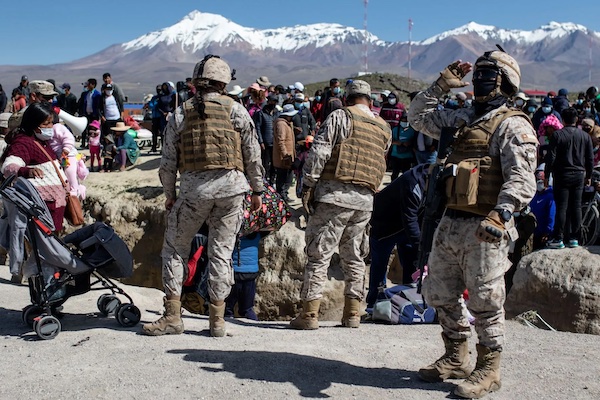
What do we do in a scenario like this, where trust in leaders has been lost? In response to this question, we have begun to see citizen arrests, a decline in reports, and a concerning loss of confidence in the rule of law. The reactions: looking to those institutions that perform well and seeking answers from them. I am referring to the Armed Forces. This week, PPD, UDI, RN, and Democratic senators presented a constitutional reform proposal for the Armed Forces to collaborate with civil and police authorities on issues of human trafficking, drug trafficking, and organized crime in border areas.
Focusing on interagency work is urgently needed to address security challenges; however, this coordination should be framed within a national strategy, a state policy built on a cross-party agreement.
But how difficult it seems to achieve that cross-party agreement when the government sends contradictory signals! Parliament is trying to provide answers to citizens through proposals like this, seeking to address an issue that, while the responsibility of the Executive, seems not to be among its priorities. But the responsibility does not lie with Congress; it is undoubtedly a key link in the security chain, but the leadership of this chain rests with the President, who, through actions like those at year-end, weakens the state day by day and cedes territory to crime.
Some say that politics is the art of governing, others, the art of the possible, but beyond everything we can say about it, one thing is clear in both phrases: not everyone is an artist. It is clear that not all of us are Da Vinci, but that does not mean we should not give our best and center the needs of those who are governed.
In this sense, the latest survey CEP showed thatcrime tops the priorities of citizens, so we would expect the same from those who govern us. Why say it conditionally? Well, because it is still unclear that it is a priority for all those in the ruling coalition, especially after hearing some parliamentarians from Apruebo Dignidad call for more pardons for those who destroyed entire areas of Chile during the social outbreak.
2022 began and ended with significant security problems, and 2023 started the same way. Let us ask the government to at least provide more answers than questions. Will it be so? We do not know, but we are starting off poorly.
Pilar Lizana
Researcher, AthenaLab
Source: El Líbero