Ricardo Montero Allende and the Undersecretariat of Defense
This article was translated automatically and may contain differences from the original. For reference, read the original.
El Mostrador, August 23, 2023
All that remains is to wish Undersecretary Montero the best, as he comes with academic preparation and experience in both the Ministry of National Defense and the Ministry of the Interior and Public Security. It is expected that he will be able to serve for more than six months in the position and that the senators who cannot forgive him for the idea of eliminating the Senate (in the Constitutional Convention project) will allow him to work. On the other hand, we hope he can cope with the ghosts of his time as a constitutional convention member, related to the role of the Armed Forces, states of constitutional exception, the use of force, and human rights.
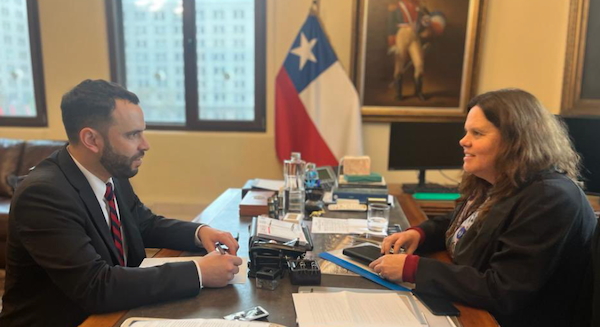
On Wednesday, August 16, the fourth Undersecretary of Defense was appointed during the Boric administration. Ricardo Montero Allende replaced Víctor Jeame Barrueto, who, despite his good performance, did not serve for six months in the position. No one quite understands the reasons for the replacement of the former deputy and former metropolitan intendant, just as the departure of Gabriel Gaspar in March of this year was also not well understood. Barrueto had experience and political capacity, which is not abundant at Zenteno 45, and on the other hand, Gaspar was by far the person from the left who knows the most about defense issues.
What the President of the Republic seeks or wants with this new change is difficult to know, and it may be advisable for La Moneda to clarify it, as otherwise it allows rumors to speak, which is not good. I am sure it is not that Montero’s predecessor fell out of favor with the President for not being a defense expert, nor that it is a settling of scores by the Minister of the Interior with Barrueto over internal PPD matters, or that Ricardo Montero will replace Maya Fernández the day she leaves to run for an elected position, nor the more fantastical possibility that Minister Tohá sent her former chief of staff to take control of the Ministry of Defense to use it with fewer restrictions on security issues.
We may never know why Undersecretary Montero arrived, but the change is already made, and his appointment is a presidential prerogative, regardless of the discomfort it caused Senators Espinoza or Quintana. That said, we know what is expected of an Undersecretary of Defense and what works well in this position, as we have the successful examples from the two Piñera administrations and Bachelet 2, which is nothing more than permanence in the position, as the issues he must handle require knowledge and experience in the field, something that was abundant in the cases of Óscar Izurieta, Marcos Robledo, and Cristián de la Maza.
The characteristics and responsibilities of this position are clearly detailed in Law 20.424 of February 2010, in its Title II, relating to the undersecretariats, and in the specific regulations and supreme decrees that precisely detail the organization, tasks, and products developed by this public agency. This work is the result of the management of the three mentioned undersecretaries, all of whom served four years in the position and had time to leave the Undersecretariat of Defense well organized, to the point that the person currently occupying the position only needs to know about defense, and if they do not know, learn quickly, just as the outgoing undersecretary was doing.
All that remains is to wish Undersecretary Montero the best, as he comes with academic preparation and experience in both the Ministry of National Defense and the Ministry of the Interior and Public Security. It is expected that he will be able to serve for more than six months in the position and that the senators who cannot forgive him for the idea of eliminating the Senate (in the Constitutional Convention project) will allow him to work. On the other hand, we hope he can cope with the ghosts of his time as a constitutional convention member, related to the role of the Armed Forces, states of constitutional exception, the use of force, and human rights.
The Undersecretary of Defense is now a key actor in the political management of National Defense. This is mainly due to this and not to the needs of public security. It is he who must ensure that National Defense exists to fulfill its main roles and that it is only an exceptional contributor to solving the problems of Undersecretary Monsalve. If the undersecretary does not believe in the narrative, no one else will.
Richard Kouyoumdjian
Vice President of AthenaLab
Source: El Mostrador