Learning from the Ecuadorian Case
This article was translated automatically and may contain differences from the original. For reference, read the original.
El Líbero, January 12, 2024
Ecuador is not Chile; however, violence in the country has rapidly increased, criminal gangs have consolidated in a few years, and transnational crime is seeking new options.
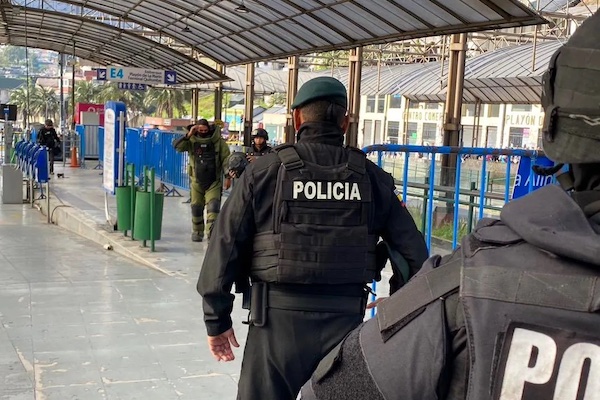
Violence in Ecuador has reached a point of no return where the government and opposition have set aside their ideological differences to combat a “war” against organized crime gangs. The President Noboa has announced amnesty and pardons for military personnel and police while attempting, by any means necessary, to regain control of the cities.
The signs of deteriorating security in that country have been accumulating for years. 2021 was the period of the greatest increase in violence, followed by a rise in criminal control in a context of drug distribution and a rather inactive state. Citizens’ trust in the police declined as power vacuums were filled, from prisons, by organized criminal groups that began to fragment in 2022.
There are many lessons that Chile must learn from the Ecuadorian case. The first, and most important: the moment to react is crucial. Waiting for chaos to arrive is not an option. At the first sign, the state must respond.
Also read by Pilar Lizana: Ecuador: The red flag that Chile cannot ignore
And, for this, it is essential not to forget the second lesson: it is fundamental to have a cross-party political agreement on security matters. But one where opposition and ruling leaders, with a broad perspective, set aside ideological differences. This is especially relevant in the national case, as that same agreement must occur within the governing coalition. The pardons for prisoners for protests during the social outbreak are an example of this, as they undermined all the efforts that Minister Tohá had made to initiate the security table.
Thirdly, it is particularly important to understand the criminal environment in which Chile is situated and what attractions crime might find. Our country has a privileged location in the Pacific, looks towards markets where the price of a kilogram of cocaine reaches its highest value ($150,000 in Oceania and $80,000 in Asia) and has port infrastructure and a reputation that could allow them to distribute contaminated containers with a low probability of inspection.
A fourth lesson undoubtedly relates to the strength and consolidation of the Ecuadorian state. The greater the strength and consolidation, the more difficult it is for crime to penetrate. This is not only related to institutional health but also to political stability.
Ecuador is not Chile, but that does not mean we should feel at ease. The arrogance behind this argument could backfire. Violence in the country has rapidly increased, criminal gangs have consolidated in a few years, and transnational crime is seeking new options.
The time has come to humbly acknowledge that the Latin American reality is a possibility for Chile, to look at Ecuador with the intention of drawing lessons learned and addressing all those red flags that have been raised and that could be raised.
Pilar Lizana
Senior Researcher, Athenalab
Source: El Líbero