Perceptions and (In)security in Chile
This article was translated automatically and may contain differences from the original. For reference, read the original.
El Líbero, April 19, 2024
The legitimacy of the democratic system to resolve its problems is at risk; people are looking at authoritarian models that could address the crisis because they no longer believe that the tools we have are sufficient.
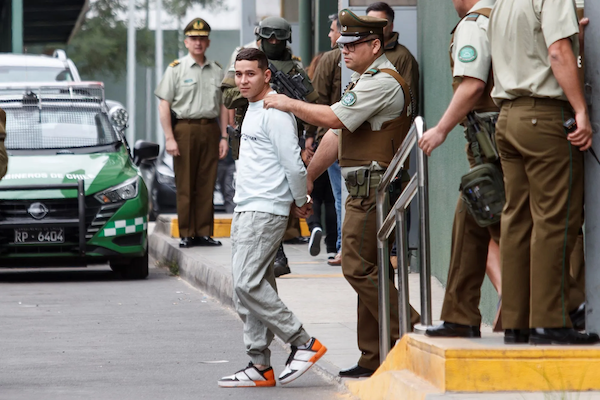
Violence has come to stay. Not in terms of the objective data provided by indicators, but in terms of the impact it has on daily life. The best example is the 51% who, according to the Bicentennial UC Survey, say that walking alone on the street at night makes them feel a lot or quite a bit of fear. And how could it not! This summer, we learned of the crime involving a former Venezuelan military officer, a few weeks ago about the murder of a police officer during a robbery, the control that the Dominican criminal group Los Trinitarios exerted in the Cerrillos takeover, and this week about the four homicides in twelve days in the Tarapacá region.
The new security landscape in Chile has not only changed the fear that citizens feel but also their approach to certain issues. Today, there is practically a balance between those who justify having firearms and those who do not; 50% are against it and 48% are in favor. Additionally, the romanticization of violence that followed the social outbreak has dissipated, and there is an observed increase in the acceptance of the use of force by the State.
Perception. That internal feeling produced by something material. That is what is at stake today. Beyond how much crime increases or decreases, it is that internal feeling that makes Chileans consider one option or another. For example, the UC instrument shows that 91% believe that the presence of immigrants has affected crime, despite 76% not having had problems with foreigners.
Such is the perception of insecurity that 73% believe that violence threatens to destroy institutional order. This is a significant jump compared to 1970, when only 52% believed this.
Today, the problem is qualitative, and how to address that perception is a priority. The objective diagnosis is clear, and various strategies can be designed for it; however, none of them will be sufficient if they do not impact the population’s fear.
It seems that Chileans have lost hope. The legitimacy of the democratic system to resolve its problems is at risk; they are looking at authoritarian models that could address the crisis because they no longer believe that the tools we have are sufficient. They would be willing to trade freedoms, as long as it is for security.
But, security is freedom. Thanks to it, we exercise our freedoms: to move, to undertake, to study, to create… In the end, security allows us to develop, pursue our dreams, and make them a reality. Security is hope. That state of mind that exists when a dream appears to be attainable.
How can we dream if we live under the threat of a shootout due to drug-related settling of scores? Or how can we undertake if we are extorted within the framework of territorial control logic?
Violence has come to change our lives. State institutions must rise to the occasion; pursuing the common good, achieving it, and restoring hope to Chileans is key to moving forward.
Pilar Lizana
Senior Researcher, AthenaLab
Source: El Líbero