A New Approach to Foreign Policy?
This article was translated automatically and may contain differences from the original. For reference, read the original.
- by Diego Sazo
- Opinion
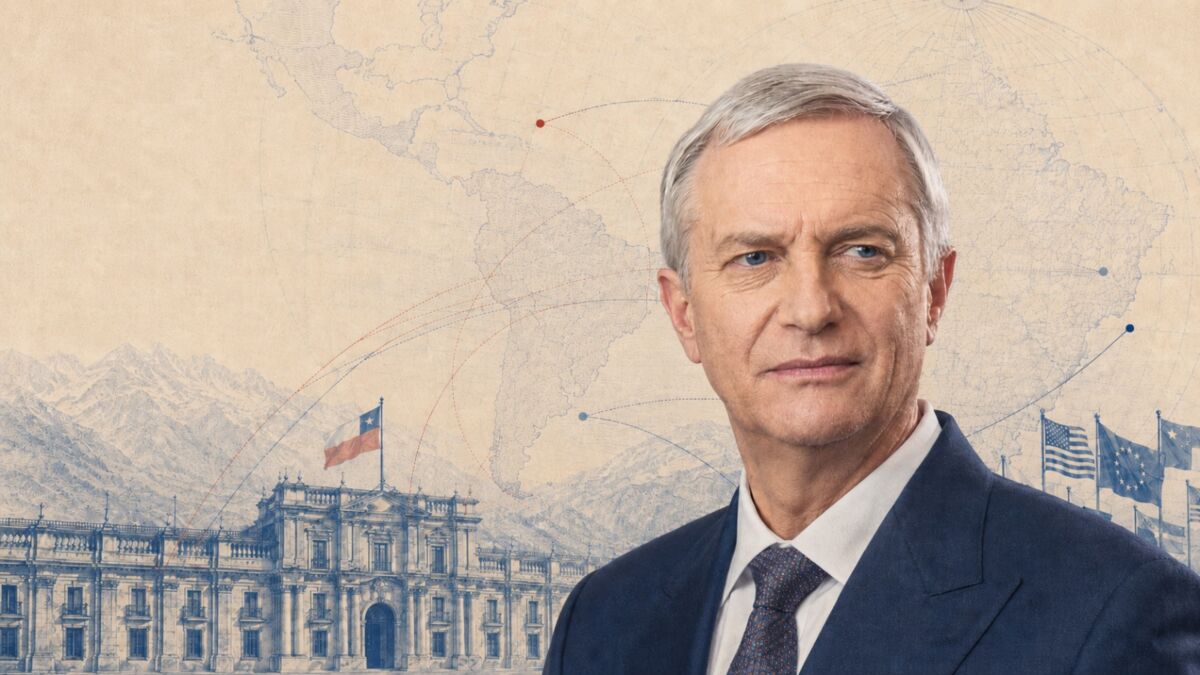
In Chile, the first public account of a president occurs three months after taking office. Therefore, it is less a performance review and more an opportunity to diagnose the state of the country, where the new government’s guidelines and priorities are established.
In his debut, President Kast maintained the narrative of a Chile in a state of “emergency.” Consequently, the speech focused its announcements on public security, economic reactivation, and institutional reconstruction.
However, just as the public account sets priorities, it also defines silences.
This was the case with foreign policy, where references to Chile’s international actions were scarce or linked as part of other issues. Cooperation with neighboring countries was present but limited to transnational crime and subordinated to the internal security and order agenda. Latin America appeared more as a mirror for comparison than as a horizon for integration, while external conflicts were mentioned only as context to justify budget cuts. There was no reference to regional priorities or a position regarding major powers or the reconfiguration of the global order.
This minimal approach by Kast contrasts with that of his predecessors. In his first account, Lagos projected a doctrinal foreign policy, where openness to the world was a constitutive part of the development model. In 2006 and 2014, Bachelet emphasized regional cooperation and multilateralism, while Piñera in 2010 and 2018 combined economic insertion with the defense of national interests in international disputes. In contrast, Boric projected his political identity by highlighting principles such as human rights, feminism, and ecology, and adopted clear stances on armed conflicts.
Kast has introduced a different tone and approach. He does not ignore the world but reorganizes it under a domestic grammar. Thus, foreign policy appears as a tool for containment, protection, and support for the internal agenda. The external matters insofar as it contributes to recovering a country battered by insecurity and economic stagnation.
This orientation is consistent with Kast’s electoral promise. However, it also entails potential costs. Chile is an open country, dependent on foreign trade, situated in a global landscape marked by trade wars, technological competition, and geopolitical realignments.
Subordinating the international to the internal front may provide political coherence in the short term, but it leaves an underlying strategic question unresolved: what place does Chile want to occupy in the world and with what tools does it intend to defend its interests in an increasingly uncertain environment.