COLUMN | Submarine Cables, Time to Look Underwater
This article was translated automatically and may contain differences from the original. For reference, read the original.
- by Juan Pablo Toro
- Opinion

AFP
The agreement signed this week between the State of Chile and Google to extend a submarine fiber optic cable that will connect the country with Oceania and Asia starting in the first half of 2027 necessitates an understanding of the importance of this key infrastructure in the 21st century, as well as the latent threats in a scenario of increasing strategic competition.
These cables carry 97% of global communications and facilitate daily financial transactions worth $10 trillion. There is no alternative due to the volume of data they can transport; current satellites would not suffice.
Because many of the connections were laid during the relatively peaceful decades of so-called hyperglobalization, their locations in isolated and poorly monitored areas are publicly available to anyone. This is where the problem lies.
In the last two years we have observed cable cuts in various parts of the world. Using the same procedure of dragging anchors in shallow waters, cargo ships have “accidentally” disrupted connections between Baltic countries and around Taiwan, forcing NATO and the Taipei Coast Guard to increase their surveillance measures, respectively, in response to what they consider “gray zone” actions sponsored by Russia and China. These are coercive measures that yield tactical or strategic gains without engaging in direct confrontation. They are characterized by being ambiguous, incremental, and easy to deny.
Houthi rebels have also been accused of damaging four cables in the Red Sea, affecting 25% of the data traffic flowing between Asia and Europe. This demonstrates that in the ocean, the barriers to sabotage are very low, to the point that even non-state groups can carry them out.
Although the tactic of cutting submarine cables is not new —it was even employed during the Pacific War (1879-1884)— the increased frequency of these incidents has partly motivated France to develop a specific strategy regarding seabed issues and the United Kingdom to build specialized surveillance vessels.
While the United Nations Convention on the Law of the Sea empowers states to impose penalties on those who intentionally break or damage a cable, the reality is that the crime scene is difficult to investigate due to being tens or hundreds of meters deep.
A paradox is also observed. While a total information cut is an unlikely scenario for countries with multiple cable connections, on the other hand, a greater presence of them could attract more hostile actions due to their potential impact.
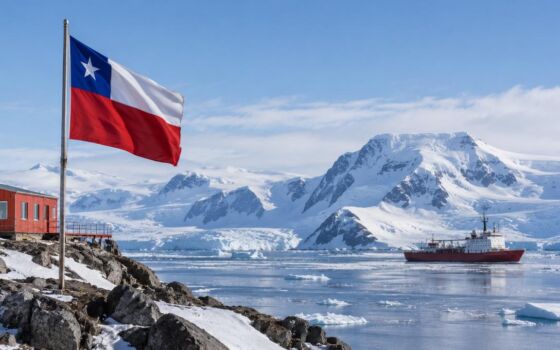
Along with the Humboldt cable, a feasibility study is currently underway for a possible cable between continental Chile and national Antarctic territories, further fueling the possibility that the country could become a digital hub with future data centers included.
It is true that the country has comparative advantages for the security of its cables, such as the depths of the surrounding seas and the relative distance from war zones. It now seems more likely that a tsunami or a volcanic explosion —as occurred in Tonga— could affect submarine communication lines. However, the fact that it is connected to the world, currently through the United States and soon with Asia via Australia, has not left China at ease, which apparently has revived the idea of another direct additional connection. And the relationship between the great powers does not seem to be progressing in a favorable direction these days.
Everything indicates that ensuring the protection of these critical infrastructures will become an even more relevant and complex challenge in a very short time, another task legally assigned to the Armed Forces in a context of budget cuts. In this case, it is more necessary than ever to try to look underwater.
June 7, 2025