Key Aspects of the Current Conflict Between Israel and Hamas
This article was translated automatically and may contain differences from the original. For reference, read the original.
1. What is Hamas and What is the Gaza Strip?
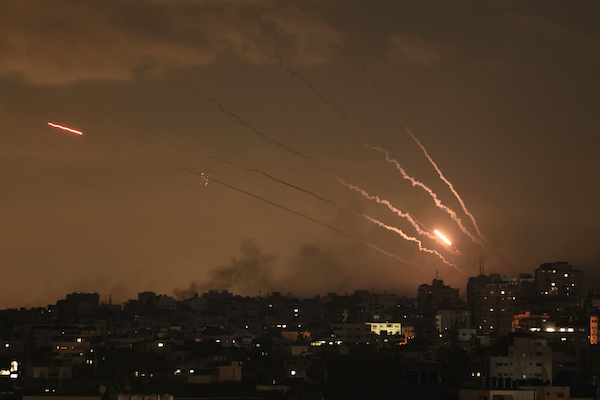
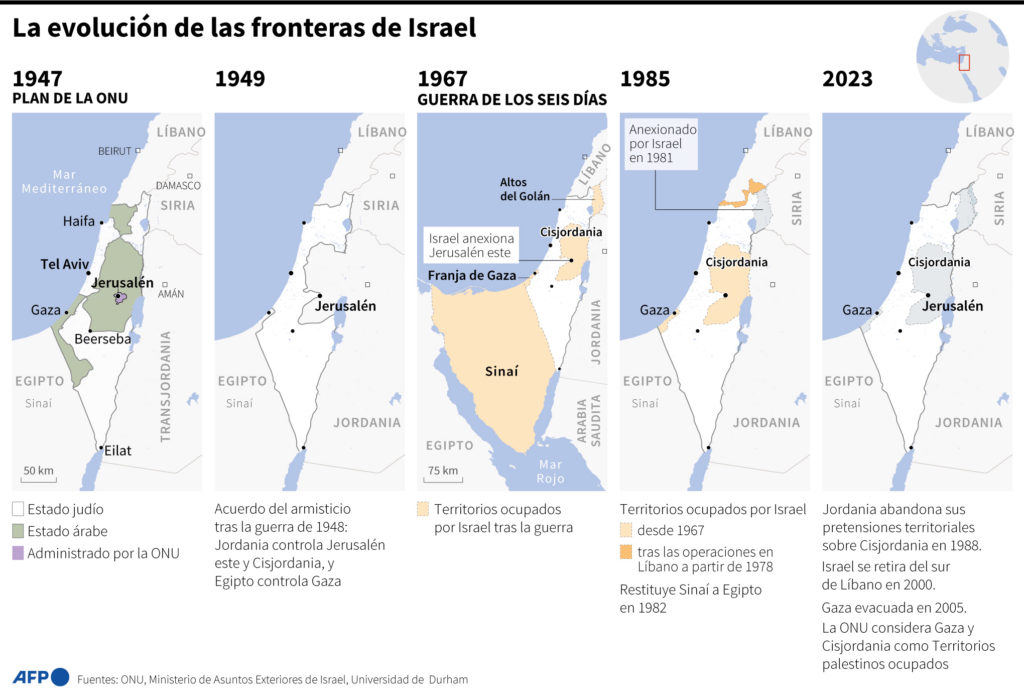
Hamas is the acronym for the Islamic Resistance Movement (Harakat al Muqawama al-Islamiya) since its formal emergence in December 1987, shortly after the start of the First Intifada against the Israeli occupation of the West Bank and the Gaza Strip. It is a branch of the Muslim Brotherhood in Palestine. It is characterized by addressing all Islamic concepts across all domains of life, including political, religious, and social aspects. It has been designated a terrorist organization by both the U.S. (1997) and the European Union (2017), as well as by the Organization of American States (OAS) (2021). Its militias are composed of the so-called Al Qassam, founded in 1991. Following the signing of the Oslo Accords (1993), the Gaza Strip was handed over to the “Palestinian Authority,” and in 2005, Israel completely withdrew from the region. In 2007, this territory was forcibly taken by Hamas, effectively becoming an independent state. The Gaza Strip is a territory of 360 km2, approximately 50 km long along the Mediterranean Sea, with a width ranging from six to twelve kilometers. It has a population of 2.3 million inhabitants, making it one of the most densely populated areas on the planet. It is important not to confuse the Hamas movement with the Palestinian people in comments or analyses.
2. Situation Prior to the Attack on October 7, 2023
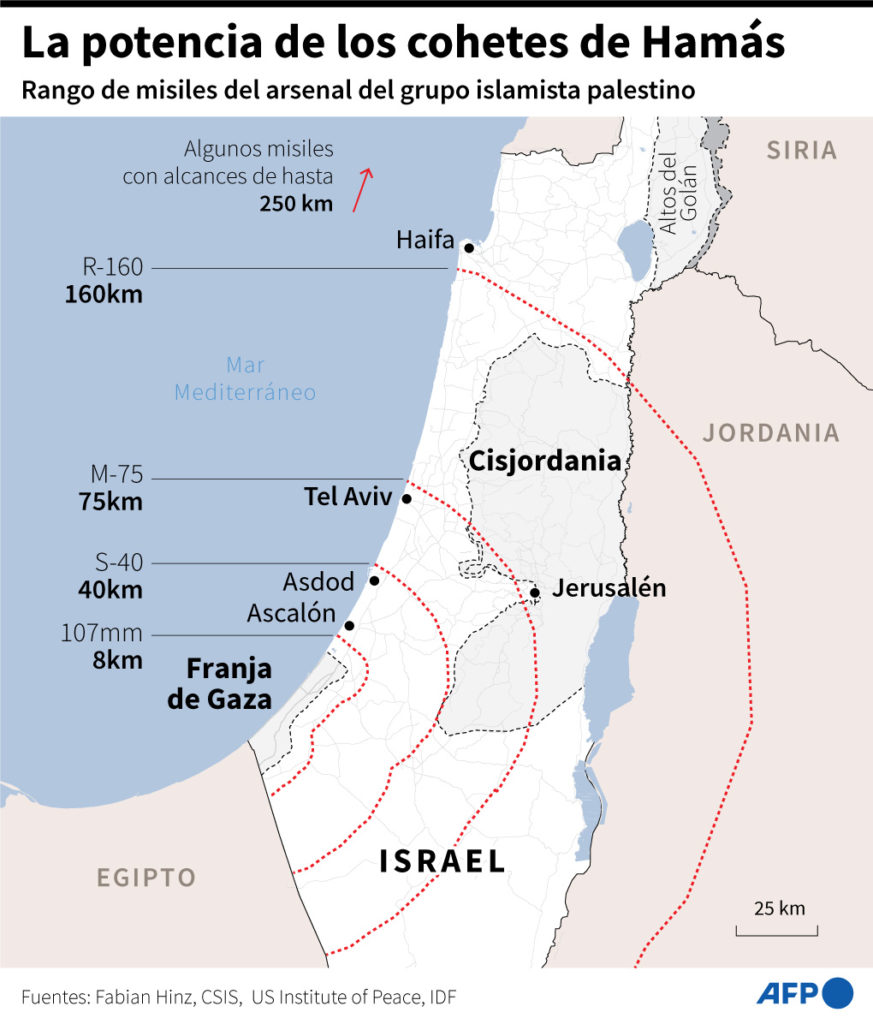
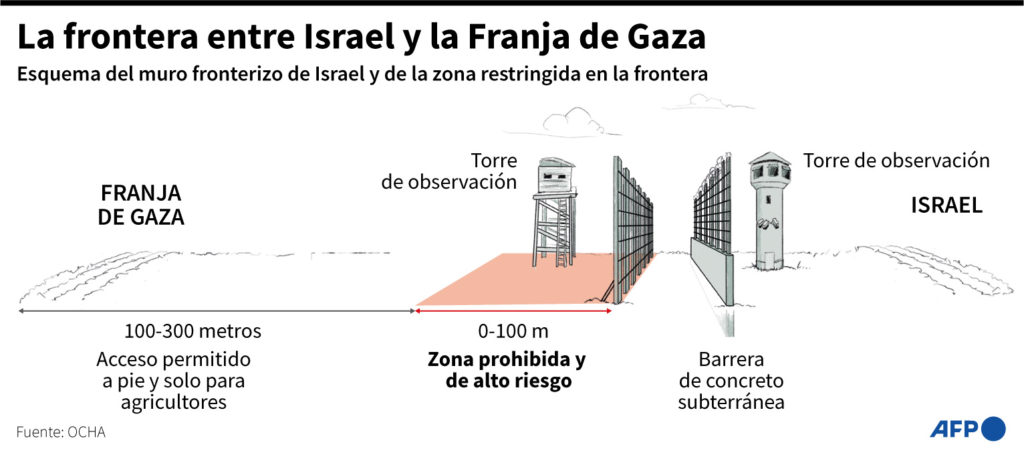
To understand the context in which the attack occurred, several background factors must be considered. First, the Gaza Strip was under a land, sea, and air blockade imposed by Israel and Egypt, which has dramatically impacted the quality of life for its population. Second, Israel was in the midst of a complex domestic political crisis, with its society divided for months, while its armed forces were significantly engaged in addressing security issues in the West Bank (it is estimated that about 70% of ground forces, including units normally stationed near the Gaza Strip, were involved). Third, although there had been no significant actions by Hamas since 2014, recent months showed signs of increasing tensions, with terrorist attacks and Israeli responses in May, July, and September. Additionally, the measures implemented by Israel in recent years (construction and activation of the wall, incorporation of technology, implementation of the “Iron Dome” system, and precision strikes) seemed sufficient to contain the threat from Hamas and the Palestinian Islamic Jihad (PIJ). Nevertheless, it appears that the combination of these elements led to a deterioration of Israel’s deterrent capacity, compounded by the fact that, in the complex relationship between Israel and Hamas, there has never been peace, but rather different stages characterized by varying levels of violence.
3. Main Characteristics of the Attack
While Hamas’s attacks on Israel are not new—thousands of rockets have been launched from Gaza and there have been hostages in the past—this case has specific characteristics. The most notable aspect is the advanced level of planning, preparation, and coordination required for the incursion. It should be noted that ground, air, and naval means were employed for infiltration and assault, and there is also information regarding the use of cyberattacks prior to the initiation of actions. Furthermore, the use of satellite imagery during the operation’s preparation phases cannot be ruled out. In short, Hamas exploited nearly all domains of warfare.
The choice of date was not random. On October 7, three elements converge: the Sabbath, the conclusion of the Jewish festival of Sukkot, and the 50th anniversary of the start of the Yom Kippur War (although it began on October 6, 1973).
On the other hand, the Palestinian people in general and Hamas in particular have been accumulating a sense of abandonment or postponement by the Arab world. The isolation resulting from the aforementioned blockade, the insufficient response of some Arab states to Israeli attacks in the Gaza Strip, the precarious living conditions within the area, and the gradual rapprochement and normalization of relations between Israel and Arab states—perhaps the process involving Saudi Arabia is the most emblematic due to its former closeness to Hamas—could have triggered the recent attack.
The attack took on characteristics of a major military operation due to its magnitude (number of resources) and complexity (unseen until now in the region) and of a terrorist operation due to the civilian casualties and extreme brutality displayed. The events represent a true shock for the State of Israel, to the extent that these are the first incidents in which Israel loses territory (albeit temporarily) to the Palestinians since 1948; moreover, since 1967, actions have never been executed within the borders of Israel defined in 1948; and it is the day with the highest number of Israeli casualties in all wars fought since that same year.
4. What Will Happen in the Future?
Following this unprecedented attack on Israel by Hamas, it is necessary to visualize possible actions in the short and medium term:
In the short term:
- A unity government in Israel should be formed—before the weekend or at the latest at the beginning of the next week—as a necessary political step to subsequently adopt the most relevant military measures related to a ground invasion of the Gaza Strip.
- It is estimated that the initiation of a ground invasion of Gaza will constitute a decision point to assess the reaction of Hezbollah regarding the possibility of opening a second front in southern Lebanon. Hence, the current reinforcement and mobilization of Israeli units in that front is an ongoing development. As of now, it is highly probable that, in the event of an Israeli invasion of Gaza, Hezbollah will open a second front along the entire border. Actions in the West Bank, particularly in the areas of Judea and Samaria, should not be ruled out either.
- Prior to the start of a ground invasion, total control of the territory adjacent to the Gaza Strip should be consolidated, as has been established in recent hours with control over the following locations: Kfar Gaza, Bari, Alumin, Nrim, Shaár haNegev, Nir Oz, and Hulit.
- Similarly, the issue of military and civilian hostages will be a factor that will constantly influence Israel’s military decisions.
- An Israeli military incursion into Gaza is expected to be temporary and will require a significant number of forces, engaging in urban combat where defenders have comparative advantages, defining a scenario of considerable attrition and wear, with high estimated casualties (both civilian and military) on both sides. This action must be coordinated with a potential effort in the north that will likely require a greater number of troops given the balance of forces with Hezbollah, as well as the ongoing threat in the West Bank.
In the medium term:
- Actions in the Gaza Strip, while having military costs, will also incur high political and social costs. Therefore, such actions must be very well planned and limited.
- Iran’s conduct and participation in this conflict—through proxy actors—will become clearer as hostilities progress, with the ongoing support provided to Hezbollah through Syria being key.
- As the conflict prolongs, the international community will pressure the stronger actor to find a negotiation that can bring an end to the operations. Thus, time plays in favor of the weaker actor. Similarly, there will be increased pressure to find political accountability for the surprise of the attack given the evident failure of the Israeli intelligence system, as well as to verify the involvement of other actors in supporting and planning the attack.
- The economic repercussions at the global level will primarily be felt through higher oil prices and a maintenance of the fuel production figures already announced by the main producers in the Persian Gulf.
5. International Repercussions
- U.S. Participation
The United States has deployed the Carrier Strike Group led by the USS Gerald R. Ford in the Eastern Mediterranean. This is seen as a precaution to deter the entry of other regional actors into the conflict rather than for direct participation. Should there be an escalation in the involvement of actors, the chances of intervention by this task force increase. It is estimated that an economic aid package—through security assistance—could be approved in the U.S. Congress once requested. This, however, requires that the House of Representatives resolve the designation of the Speaker as a prior step.
- War in Ukraine
One of the effects of this new crisis is that it diverts Western attention and support—particularly from the U.S.—from the ongoing conflict in Ukraine. In this case, it benefits Russia’s current strategy and objectives. Evaluating the continuation and persistence of Western support for this conflict will be a topic to consider in future analyses.
- Israel’s Relations with Saudi Arabia
Before the October 7 attack, discussions between Israel and Saudi Arabia were well underway toward a peace agreement between the two countries (Abraham Accords), which has been disrupted by this incursion and attack by Hamas. It can be hypothesized that one of the effects of this action is to affect that understanding, both for Hamas and for Iranian benefit. In other words, this conflict freezes or undermines the possibility of an agreement in the short and medium term.
- Iran’s Role in the Conflict
Iran’s participation and level of commitment in the current conflict is a developing factor, as already mentioned by the U.S. newspaper “Wall Street Journal,” in clear reference to the meeting in Beirut between Iranian officials and Hamas. It will be relevant to know in the future the extent of support in planning, training, and arms, as has occurred with Iranian support to Hezbollah and Hamas in the past. This is a very delicate factor due to the potential for escalation and expansion of the conflict.
6. Systemic Intelligence Failure
Whether due to the scale of the attack or the surprise achieved by Hamas, the October 7 attack can be considered a serious failure for Israeli intelligence. The recency of the events and the limited information available make it impossible to assess the origin of the problem, but undoubtedly a thorough investigation will be conducted, leading to changes in Israeli intelligence services. Nevertheless, with the available background, it is possible to identify some factors that may have influenced this situation. First, in recent years, there was a certain level of control over the situation, as containment measures against Hamas seemed sufficient without entering into greater risks such as a ground military operation. Second, credit should be given to Hamas and its military structure for the successful preparation of the action, drawing important lessons from previous experiences, such as the rocket capacity needed to saturate the system known as the “Iron Dome.” Third, whether due to domestic political problems or the diversion of military forces to other fronts, the context did not favor prioritizing activities related to Hamas. Fourth, there is an excessive reliance on technology in Western intelligence agencies, including Israel’s, at the expense of human intelligence, the only source that allows for understanding or deducing the intentions of potential adversaries. Fifth, closely related to the previous point and drawing an analogy with what the United States and its intelligence services experienced prior to the attacks on the Twin Towers in 2001, Israel may be a victim of a “lack of imagination” in processing and analyzing information, preventing it from connecting fragments of known facts from different components. In other words, there was not necessarily an absence of information regarding the events.
Finally, it is possible to identify that the problem may have arisen in two areas. On one hand, the inability to detect the attack and what was being plotted (Intelligence) and, on the other hand, the inability to prevent Hamas and other groups from acquiring sufficient information to plan a detailed major operation (Counterintelligence).
7. Final Considerations
This conflict is very different from what has occurred in this region over the last decade. It will not be a matter of weeks, but will likely extend—at least—until the end of the year. The best scenario envisioned for Israel is a major effort on only one front (Gaza), where the military incursion will be subject to heavy casualties among both military and civilians. On the other hand, the worst-case scenario involves the opening of a second front with Hezbollah in southern Lebanon, or a new intifada in the West Bank, or a combination of both. If this second scenario manifests, Israel will require the deployment of nearly all its forces.
- We are witnessing a significant systemic intelligence failure. It will be important to understand the subsequent investigation that reveals the vulnerabilities or errors made, as well as the interaction between intelligence agencies and the decision-makers they serve. Of particular interest will be to confirm whether this masking of the offensive or assault, as well as actions in cyberspace—prior to the assault—that may have affected detection technology systems were carried out by Hamas’s means or involved the participation of other actors.
- It is evident that victory—on the battlefield—will primarily be the responsibility of the Israeli defense forces, while victory—on the home front—will depend on Israeli society’s capacity for cohesion and resilience.
- The crisis highlights more than ever the value of state security architectures, as well as the ability to maintain effective intelligence systems, which, as history shows us, do not prevent occasional surprises, but there is no doubt that without them, the costs to the state and its citizens would be infinitely higher. This implies a significant lesson observed for our country, which currently lacks both systems.