Middle East in Transition: Israel (+ U.S.) versus Iran
This article was translated automatically and may contain differences from the original. For reference, read the original.
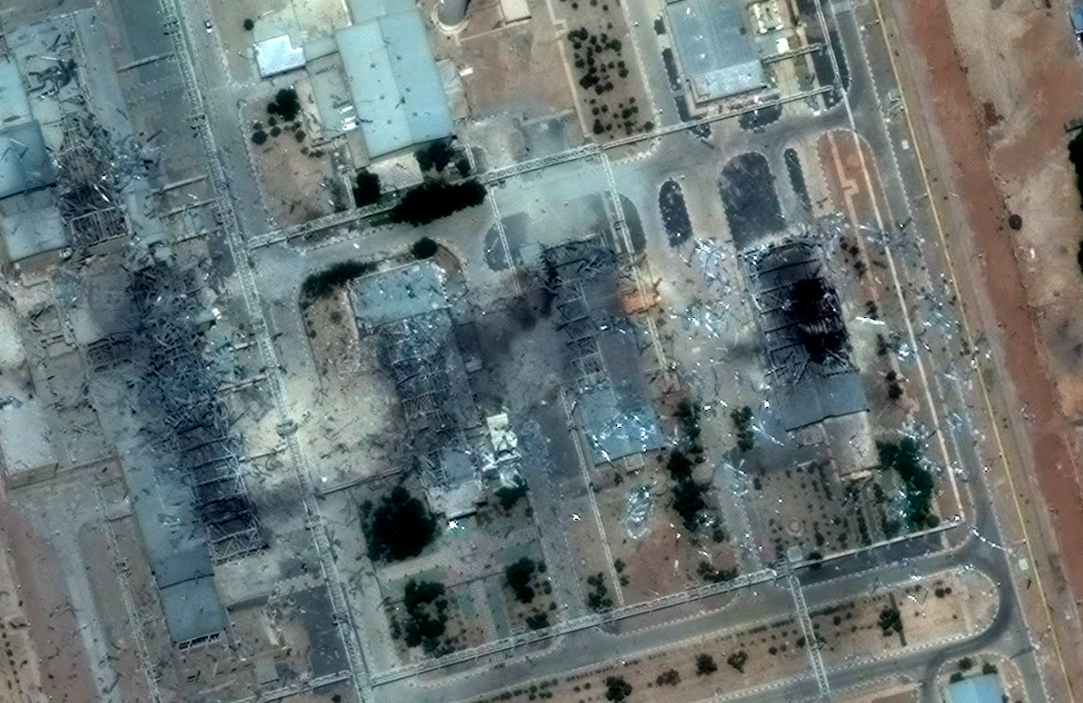
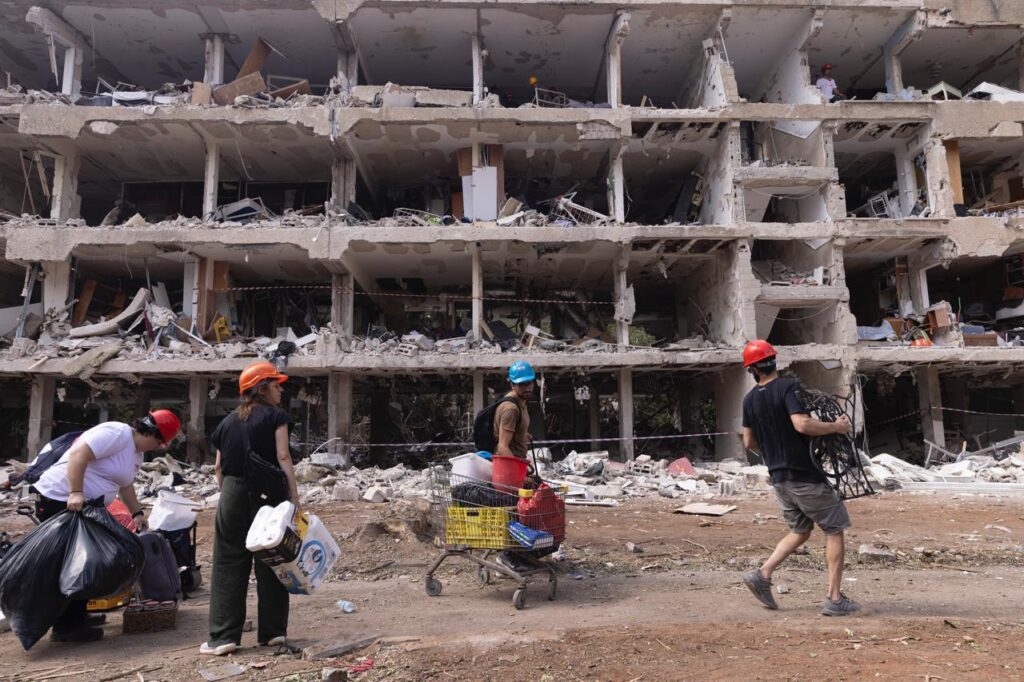
Edificios destruidos por un ataque de EE UU a Irán
Many events had to occur in the Middle East for the United States to finally decide to intervene directly with a precision airstrike on three sites that are central to Iran’s nuclear program.
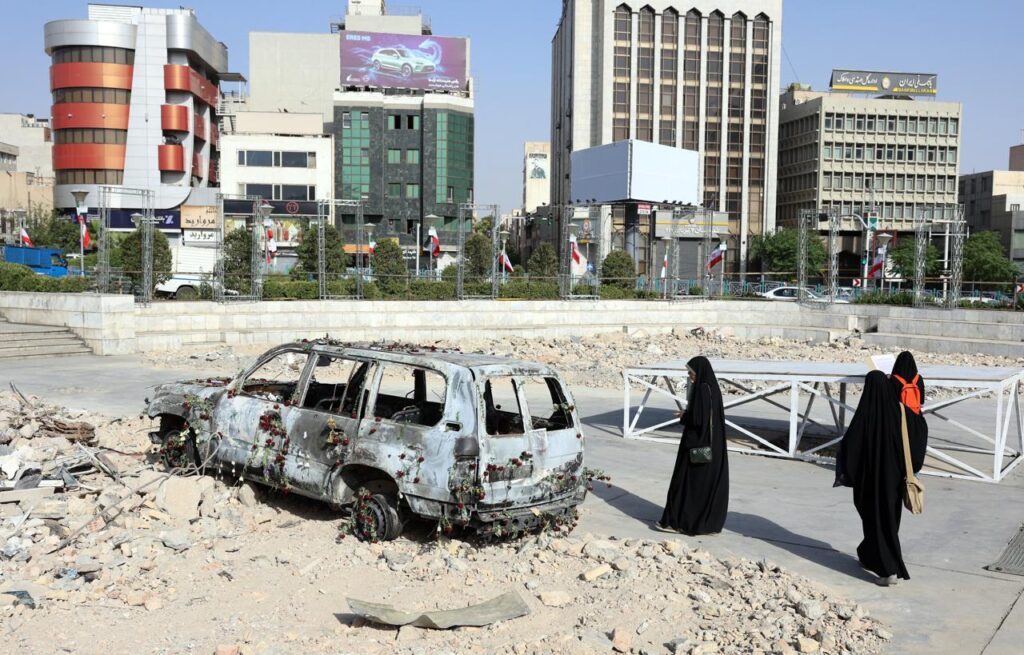
Certainly, in the early hours of June 13, Israel initiated a new phase in the conflict with attacks on Iranian territory. In this phase, the primary objective was to seriously impact the nuclear program and strategic capabilities, and apparently also the stability of the Tehran regime. Complexes such as Fordo were bombed, and missile launchers and facilities for manufacturing such weapons were destroyed. Similarly, either through its air campaign or by executing special operations, important scientists from the Iranian program and high-ranking officials from its military structure were eliminated. In the following days, the situation escalated with Tehran’s response, which resulted in a significant number of casualties in Israel—something different from what occurred last year; however, the damage was much more limited than that observed in Iran, considering that Israel continued its operations and objectives in the following days.
The underlying problem in the Middle East, illustrated in the Israel-Iran conflict, centers on the clerical regime in Tehran and its ambitions to obtain nuclear military capability. Everything accelerated after the attack by the terrorist militia Hamas on October 7, 2023. Since Iran does not share borders with Israel (which will always limit the conflict), it created a belt around its rival, which it called the “Axis of Resistance.” Therefore, it acted through subordinate forces, or proxies, such as Hamas in Gaza and the West Bank; the Houthis from Yemen; militias in Iraq; the Syrian regime; and, above all, Hezbollah in Lebanon.
The problem for Iran is that the attack on October 7, 2023, generated a crushing response that it did not foresee, both in terms of magnitude and scope. Israel first destroyed Hamas’s military capability, then focused on Hezbollah, which it also reduced to a minor actor. At the same time, it maintained a defensive position against the Houthi rebels with the help of other countries, and its actions contributed to the fall of Bashar al-Assad’s regime in Syria last December. In other words, the entire framework through which Iran threatened and deterred Israel has been decimated or severely degraded in about 15 months.
Now, what interest could Israel have in directly attacking Iran if it knew that Iran had thousands of missiles that could be used for retaliation? First, Tel Aviv would never stand idly by watching Tehran acquire nuclear capabilities, and it had intelligence information about the military development of these capabilities. Second, the ayatollahs’ regime is a permanent and existential threat to Israelis, as it publicly preaches the destruction of the Jewish state. And third, President Donald Trump’s administration was less inclined to block an incursion of this magnitude. Thus, a window of opportunity opened to act, especially since by October of last year, Israeli forces had practically destroyed Iran’s air defense capability. Additionally, the regime is very weakened, due to its inability to defend itself and inflict serious damage in response, while its economy languishes from decades of sanctions and internal repression intensifies.
Of course, at the moment of launching its attack, Israel also sought international contextual elements to make it justifiable. This occurred after reports from the International Atomic Energy Agency were released, warning that the Iranian nuclear program had dangerously advanced in uranium enrichment (it was already over 60%, while the military level is around 90%). Negotiations with the U.S. were also stalled. On one hand, the deadline set by President Trump for reaching an agreement with Iran had expired (one day before the attack), and on the other, Iran had rejected the latest conditions proposed by Washington.
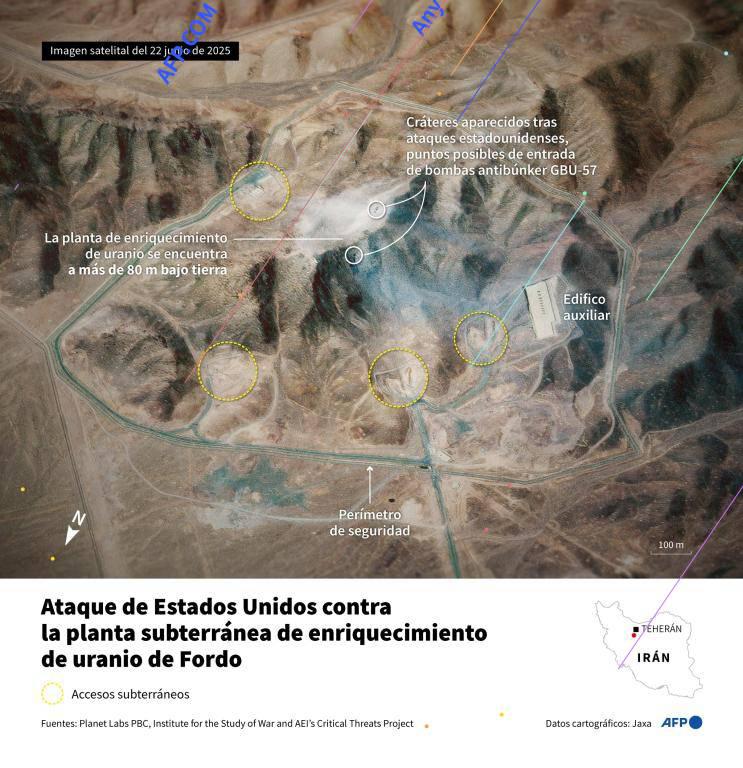
In its successive missions, Israeli forces managed to damage a significant portion of Iran’s nuclear capability, eliminate a large number of missiles (their launchers and factories), and kill most of the military leadership and nuclear scientists of the Iranian program. However, only the U.S. had the bunker-buster bombs capable of destroying the Fordo facilities, which were heavily protected, located dozens of meters underground, and surrounded by layers of concrete. Israel could not conclude this phase without Washington’s participation; even knowing about the existence of U.S. interests and bases in the region, which are within reach of Iranian missiles and sympathetic militias, posed a risk when determining its participation. Furthermore, Iranian naval forces are a threat in the Strait of Hormuz, a crucial passage for 20% of the world’s oil trade, which primarily fuels Asian economies.
Therefore, with deadlines met and a favorable and lower-risk scenario—since Israel had done most of the work—the U.S. launched Operation “Midnight Hammer,” which, according to the Pentagon, included the participation of seven B-2 stealth bombers that dropped 14 GBU-57 bombs on the nuclear facilities in Natanz, Fordo, and Isfahan, after conducting a transcontinental flight, where they were supported by aerial refueling aircraft and escorted by fighters. It is estimated that, at those targets, Iran maintained stocks of radioactive material and sufficient uranium enrichment capacity to continue its path toward obtaining a nuclear bomb in a matter of weeks, according to experts.
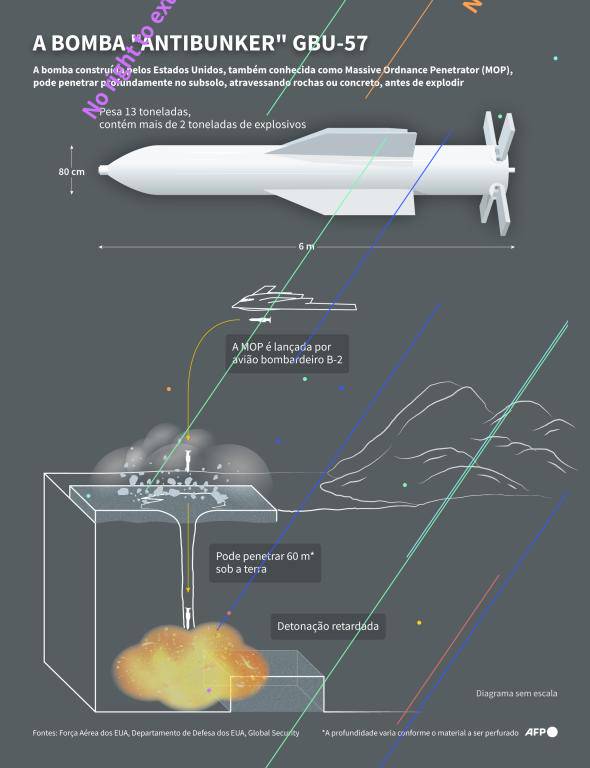
Regarding the damage caused by the bombing, which also included combined attacks with Tomahawk missiles from a submarine, there are reports ranging from irreversible destruction by Washington to attempts by Tehran to minimize the impact. The reality is that the ayatollahs’ regime will have to think very seriously about whether to continue its pursuit of the atomic weapon, despite the technological, technical, and scientific experience accumulated over the years. The threat from Israel and the United States materialized. If they continue along the same lines, they will keep striking.
It seems crucial to focus now on the survival needs of Ayatollah Khamenei’s regime. Autocratic regimes always prioritize their maintenance of power over any other consideration, and this could be the occasion. Now we must wait for the magnitude, intensity, and scope of Tehran’s response following the U.S. attack. However, the range of alternatives is not limited to the conventional use of military force, as for the Iranians, cyberspace and terrorist actions have been in their portfolio for decades, so the dilemma is not minor.
If Tehran attacks U.S. interests, it could trigger an even greater military campaign against it, something President Trump has already warned about. Conversely, if it limits its ambitions and agrees to a deal with Washington, Brussels, and other countries in the region (never with Israel), this could be seen internally as a concession and a sign of weakness. In the case of Israel, it will only stop if it assesses that the objective of the war has been achieved and if Iran is not in a position to obtain a nuclear bomb in the coming years or decades. Ideally for Tel Aviv, all of this ends with a regime change, the outcome of which could unexpectedly impact regional dynamics.
Everything indicates that we are facing a period that will mark geopolitical and strategic changes in the Middle East, as Iran has been severely weakened, and its theocratic regime will have to adopt domestic measures to survive. It has also demonstrated Israel’s strength, at least from a military perspective, the sophistication of its intelligence, and its determination to survive. Of course, it became clear that the U.S. will maintain its support for Tel Aviv, even intervening militarily.
In light of these realities, the rest of the region—particularly the Arabs—and other global powers are observing before making calculations. China, the main buyer of oil from Tehran, has shown no signs of support or condemnation but maintains strong ties and shares interests with Iran. It is also aware that a U.S. tied up in the Middle East will have fewer assets in the Pacific. Russia, another close partner of the ayatollahs, condemned the U.S. attack, calling it irresponsible and questioning how it could be carried out by a country that is a permanent member of the Security Council. Undoubtedly, a comprehensible and paradoxical position from Moscow; the invader of Ukraine acquires Iranian drones to use in this conflict and will now see its access to these weapons limited. For its part, the European Union asserted that Iranians should not have offensive nuclear material and urged the parties to negotiate.
Finally, it is difficult to predict whether this situation in the Middle East could escalate to a global level, but it seems unlikely today. The interests at stake for the great powers do not appear to be significant. Overall, the U.S. attack was very targeted and had a clear objective. Another scenario would open if Iranian forces attempt to close the Strait of Hormuz, one of the key routes for global oil trade. Several exporting countries in the Persian Gulf could not accept that situation, nor could Asian buyers and Western navies that ensure freedom of navigation. But that is just a hypothesis. It is also not feasible to visualize whether this stage of confrontation has ended, as much will depend on what Iran ultimately decides to do.
For now, it is appropriate to take a step back and wait for the situation to begin to settle in order to make a better and more complete assessment of the geopolitical and strategic changes that are looming, within the framework of what is already a major regional remodeling.
Marcelo Masalleras, Senior Researcher at AthenaLab
June 23, 2025